
Inner Chest Workout Exercises That Build a Defined Cleft

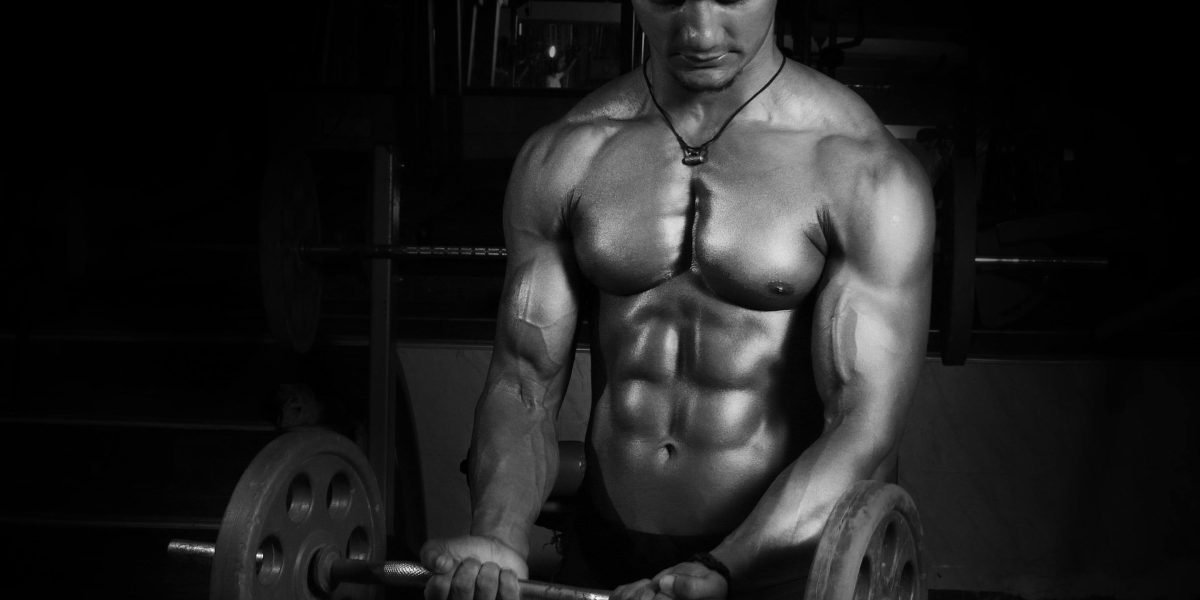
You want a chest that looks full and defined. That sharp line down the middle, the one that shows you put in real work. You see it on social media and wonder why your own chest lacks that same look.

Here is the truth. Many people chase the inner chest workout idea but get it wrong. They think the inner chest is a separate muscle they can isolate with special moves. That is not how your body works.
Your chest is one muscle called the pectoralis major. According to the StatPearls medical library, it is a thick, fan shaped muscle that covers your upper chest wall. It has two main parts: the clavicular head (upper chest) and the sternocostal head (lower and middle chest). As TeachMeAnatomy explains, both heads work together. You cannot magically activate only the inner part.
So why does that inner cleft look different on some people?
It comes down to full chest development, smart exercise choices, and low enough body fat to show what you built. The best chest day workout targets all areas, not just the middle. And you also need strong back workouts and rear delt exercises to keep your shoulders healthy and your posture balanced.
This guide gives you the real science behind building a chest you can be proud of. You will learn which exercises actually target the inner region, how to program them, and how to fix common mistakes that slow your progress.
Let us get started with the anatomy you need to know. And if you want a complete, science backed approach to all your training, RepCore has guides built for everyday athletes who want real results.
Why Inner Chest Development Is Challenging
You might think the "inner chest" is a stubborn muscle that just won’t grow. But the real challenge is not a missing muscle. It is anatomy.
Your pectoralis major has two heads. The clavicular head (upper chest) and the sternocostal head (middle and lower chest). They attach to your arm at the same spot, but they start in different places. As Physiopedia explains, these two heads work as one unit. You cannot fire only the inner part because the muscle fibers run across your chest like a fan.
So why does that inner cleft look full on some people and flat on others?
Here is the tricky part. The lower sternal fibers have a better angle to pull your arm across your body. To fully work them, you need a deep stretch and a complete range of motion. This is called stretch-mediated hypertrophy. When you stop your reps short, you miss the part where those low fibers get the most stimulation.
The common belief that you can isolate the inner chest with special flyes or cable crossovers is just not true. Your chest activates as one sheet. The real challenge is building enough mass in the lower sternal head while keeping body fat low enough to see it.
That is why a smart best chest day workout includes exercises with a deep stretch like dumbbell press and flyes. And it is why neglecting back workouts or rear delt exercises can hurt your chest development by pulling your shoulders forward.
Ready to build a chest that actually shows? RepCore gives you workout plans based on real science, not gym myths.
The Muscles Involved: Pectoralis Major and Minor
Now that we understand the challenge, let’s look at the actual muscles. Your chest is built by the pectoralis major and the pectoralis minor underneath. The pectoralis major has two distinct heads: the clavicular head (upper chest) and the sternal head (lower chest). The sternal head is larger and, according to Physiopedia, is the main driver for horizontal adduction. That is any movement that brings your arm across your body. This action is what you need to target for inner chest fullness.
But here is the twist. The sternal head itself has different fiber angles. The lower fibers run more diagonally, and they get a stronger mechanical advantage when your arms are stretched behind you. That is why pressing at a decline or using a deep stretch in flyes hits those lower fibers harder. As The Sport Journal explains, exercise selection and hand position can bias which region works hardest.
The pectoralis minor sits underneath. It does not move your arm much. Instead, it stabilizes your shoulder blade and helps with posture. Weak or tight pec minors can pull your shoulders forward, limiting your range of motion. That makes your chest look smaller. That is why a proper inner chest workout must also address shoulder health.
So what does this mean for your chest day workout? You need exercises that emphasize the stretch and adduction for the lower sternal head, while keeping your shoulders open.
If you want a training plan that respects these anatomy details, check out RepCore. They design workout plans based on real science, not bro science.
Now, let’s move to the best exercises for your inner chest.
Warm-Up and Mobility for Optimal Chest Training
Most people skip warm-ups. They run to the bench and start pressing heavy. That is a mistake. A cold chest and tight shoulders limit your range of motion. That makes it harder to hit the deep stretch your inner chest needs.
Before you start your chest day workout, spend five minutes on mobility. Begin with band pull-aparts. Grab a light resistance band and pull it apart in front of your chest.

Squeeze your shoulder blades together. This wakes up your rear delts and opens your posture. According to the ISSA, proper shoulder mobility helps you reach a fuller stretch during presses, which targets more muscle fibers.
Next, do a doorway pec stretch. Place one arm on a doorframe at shoulder height. Gently turn your body away. Hold for 20 seconds per side. This loosens the pectoralis minor and stops your shoulders from rolling forward. A tight pec minor limits your range of motion, as we covered earlier.
Finally, do warm-up sets for your close-grip exercises. Use 50% of your working weight for 10 to 12 reps. Focus on the stretch at the bottom. This tells your nervous system it is time to work.
If you want a complete warm-up routine designed by experts, check out RepCore. They provide science-based training plans that include mobility work. That way you never skip the prep that matters.
Now you are ready for the best inner chest exercises.
Evidence-Based Exercises for the Inner Chest
You have warmed up. Your shoulders feel loose. Now it is time to choose the right exercises for your inner chest workout. Not all chest moves hit the inner part the same way. The best chest day workout includes exercises that put more tension on the sternal head and squeeze the muscle hard at the top.
Let us look at four evidence-based exercises. Each one is backed by science and used by people who want a full, defined chest.
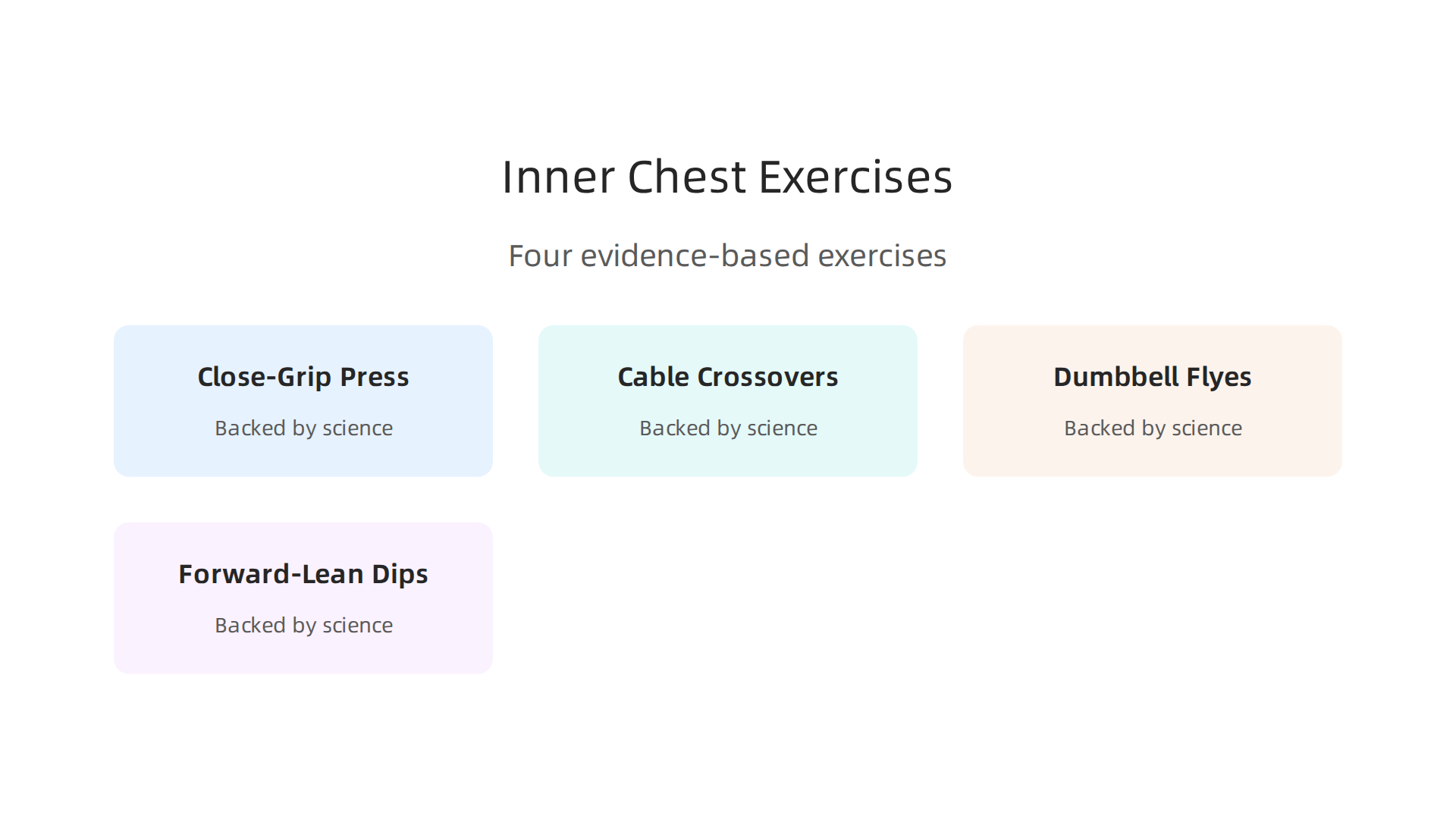
Close-Grip Bench Press
This move is a game changer for the inner chest. By bringing your hands closer together, you shift more work to the triceps and the lower part of the pectoralis major. A study from mDurance ranked the chest press machine at 79% EMG activation for the pecs, and close-grip variations are equally effective. The narrower grip forces your arms to adduct more, which activates the inner chest fibers. Focus on lowering the bar to your lower sternum and squeezing at the top.
Cable Crossovers
Cable crossovers let you control the angle and the tension.

When you set the pulleys above shoulder height and bring your hands down and together, you target the sternal head hard. Research from The Sport Journal shows that hand position and body angle play a huge role in pectoralis activation. Keep a slight bend in your elbows, lean forward a bit, and cross your hands past the midline. That extra squeeze at peak contraction is what builds the inner chest.
Dumbbell Flyes and Hex Press
Dumbbell flyes give you a deep stretch. When you lower the weights out to your sides, you open up the chest and engage all the fibers. A 2012 EMG study found that flyes produce strong activation of the pectoralis major during the stretch phase. Hex press is a mix of a fly and a press. You hold dumbbells together like a hexagon and press them away from your chest while keeping them squeezed. This constant tension hits the inner area without heavy shoulder stress.
Dips with Forward Lean
Dips are often thought of as a triceps exercise. But when you lean your torso forward and keep your elbows out, they become a powerful lower chest builder. The lower fibers of the pectoralis major attach to the sternum and pull the arm down and inward. A YouTube guide from Catalyst University explains how leaning forward shifts the load to the lower chest. This is perfect for filling out the bottom of your chest and creating that complete look.
For a complete inner chest workout that uses these exact moves, you can follow a science-based plan. If you want expert guidance on exercise selection and progression, check out RepCore’s training plans. They use the latest research so you never waste a rep.
Now that you know the best exercises, let us put them into a routine that works.
Common Mistakes and How to Fix Them
Now you know the moves. But even the best inner chest workout can fall flat if you keep making small form mistakes. Let’s fix the three biggest ones.
Mistake 1: Using too much weight
This is the most common error. You grab heavy dumbbells or load up the bar, and suddenly your range of motion shrinks. Your shoulders take over. Your elbows flare. You lose the squeeze at the top. According to research on exercise ranking, the chest press machine delivers 79% activation when done properly. That number drops fast with bad form. The fix? Drop the weight. Use a load you can control for 8 to 12 reps with a full stretch and a strong contraction. Your inner chest needs tension, not ego.
Mistake 2: Ignoring the eccentric phase
Most people rush the lowering part. But the stretch under tension is where your inner chest fibers really turn on. A 2012 EMG study found that the pectoralis major activates heavily during the stretch phase of exercises like flyes. If you let gravity do the work, you lose that stimulus. Fix: Lower the weight slowly for a count of two to three seconds. Pause at the bottom for a split second. Then press back up. This one change can turn a mediocre chest day workout into a great one.
Mistake 3: Poor hand placement and elbow angle
Where you put your hands and where you point your elbows changes which part of the chest gets hit. Wide elbows shift work to the front delts and outer pecs. For inner chest, you need your hands closer together and your elbows slightly tucked. The Sport Journal explains that body and hand position are key for optimizing pectoralis development. Also, avoid flaring your elbows during cable crossovers or presses. That adds shoulder stress and reduces inner chest activation. Fix: Keep your elbows at a 45 to 60 degree angle from your torso. Use a narrower grip on presses. And during cable work, cross your hands past your chest midline.
One more tip: If you want a complete guide that fixes these mistakes and builds a balanced chest, check out RepCore’s evidence-based training plans. They break down form, reps, and progression so you never waste a rep. See the recommended program here.
When you clean up these mistakes, your inner chest will finally respond the way you want. Now let’s put it all together into a full routine.
Programming Your Inner Chest Workout for Hypertrophy
You’ve cleaned up your form. You know which moves to do. Now let’s turn those exercises into real muscle growth. A great inner chest workout needs more than just good technique. It needs a smart program.
Here’s the simple formula that works for most people.
Reps and sets
For building size, stick with the classic hypertrophy range. A major research review in PMC found that doing 8 to 12 reps per set with 60% to 80% of your one-rep max gives you the best results for muscle growth. That is your sweet spot. Aim for 3 to 4 sets per exercise. Rest for 60 to 90 seconds between sets. That keeps enough tension on the muscle without letting your energy drop too much.
How often to train your chest
You do not need to train your chest every day. In fact, that hurts you. According to the RP Strength guide, training your chest 2 to 4 times per week works best for most people. For your chest day workout, I recommend hitting the chest twice per week. That gives your muscles enough stimulus and enough recovery for real growth. You could do one heavy day and one lighter, more volume-focused day. Or spread your sets evenly across two days.
Progressive overload
Your inner chest will not grow if you do the same weight and reps every week. You need progressive overload. That means making the workout harder over time. You have three main ways to do this.
- Add weight. Increase the load by a small amount each week.
- Add reps. If you can hit 12 reps with good form on your last set, try for 13 or 14 next time.
- Slow down the tempo. Spend more time on the eccentric, or lowering, phase. That adds time under tension without changing the weight.
Even small increases of 2.5 pounds or one extra rep add up over months. According to the Outlift guide on volume, sets of 6 to 30 reps can build muscle effectively. So do not stress about hitting a perfect number. Just make sure you are pushing yourself slightly harder than last week.
If you want a structured plan that puts all of this together, RepCore’s detailed training framework takes the guesswork out of your progress. It shows you exactly how to apply these principles so you never stall. Check out the program here.
Your next step is to pick your exercises and plug them into this structure. In the next section, I will show you a simple three-day split that puts your inner chest workout at the center.
Sample Inner Chest Workout Routine
Now it is time to put those programming rules into action. This sample routine is built to target your inner chest while keeping your shoulders safe. You can finish it in about 45 minutes.
Warm-up (5 minutes)
Never skip this. A cold chest leads to injury. Start with 30 seconds of arm circles forward and backward. Then do light band pull-aparts to fire up your upper back and rear delt muscles. Strong back muscles help stabilize you during heavy presses. Finish with 10 slow push-ups or one light set of dumbbell presses.
The Main Workout
Stick to the 8 to 12 rep range for the compound lifts and go a bit higher (12 to 15) for isolation moves. Research shows this hits the sweet spot for muscle growth. Rest 60 to 90 seconds between sets.
-
Close-Grip Dumbbell Press
Sets: 4
Reps: 8 to 10
Keep your elbows tucked close to your body. This shifts more tension to your upper and inner chest. Do not flare your elbows out. -
Dumbbell Flyes (Flat Bench)
Sets: 3
Reps: 10 to 12
Lower the weights until you feel a deep stretch across your chest. Then squeeze them together at the top like you are hugging a tree. That crunching motion is what builds the inner chest line. -
Cable Crossovers (High to Low)
Sets: 3
Reps: 12 to 15
Cables keep constant tension on your pecs. Lean forward slightly and bring your hands down and together. Pause for one second at the bottom. This is your best move for a visible inner chest. -
Parallel Bar Dips (Chest Variation)
Sets: 3
Reps: 8 to 12
Lean your torso forward while you dip. That shifts the work to your lower and inner chest. Go deep, but do not let your shoulders roll forward at the bottom.
Home Gym Substitutions
If you train at home, swap the cable crossovers for a resistance band anchored to a doorframe. Replace dips with floor presses or decline push-ups. You can still crush this workout without a gym. Just focus on the squeeze.
Cool-down
Hold a doorway chest stretch for 30 seconds per arm. This helps you recover faster and keeps your shoulders healthy so you can hit your next chest day workout hard.
Your Progression Plan
Start with a weight where the last two reps of each set are very tough. Each week add one rep or five pounds. That consistent overload is what makes your inner chest workout actually work.
If you want a fully personalized plan that maps out every set and meal for you, science backed and built for real results, check out RepCore’s detailed training framework. It takes the guesswork out of your gains. Get your custom plan here.
Nutrition and Recovery for Chest Development
You just crushed that inner chest workout. But here is the truth: muscles grow when you rest, not when you lift. Without the right fuel and recovery, your chest will stay flat no matter how many flyes you do.
Calories and Protein: The Building Blocks
To build new muscle tissue, your body needs extra energy. That means eating in a small caloric surplus. Think 200 to 300 extra calories per day. And protein is non-negotiable. Aim for 1.6 to 2.2 grams per kilogram of body weight each day. That range is backed by the U.S. Anti-Doping Agency as the sweet spot for maximizing muscle protein synthesis

(source: USADA protein guidelines).
Protein Timing: Helpful But Not Critical
You have probably heard you need a shake immediately after your last rep. Research shows that consuming protein before and after your workout can improve recovery and hypertrophy (study on protein timing). But here is the thing: total daily intake matters more. A 2024 study found that high-protein diets boost muscle mass regardless of when you eat the protein (Frontiers in Nutrition). So spread your protein across 3 to 4 meals. That is enough.
Sleep and Stress: The Silent Game Changers
Your chest does not grow while you scroll your phone at midnight. Deep sleep triggers growth hormone release. Chronic stress raises cortisol, which breaks down muscle. Prioritize 7 to 9 hours of sleep. Manage stress with walks, breathing exercises, or even your back workouts to pull tension out of your shoulders.
Simple Pre- and Post-Workout Fuel
- Pre-workout (1 to 2 hours before): A small meal with carbs and protein. Example: banana with peanut butter, or Greek yogurt with oats.
- Post-workout (within 2 hours): A protein-rich meal or shake. Carbs help replenish glycogen. This supports your next chest day workout.
Make It Personal
Nutrition is not one-size-fits-all. Your caloric needs depend on your activity level, age, and goals. If you want a custom meal plan that pairs with your training, check out RepCore’s evidence-based framework. It takes the guesswork out of fueling for growth. Get your personalized nutrition guide here.
Eat smart, sleep deep, and watch your inner chest catch up.
Summary
This article debunks the myth of an isolated




Get practical training, recovery, and nutrition insights in your inbox