
The Science Backed Ab Workout Routine for a Stronger Core


Introduction
If you have ever searched for the best ab workout routine, you already know how confusing the fitness world can be. One video tells you to do hundreds of crunches. Another says crunches are useless. A third claims you need special equipment to see results. It is exhausting.

And most of the advice out there is not backed by real science.
Here is the thing. Your core is not just one muscle. It is a complex group of muscles including the rectus abdominis, the obliques, and a deep stabilizer called the transversus abdominis. This deep muscle plays a big role in keeping your spine safe and your posture strong. Research shows that when the transversus abdominis is weak or not working properly, it can lead to low back pain and other issues.
At RepCore, we believe in cutting through the hype. Our audience wants evidence-based, no-nonsense guidance. They want to know what actually works and why. That is exactly what this article delivers.
We are giving you a complete, science-backed ab workout routine. It is grounded in real anatomy and proven training principles. We looked at studies on muscle activation during different exercises to make sure every move counts. This routine is designed for beginners and experienced lifters alike.
By the end of this guide, you will understand how your core really works. You will know which exercises hit which muscles. And you will have a simple plan you can follow at home or in the gym.
Ready to build a stronger core the smart way? Let us get started.
The Anatomy of the Core: More Than Just a Six-Pack
If you picture a six-pack when you think about core muscles, you are not alone. Most people do. But the truth is your core is way more complex than that. And if you only train the muscles you can see in the mirror, you are missing the most important ones.
Here is what is actually going on under the surface.
Your core is made up of several layers of muscle that work together. The outermost layer is the rectus abdominis. That is the six-pack muscle. It helps you bend forward and curl your torso. Then you have the external and internal obliques on the sides of your waist.
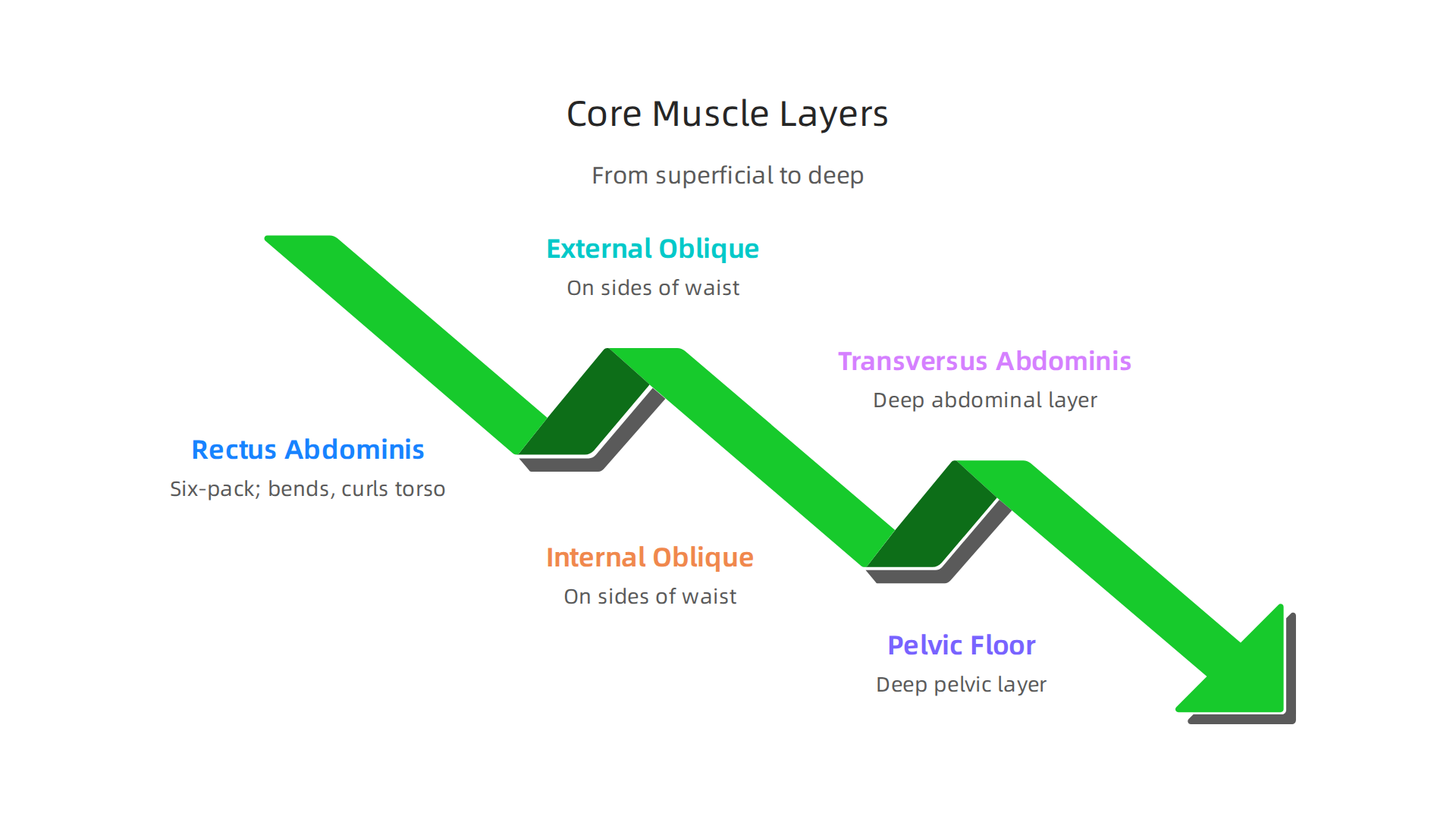
They help you twist and bend sideways. Research on muscle activation patterns shows that these muscles fire differently depending on the exercise you choose.
Now here is where it gets interesting. Deep underneath those visible muscles is the transversus abdominis. This one acts like a natural weight belt. It wraps around your entire midsection and helps increase intra-abdominal pressure to keep your spine stable. According to research, the transversus abdominis is crucial for maintaining normal abdominal tension. When this muscle is weak or not activating properly, it can contribute to low back pain.
You also have deeper stabilizers like the multifidus and the pelvic floor muscles. They do not look flashy, but they are essential for balance and injury prevention.
Why does all of this matter for your ab workout routine? Because a truly effective ab workout for beginners or advanced lifters targets every layer. If you only do crunches, you work the rectus abdominis but skip the deep stabilizers. If you only do planks, you work the transversus abdominis but miss the obliques. The best core exercises hit multiple muscles at once.
A smart lower ab workout, for example, should engage the lower portion of the rectus abdominis AND the deep stabilizers at the same time. A plank workout for abs should challenge your obliques and transversus abdominis together.
Understanding this anatomy changes how you train. Instead of chasing a look, you build a core that is strong, stable, and resistant to injury. That is the kind of foundation every rep and every set should be built on.
When you are ready to put this knowledge into action, using the right equipment can make a big difference. If you are training at home, a quality ab roller or resistance bands can help you target those deeper muscles more effectively.
Why Most Ab Workouts Fail: Debunking Persistent Myths
You now know the complex anatomy of your core. But even with that knowledge, your ab workout routine might still let you down. Why? Because most people train based on myths, not science.
Here is the biggest one: spot reduction. The idea that doing hundreds of crunches will burn belly fat is everywhere. Many people still believe you can choose where your body loses weight. But according to researchers from the University of Sydney, spot reduction is a myth because you cannot control where your body sheds fat from. Fat loss happens systemically across your whole body, not just where you exercise.
Some newer research does show that abdominal exercises might use more local fat than running. But even that study admits there was no overall loss of total body fat. So you cannot out-crunch your genetics.
Here are a few other persistent myths that hurt your progress:
- High reps for definition. Doing 50 or 100 reps per set does not reveal your abs. It just builds muscular endurance. If you want visible abs, you need a caloric deficit and overall fat loss, not endless reps. Check out this article on how the spot reduction myth persists for more context.
- Crunches are all you need. Crunches only work the rectus abdominis. They skip your deep stabilizers entirely. A smart ab workout for beginners uses exercises that hit every layer.
- You need to train abs every day. Your core muscles need recovery like any other muscle group. Two to three targeted sessions per week is plenty.
The real path forward is simple. Forget chasing myths and focus on the best core exercises that build strength and stability. Use progressive overload. Pair your training with a solid nutrition plan. That is what actually changes your appearance and performance.
If you want to build a routine based on facts instead of fads, start with RepCore’s expert-backed guides. They can help you avoid the mistakes that keep most people stuck.
Myth #1: Spot Reduction: You Cannot Lose Belly Fat by Doing Crunches
You already know that most people train based on myths, not science. Here is the biggest one: spot reduction.
The idea that doing hundreds of crunches will burn belly fat is everywhere. Many people still believe you can choose where your body loses weight. But according to researchers from the University of Sydney, spot reduction is a myth because you cannot control where your body sheds fat from.

Fat loss happens systemically across your whole body, not just where you exercise.
Some newer research does show that abdominal exercises might use more local fat than running. But even that study admits there was no overall loss of total body fat. So you cannot out-crunch your genetics.
The real solution is simple. Visible abs require an overall reduction in body fat. You achieve that through a smart caloric deficit and full-body training. Strengthening your core is great, but it is what you do outside the gym that strips away the fat.
If you want to build an effective ab workout routine, skip the gimmicks. Focus on the best core exercises that build strength and stability. Use progressive overload. Pair your training with a solid nutrition plan. That is what actually changes your appearance and performance.
If you want to build a routine based on facts instead of fads, check out these science-backed core training programs. They can help you avoid the mistakes that keep most people stuck.
Myth #2: High Reps for Definition – Why Reps Don’t Reveal Abs
You already know crunches won’t burn belly fat. But here is another myth that just will not die: "Do high reps to sculpt defined abs."
Walk into any gym and you will see people doing hundreds of crunches or planks for minutes on end. The logic feels right. More work means more burning and more definition. But muscle definition does not actually work that way.
Visible abs are a product of two things: a low body fat percentage and developed abdominal muscles. High rep, low weight training is excellent for building endurance. But it is not very good at building muscle size, which is what creates that "pop" when the fat is gone. If you stick to endless reps with zero challenge, your abs will not grow.
Instead, you need to apply progressive overload to your ab training. This means adding weight, increasing difficult reps, or doing harder variations like hanging leg raises or cable crunches. This is what forces the muscles to adapt and grow. A study on abdominal exercises shows that while local endurance work can tap into some fat stores, it does not build significant muscle or cause overall body fat reduction. Muscle & Fitness emphasizes that smart training with solid nutrition is the real deal, not high rep gimmicks.
So do not waste time on the high rep treadmill. If you want definition, train your abs with purpose. A good foundation for an ab workout routine needs to include weighted, challenging movements. That is how you build muscle and reveal it. Skip the gimmicks. Focus on strength and structure. That is the real secret to visible abs.
Myth #3: You Need to Train Abs Every Day – Recovery Matters
It feels good to hammer your abs every single day, right? You want results fast, so more crunches must be better. But here is the truth: your abdominal muscles are just like any other muscle in your body. They grow and get stronger during rest, not during the workout itself.
When you train your abs, you create tiny tears in the muscle fibers. Recovery time lets those fibers repair and rebuild. That is how you actually build strength and definition. If you never give your abs a day off, you never give them a chance to grow. You end up stuck in a plateau with sore, tired muscles that refuse to pop.
So how often should you train your abs? Current evidence points to 2 to 3 times per week as the sweet spot for most people. That is enough frequency to stimulate growth without overdoing it. A good ab workout routine includes challenging moves like cable crunches, hanging leg raises, or weighted planks. Then you rest and repeat. This approach works for everyone, whether you are following an ab workout for beginners or a more advanced program.
Overtraining your core can actually backfire. You risk poor recovery, nagging injuries, and zero progress. Instead of doing a plank workout for abs every single morning, focus on quality sessions spaced out during the week. Pair that with smart nutrition and overall fat loss, and your results will come faster than endless daily crunches.
If you want a structured plan that respects recovery and delivers real results, try a science-backed ab workout routine that includes the best core exercises for strength and definition. RepCore offers a great starting point with guides built around proven principles. Let your abs rest so they can actually grow.
The Science of Effective Ab Training: Volume, Intensity, and Progression
So you know your abs need rest to grow. That is a great start. But how do you actually make them grow? It comes down to three things: volume, intensity, and progression. If you understand these, you can build an ab workout routine that delivers real results.
The number one driver of muscle growth is something called progressive overload. That simply means you make your muscles work harder over time. You can do this by adding more weight, doing more reps, or increasing the number of sets.
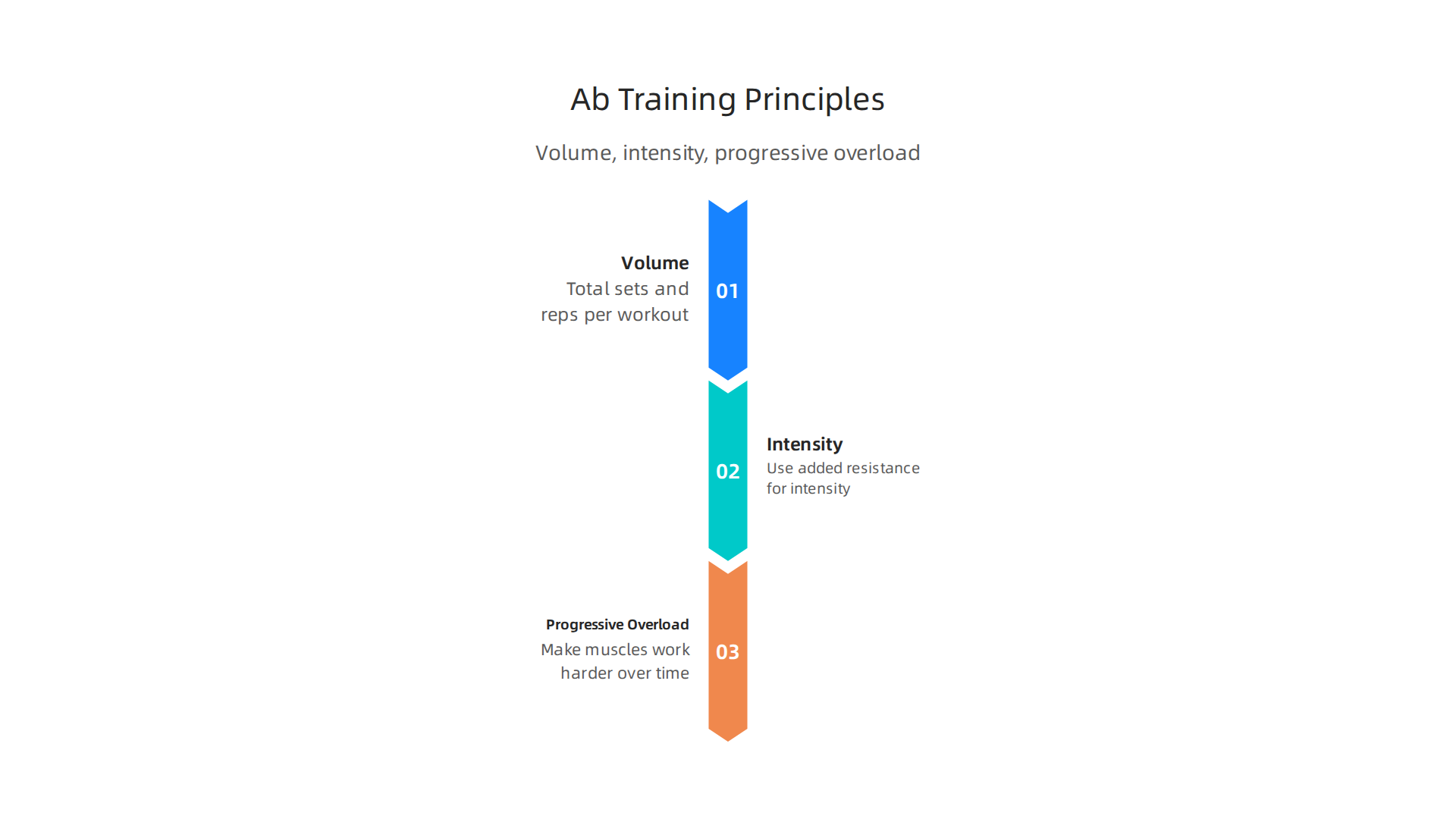
Without some form of progression, your abs will never get a reason to get stronger or more defined.
Let us talk volume. Volume is the total amount of work you do. It is usually measured as sets times reps. Current research suggests that doing 10 to 20 sets per muscle group per week is a good target for growth. For your abs, that might look like 3 sets of an exercise, 3 times per week. That puts you at 9 sets. If you want more, add one more exercise. A solid ab workout for beginners might start with 6 to 9 sets per week and slowly build from there.
Intensity is the other piece. With abs, intensity often means adding resistance. Bodyweight crunches can only do so much. Once you can do 15 to 20 reps with good form, it is time to add weight. Weighted exercises like cable crunches, plate V-ups, or barbell rollouts let you keep progressing. A study on best core exercises shows that adding load is necessary for continued gains.
But you cannot just add weight every single session. Your body needs time to adapt. That is where periodization comes in. You rotate your exercises, vary the rep ranges, and change the load every few weeks. This keeps your muscles guessing and lowers your chance of overuse injuries. For example, you could spend 4 weeks focusing on heavier cable crunches (6 to 8 reps), then switch to a phase of higher rep planks and leg raises (12 to 15 reps).
A smart plank workout for abs might be great for a while, but you need to progress it. Maybe add a plate on your back, or hold for longer. Or switch to a different variation entirely. The point is that staying with the same moves and same weight will stop your progress cold.
If you want a system that handles all of this for you, check out RepCore. They offer a science-backed approach to training that includes proper volume, intensity, and progression for every fitness level. It takes the guesswork out of building your ab workout routine and helps you see results faster.
Warm-Up: Activating the Core for Safe Training
Here is a mistake many people make. They walk into the gym and start hammering their abs with weighted crunches right away. That is a fast track to a pulled muscle or a strained lower back. A proper warm-up gets your nervous system ready and wakes up the deep stabilizers in your core. That way, every rep you do later is safer and more effective.
Spend 5 to 10 minutes on dynamic movements before you start your ab workout routine. Do not just do a few toe touches. Focus on exercises like dead bugs and bird dogs. These moves teach your brain to activate the transverse abdominis and other deep muscles that protect your spine. According to the comprehensive core training guide from Stronger by Science, gradual activation of these muscles helps prepare you for heavier loads and reduces injury risk.
You can also add a quick plank hold or a glute bridge to wake up the whole chain. The goal is to feel connected and ready, not tired. Keep the pace slow and controlled. If you are new to training, this warm-up step is even more important. It builds the mind-muscle connection you need for the harder moves later.
Want a warm-up that is built around the science of movement? Check out RepCore’s science-backed warm-up guides. They take the guesswork out of preparing your body for every workout.
Main Workout: The Evidence-Based Ab Exercise Selection
Your warm-up is done. Now it is time to pick the right exercises for your ab workout routine. The key is to choose moves that hit all three core functions: anti-extension, anti-rotation, and trunk flexion. If you only do crunches, you miss half the picture. Research shows that some common ab tools are not as good as you might think. For example, an ACE Fitness study found that the Ab Roller was "virtually no more effective than the traditional crunch," and the AB Rocker was "up to 80 percent less effective." So skip the gimmicks and stick with what works.
Here are the three categories you should include in any best core exercises plan:
- Anti-extension exercises: These teach your spine to stay neutral when pushed forward. Think planks, ab wheel rollouts, and hanging leg raises.

A study published in SciELO looked at muscle activation during isometric ab wheel exercises and found high engagement of the trunk stabilizers. That makes the ab wheel a top pick for building deep core strength.
- Anti-rotation exercises: These resist twisting forces. The Pallof press is the gold standard here. It trains your obliques and transverse abdominis to keep your torso stable when something tries to spin you.
- Flexor exercises: These are the classic moves that shorten your torso. Cable crunches and decline crunches fit here. An older EMG study from the Master’s Thesis archive compared different abdominal exercises and noted that the standard crunch still gets good activation when done correctly. But adding resistance with a cable makes it even better for lower ab workouts.
A solid plank workout for abs or ab wheel rollout covers anti-extension well. For flexion, cable crunches let you load progressively. For anti-rotation, the Pallof press is simple and very effective.
Here is a sample routine you can run three times per week. Do 2 to 4 sets of 8 to 15 reps per exercise. Focus on slow, controlled reps.
| Exercise | Category | Sets x Reps |
|---|---|---|
| Ab wheel rollout | Anti-extension | 3 x 8-12 |
| Cable crunch | Flexion | 3 x 10-15 |
| Pallof press (each side) | Anti-rotation | 3 x 10-12 per side |
| Hanging leg raise | Anti-extension + flexor | 3 x 8-12 |
This structure works for an ab workout for beginners and advanced lifters alike. Beginners should start with bodyweight versions (like knee rollouts instead of full ab wheel) and add weight slowly.
Want to know which tools and gear actually stand up to the science? RepCore reviews and recommends equipment based on real evidence.
Progression: How to Keep Gaining Strength and Size
A solid ab workout routine is only half the story. To keep seeing results month after month, you must follow the principle of progressive overload. This means slowly making your workouts harder over time. Without it, your muscles adapt and stop growing.
Here is how to apply progressive overload to your core training.
1. Increase resistance or leverage every 2 to 4 weeks.
For weighted moves like cable crunches or ab wheel rollouts, add 5 to 10 pounds when the current weight feels easy. If you are doing bodyweight moves like planks, make them harder by extending your arms farther forward or using a stability ball. Adding weight is a proven way to build a stronger core, as Men’s Health explains.
2. Progress from bodyweight to full range of motion with added load.
If you are new, start with simpler versions. For example, do knee ab wheel rollouts before full standing rollouts. Once you can do clean reps, move to the full version. Then add a weighted vest or hold a dumbbell between your feet for hanging leg raises. This approach works for ab workout for beginners and advanced lifters alike.
3. Track your workouts to apply systematic overload.
Use a notebook or app to log sets, reps, and weight. Research suggests that 10 to 20 sets per muscle group per week is optimal for growth. If you do 3 sets of 3 exercises, that is 9 total sets. Slowly increase volume by adding one more set per exercise over a few weeks. For a plank workout for abs, you might track plank hold time and add 5 seconds each session.
Here is a real world example: Start with knee rollouts for 3×8. After two weeks, go to full ab wheel rollouts. After another two weeks, add a light weight vest or use a resistance band. This keeps tension high and prevents plateauing.
A great tool for progression is a weighted vest or dip belt. You can grab one that lets you add small plates for fine tuning. Check out this recommended option if you want to easily load up your lower ab workouts and anti-extension moves.
The key is patience. Pick one variable to increase each workout. Let your strength build slowly, and your core will respond with visible growth.
Nutrition and Recovery: The Missing Link for Visible Abs
You can have the strongest core on the planet. But if it is hidden under a layer of body fat, nobody will see it. That is why they say abs are made in the kitchen.

Even the best ab workout routine needs a solid nutrition plan to reveal your hard work. Here is the truth: visible abs require a body fat percentage of around 10 to 15 percent for men and 18 to 22 percent for women, according to FitCommit. Everyone stores fat differently. If you hold most of your fat in your belly, your lower ab workouts will stay hidden until you drop your overall body fat.
How to eat for visible abs.
You do not need to starve yourself. You just need a moderate calorie deficit. This means burning more calories than you eat. As Maxinutrition explains, cutting calories too much can backfire and slow your metabolism.
Focus on these three nutrition pillars:
- Protein: Aim for 1.6 to 2.2 grams per kilogram of body weight. Protein keeps you full and repairs muscle after an ab workout for beginners or a heavy lifting session. Good sources include lean meats, tofu, eggs, and nuts. Medical News Today highlights that no single food burns belly fat, but a balanced diet helps.
- Fiber rich carbs: Vegetables, whole grains, and fruits keep your digestion smooth and energy levels high.
- Healthy fats: Avocado, olive oil, and fatty fish support hormone function, which helps with fat loss.
A structured plank workout for abs paired with these nutrition habits will start moving the needle fast. For a complete breakdown of what to eat and avoid, Healthline has a great guide on the best diet for abs.

Do not skip recovery.
Here is something many people get wrong. Your muscles do not grow in the gym. They grow while you rest. Getting 7 to 9 hours of sleep helps lower cortisol. High cortisol makes your body hold onto belly fat. Staying hydrated also helps with recovery and performance.
If you want to speed up results, consistent best core exercises combined with a targeted recovery plan is your winning formula.
Your next step
Putting this all together can feel like a lot of guesswork. You want to know exactly what to eat and what supplements to use for recovery. You also want to avoid wasting money on junk.
Grab this tailored nutrition and recovery toolkit to make your diet simple and effective. It covers meal timing, protein targets, and recovery habits that work alongside your ab workout routine so you can finally reveal the abs you have been working for.
Recovery Protocols: Muscle Repair and Hormonal Optimization
You finish your ab workout routine and feel that good burn. But what happens next matters just as much as the exercises themselves. Your abs are muscles, and like any other muscle, they need time to repair and get stronger.
Let your abs rest for at least 48 hours between hard sessions. If you push through a tough plank workout for abs on Monday, give your core a break until Wednesday. Muscles grow when you rest, not when you train. Training the same muscles too often can slow your progress and increase your risk of injury.
Active recovery can help. Light activities like walking, gentle stretching, or using a foam roller improve blood flow to the muscles. Better blood flow means less soreness and faster repair.

You do not have to stay on the couch. Moving a little on your rest days helps.
Sleep and stress control are secret weapons. High stress raises cortisol, a hormone that makes it harder to lose belly fat and recover well. Getting 7 to 9 hours of good sleep every night helps balance your hormones and supports better results from any ab workout for beginners or advanced plan. In fact, poor sleep can undo some of your hard work.
If you want to make recovery easier, having the right tools can speed things up. Whether you need a quality foam roller or a sleep aid, using science backed products makes a difference. Check out this recovery toolkit from RepCore to find trusted gear and nutrition plans that support muscle repair and hormonal balance. Combine smart recovery with your best core exercises, and you will see faster, more visible progress.
Ab Training Tools and Equipment: What Science Says
You have been following your ab workout routine and recovering well. Maybe now you are wondering if using tools or equipment can speed up your results. The short answer is yes, but only if you pick the right ones.
Not every gadget on the market actually helps. Science has looked closely at many popular ab devices, and the findings might surprise you. For example, one classic study found that the Ab Roller was no more effective than a basic crunch. And the AB Rocker? It was shown to be up to 80 percent less effective.

That is a lot of wasted effort and money.
So what does work? Tools that let you add resistance and increase your range of motion. Think about an ab wheel. Research shows it can activate your deep core muscles and shoulder stabilizers very well. Cables and benches also let you do exercises that target your whole core, not just the front. These tools allow you to practice progressive overload, which means you keep making your muscles work harder over time.
Here is a quick look at what science says about some common tools:
| Tool | How Effective? | Why |
|---|---|---|
| Ab Wheel | High | Great for full core activation and stability. |
| Cables & Pulleys | High | Allow varied angles and constant tension. |
| Benches (decline) | Medium to High | Increase range of motion for crunches. |
| Ab Roller | Low | No better than a regular crunch. |
| AB Rocker | Very Low | Up to 80% less effective than a crunch. |
You get the idea. Focus your energy and money on tools that challenge your core in multiple ways. If you are starting with an ab workout for beginners, a simple ab wheel can be a smart first purchase. Over time, you can add cables or a bench as you need more resistance.
The key is to build a small collection of smart tools that support your training, not clutter your home. If you want to find quality equipment that science backs, check out trusted recommendations for ab training tools. Combine the right gear with the best core exercises and a solid plank workout for abs, and you will build a stronger, more defined midsection without the guesswork.
Conclusion: Build Your Best Core with Science
You now have everything you need for a strong core. Effective ab training starts with understanding your anatomy, like how your deep transversus abdominis helps stabilize your back. It also means letting go of myths and applying progressive overload. Good nutrition and smart tool choices round out the plan.
Trust the process. When you consistently use these evidence-based principles, you get visible, lasting results. Start with your ab workout routine from this guide. Track your progress and adjust as you go. If you are new, try an ab workout for beginners first. Make sure your plan includes lower ab workouts that target the lower rectus abdominis as shown in recent research. Add a plank workout for abs and the best core exercises for full core engagement. Use tools like an ab wheel or cables to keep challenging your muscles.
For more trusted product recommendations and science-backed guides, check out expert advice at RepCore. They turn complex research into simple steps you can use right away.
Train smart, stay patient, and your core will thank you.
Summary
This article delivers a science-backed guide to building a stronger, more functional core by explaining what the core actually is, why deep muscles like the transversus abdominis matter, and which exercises target each layer. It debunks common myths—spot reduction, endless high reps, and daily ab training—and lays out practical training principles: proper warm-up, exercise selection across anti-extension/anti-rotation/flexion, and progressive overload. You’ll find recommendations for sets, reps, and weekly volume, guidance on when to add resistance, and recovery and nutrition rules to reveal visible abs. The piece also evaluates common ab tools and gives a sample routine you can use at home or in the gym, so readers finish ready to train smarter, avoid injury, and get measurable results.






Get practical training, recovery, and nutrition insights in your inbox