
Creatine Pills vs Powder The Real Differences in Absorption Convenience and Cost

Introduction
You are standing in the supplement aisle, staring at two options: creatine pills and creatine powder. Both claim to boost your performance. Both promise results. So which one should you choose?

It is a common dilemma, and the answer is not always clear.
Marketing messages can make this decision harder. Some brands push pills as the ultimate convenience. Others swear by powder for better absorption. But behind the hype, what does the evidence actually show?
That is exactly what this article will help you figure out. Our goal is simple: cut through the noise and compare creatine pills vs powder based on real science. We will look at how your body uses each form, what the research says about effectiveness, and how to pick the option that fits your lifestyle.
The science behind creatine is well established. According to the Creatine 101 guide, creatine helps your muscles produce more energy during heavy lifting and high intensity exercise. But when it comes to the best delivery method, things get trickier. Not all creatine supplements are created equal.
We also know that trust is a big issue in the fitness world. Conflicting claims leave many people unsure who to believe. Our approach is to stick with peer-reviewed research and practical experience. We will give you the facts you need to make a smart choice. And if you want to dive deeper into what makes a high quality product, check out our guide on best quality creatine testing and purity standards.
Let us get started.
The Science Behind Creatine Supplementation
To really understand the creatine pills vs powder debate, you first need to know what creatine actually does inside your body. At its simplest, creatine is a natural compound your body makes and also gets from food like red meat and fish. But when you take a creatine supplement, things get interesting.
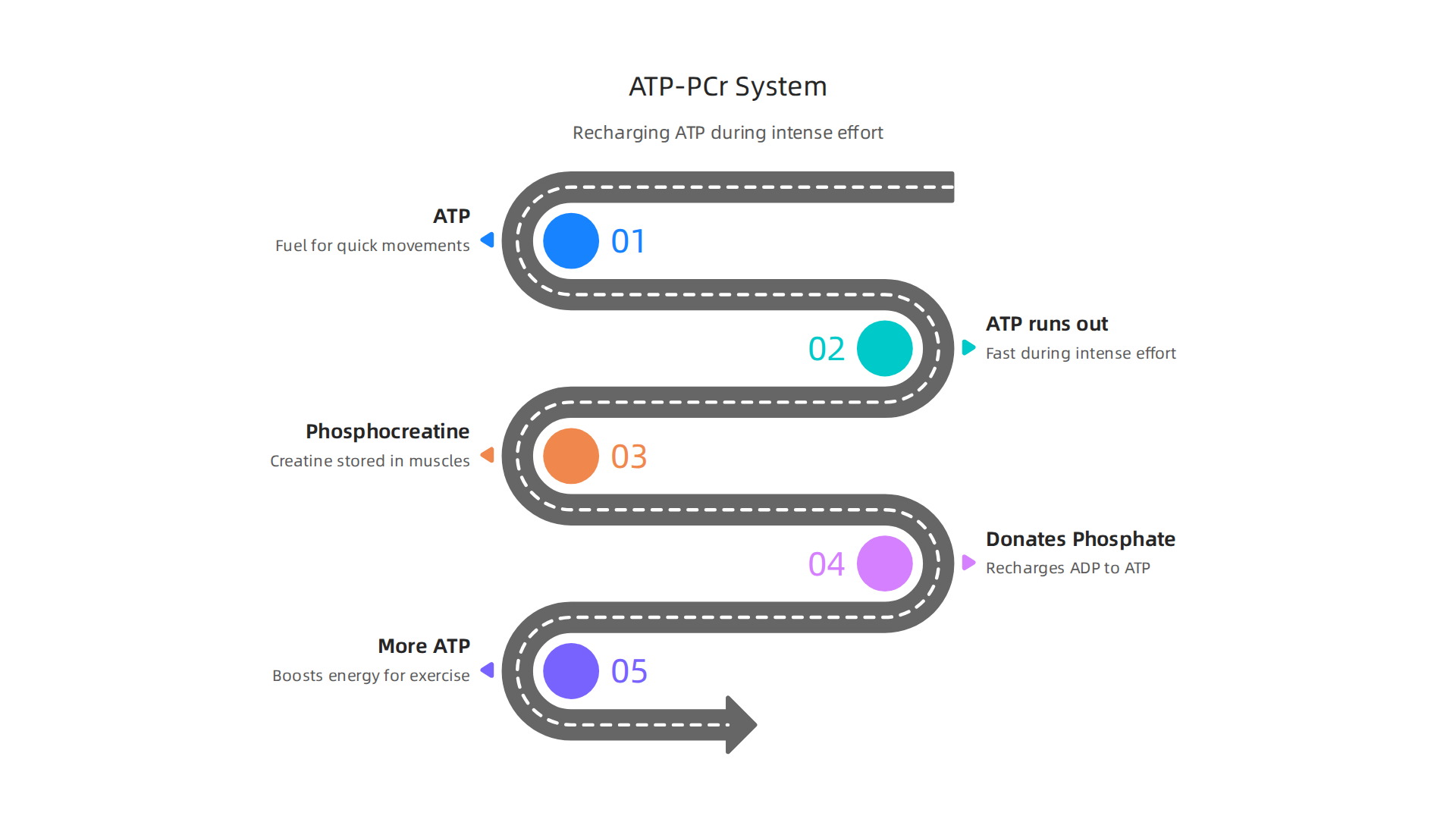
Your muscles use a molecule called ATP for quick, powerful movements. The problem? ATP runs out fast, usually within a few seconds of intense effort. That is where creatine steps in. Your body stores creatine as phosphocreatine, and when you lift, sprint, or push hard, that stored creatine donates a phosphate to turn used-up ATP back into fresh energy.
Think of it like a battery pack that recharges your muscles instantly.
This process is called the ATP-PCr system. It is why creatine helps you grind out one more rep or explode through a sprint.

According to the Creatine – Wikipedia page, its phosphorylated form directly donates phosphate groups to ADP, turning it back into ATP. This energy boost is especially useful for high intensity exercise lasting less than 30 seconds.
Decades of research back this up. Scientists have studied creatine since the early 20th century, and thousands of peer reviewed studies confirm it is both safe and effective. A 2018 review in the Journal of the International Society of Sports Nutrition ranked creatine monohydrate as the most effective supplement for increasing high intensity exercise capacity and muscle mass during training. That is a big deal. And when we talk about creatine monohydrate, we mean the classic, well tested form that has been used by athletes for years. It is the gold standard.
Creatine benefits are not just about energy production. Research shows it also helps with muscle protein synthesis, cell signaling, and even recovery. But the core science stays the same: more creatine in your muscles means more available energy for explosive work.
If you want to compare creatine head to head with other pre workout ingredients, check out our detailed breakdown of creatine vs pre workout which one you actually need for strength and energy. It will help you see where creatine fits in your overall supplement stack.
Now that you understand the science, we can look at how the delivery method changes things. Pills and powder both aim to get creatine into your system, but the way your body absorbs them might be different. Let us get into that next.
Creatine Pills vs Powder: A Detailed Comparison
Now that you know how creatine works, the big question is: should you buy pills or powder? Both forms deliver the same creatine monohydrate to your muscles. The difference comes down to three things: absorption, convenience, and cost.
Let us break each one down so you can decide what fits your life.
Absorption: Does it really matter how fast you digest it?
Creatine powder dissolves in liquid before you drink it. That means your body can start absorbing it right away. Pills, on the other hand, have to break down in your stomach first. The coating and capsule slow things down. According to a detailed comparison on creatine pills vs powder, powder typically absorbs faster because it is already dissolved. But here is the thing: how fast you absorb a single dose probably does not change your results. Creatine works by building up in your muscles over days and weeks, not minutes. A consistent daily dose matters far more than whether you took a pill or powder that morning. So do not stress over absorption speed. Focus on taking your creatine every day.
Convenience: Which one fits your daily routine?
This is where the tradeoff really shows. Pills are incredibly easy. You toss a few in your mouth, swallow them with water, and you are done. No mixing, no shaking, no cleanup. Perfect for tossing in your gym bag or taking at your desk. Powder requires a shaker bottle, some liquid, and a quick stir. It takes maybe thirty seconds. But you also need to bring your container and scoop with you. For some people that is no big deal. For others it is a hassle they will skip. If you know you will skip taking creatine because powder feels like work, pills might be the better choice.
Cost: Powder wins on price every time
If you want to save money, go with powder. Creatine powder costs less per serving than pills. You can buy a large tub that lasts months for a fraction of the price of an equivalent pill supply. Pills cost more because of the extra manufacturing, packaging, and the sheer number of capsules you need. A standard serving of creatine is five grams. That means you might need four or five pills to get the same amount you get from one scoop of powder. Over a month, that adds up fast.
So which one should you pick? It really comes down to your priorities. If you value convenience above all and have the budget, try pills. If you want the best value and do not mind a quick mix, stick with powder. Both will help you build strength and recover better. The best creatine supplement is the one you actually take.
For a deeper look at what to look for in a creatine product, check out our guide on how to find the best quality creatine.
Absorption and Bioavailability
So how does your body actually handle creatine pills vs powder? It comes down to how fast each form gets broken down and absorbed.
Creatine powder dissolves in water or juice before you drink it. That means your digestive system can start absorbing it right away. With pills, your stomach acids have to break down the capsule or tablet first before the creatine is released. According to Creatine Pills vs. Powder: Which Is Right for You? – Health, your body absorbs creatine faster from powder than from pills. The difference is small but real.
Here is the thing though. Does faster absorption actually change your results? Not really. Creatine monohydrate does not work like a pre-workout stimulant. It does not give you an instant boost. Instead, it builds up in your muscle cells over days and weeks. This is called saturation. Whether you take powder or pills, the total amount of creatine your muscles hold onto stays the same. The overall bioavailability is nearly identical either way.
What really matters is consistency. Taking your creatine every single day is far more important than a few minutes of absorption speed. If you take it daily, your muscles will reach full saturation regardless of the form you choose.
If you want to learn more about what makes a quality creatine product, check out our Sam’s Club creatine review for purity and value. It is a practical look at what you get for your money.
Dosage and Convenience
When comparing creatine pills vs powder on a daily basis, convenience and control are what really set them apart.
Creatine pills give you a pre-measured dose every single time. No scooping, mixing, or cleanup. Just swallow a few capsules with water and you are done. That makes them ideal for travel. You can toss a bottle in your gym bag or suitcase without worrying about spills or tracking down a shaker cup. Pills also have no taste or gritty texture. They go down smoothly every time.
Powder works differently. You measure your own serving, mix it into water or a shake, and drink it. That extra step may feel like a hassle, but it gives you more control. Need a half scoop for a lighter dose? Want to bump up your intake during a loading phase? Powder lets you adjust your creatine monohydrate supplement exactly how you want. That flexibility matters if you are changing your dose based on body weight or cycling your intake.
Taste and texture are worth thinking about too. Some creatine powders can feel gritty or have a mild flavor, especially if you do not mix them well. Pills are tasteless and smooth. If texture bothers you, pills might be the simpler pick.
Cost is another factor. As one detailed guide on Creatine Pills vs. Powder: Which is the Best Option for You? points out, powder is more economical per serving. Pills cost more because of the extra manufacturing and packaging steps.
So think about your lifestyle. If you want grab-and-go simplicity, pills win. If you want dosing flexibility and better value, powder is the smarter choice.
If you are still deciding between supplement forms, our creatine vs pre-workout comparison can help you figure out what fits your routine best.
Cost Analysis
When comparing creatine pills vs powder, the price gap is hard to miss. Powder is almost always cheaper per serving. That is because turning creatine into capsules or tablets requires extra manufacturing and packaging. You pay a premium for that convenience.
A detailed breakdown on Creatine Pills vs. Powder confirms that powder is the more cost-friendly option. Buying in bulk gives you more product for your money. Pills cost more because they are not sold in bulk quantities.
Let us look at real numbers. A standard 5-gram serving of creatine powder costs between $0.15 and $0.30. The same dose in pill form often costs $0.50 or more. That difference adds up quickly. If you take a creatine monohydrate supplement every day, you could save $30 to $60 each month by sticking with powder.
Over a full year, those savings become significant. For anyone serious about muscle growth and recovery, choosing the best creatine supplement for your budget matters. Powder gives you the best value for consistent daily use.
If you want a trusted option that balances purity and price, check out our Sam’s Club Creatine: A Quality, Purity, and Value Review. We look at exactly what you get for your money.
What Does the Evidence Say About Efficacy?
Now that we have looked at the price difference, you might ask: does one form actually work better than the other? The short answer is no. When it comes to results, creatine pills vs powder are nearly identical.
Most scientific studies on creatine use powder. That is because it is easier to measure and cheaper for large trials. But experts agree the findings apply to pills too. The key factor is total creatine intake, not the form you choose.
The International Society of Sports Nutrition (ISSN) has reviewed decades of research. Their official position is clear. In their International Society of Sports Nutrition position stand, they state that creatine monohydrate is the most effective supplement for improving high-intensity exercise performance and lean body mass. That conclusion comes from studies that almost all used powder. Yet the same benefits happen when you take the same amount in pill form.
A straightforward comparison by NDL Pro Health confirms this. Their guide on Creatine Pills vs. Powder: Which is the Best Option for You? says both formats are equally effective. It notes that both improve physical performance, increase muscle mass, and speed up recovery. There is no winner between the two.
What about absorption speed? Some people worry that pills break down slower in the stomach. Research from Life Extension on Creatine Capsules vs. Powder: Which Is Better? explains that both forms go through the same digestion process. Powder may absorb slightly faster, but the difference is too small to matter for results.
In 2025, a study from the University of New South Wales tested this from another angle. Researchers found that taking 5 grams of creatine per day did not give extra muscle gain beyond resistance training alone. They suggested people might need more than the standard dose to see added benefits. This reinforces the main point: total creatine dose is what drives results, not whether you take pills or powder.
So if you want to build strength and power with a creatine monohydrate supplement, both forms will work. The choice is really about convenience and budget. If you are curious how creatine fits into your overall supplement stack, read our breakdown of creatine vs pre-workout. It helps you see which one matches your needs.
Practical Considerations for Everyday Athletes
So you know both forms work. Now let’s talk real life. Your creatine pills vs powder decision comes down to how you actually live, train, and eat.
Think about travel. If you are going on a weekend trip, do you really want to carry a tub of powder? Probably not. Pills are much easier to pack.

You just throw a bottle in your duffel bag and go. Powder takes up more space and you need a shaker cup. This is one area where pills win for convenience.
Now think about your gym bag. Powder can leak. Even with a good container, a spilled scoop of creatine powder is a mess you do not want to clean up. Pills are sealed tight. No mess, no fuss. Many everyday athletes prefer pills for this reason alone.
Then there is meal prep and mixing. Powder works great if you already make protein shakes or smoothies. You just stir it in. But if you do not like the taste or texture of creatine powder, you might skip doses. Pills are tasteless and easy to swallow. You just take them with water.
One more thing about powder: if you do not mix it well, you might get stomach discomfort. Some people report bloating or gas from powder when it clumps together. A guide from Health explains that creatine pills and powder differ in convenience and absorption, and that mixing issues can affect how you feel. Pills bypass this completely.
Here is the bottom line: the best creatine supplement is the one you actually take every day. Consistency matters more than form. If you travel a lot or hate mixing, go with pills. If you already make shakes and want to save money, stick with powder.
If you want to know more about finding a quality product that fits your lifestyle, check out our review of Sam’s Club creatine. It helps you see if a budget-friendly powder option is worth your time.
How to Choose the Right Form for Your Goals
Your fitness goals should guide your creatine pills vs powder choice more than anything else. Here is how to match each form to what you are working toward.
Bulking: If adding mass is your main priority, creatine powder is the better value. You get more servings for your money, and you can easily adjust your dose up or down. Most people focused on bulk already make protein shakes, so stirring powder in does not feel like extra work.
Aesthetics: If your goal is a lean, defined look, both forms work the same. What really matters is taking it every single day. Missing doses slows your results far more than the form you pick.
Convenience: If you just want something simple, pills are hard to beat. No scooping, no shaking, no cleanup. Just swallow and go. An article on creatine pills vs powder decision factors notes that pills are ideal if you value ease and want to avoid preparation entirely.
What about Vegans and Sensitive Stomachs?
For vegans, creatine monohydrate supplement makes a lot of sense since plant-based diets provide almost no creatine from food. Both pills and powder work well. Just check for a vegan label.
For people with sensitive stomachs, pills often work better. Powder can cause bloating if it does not dissolve fully. But both forms absorb the same way once they reach your system. A guide on creatine capsules vs powder absorption confirms the speed difference is small, so choose what your stomach handles best.
A Simple Decision Framework
Here is how to decide in 30 seconds:
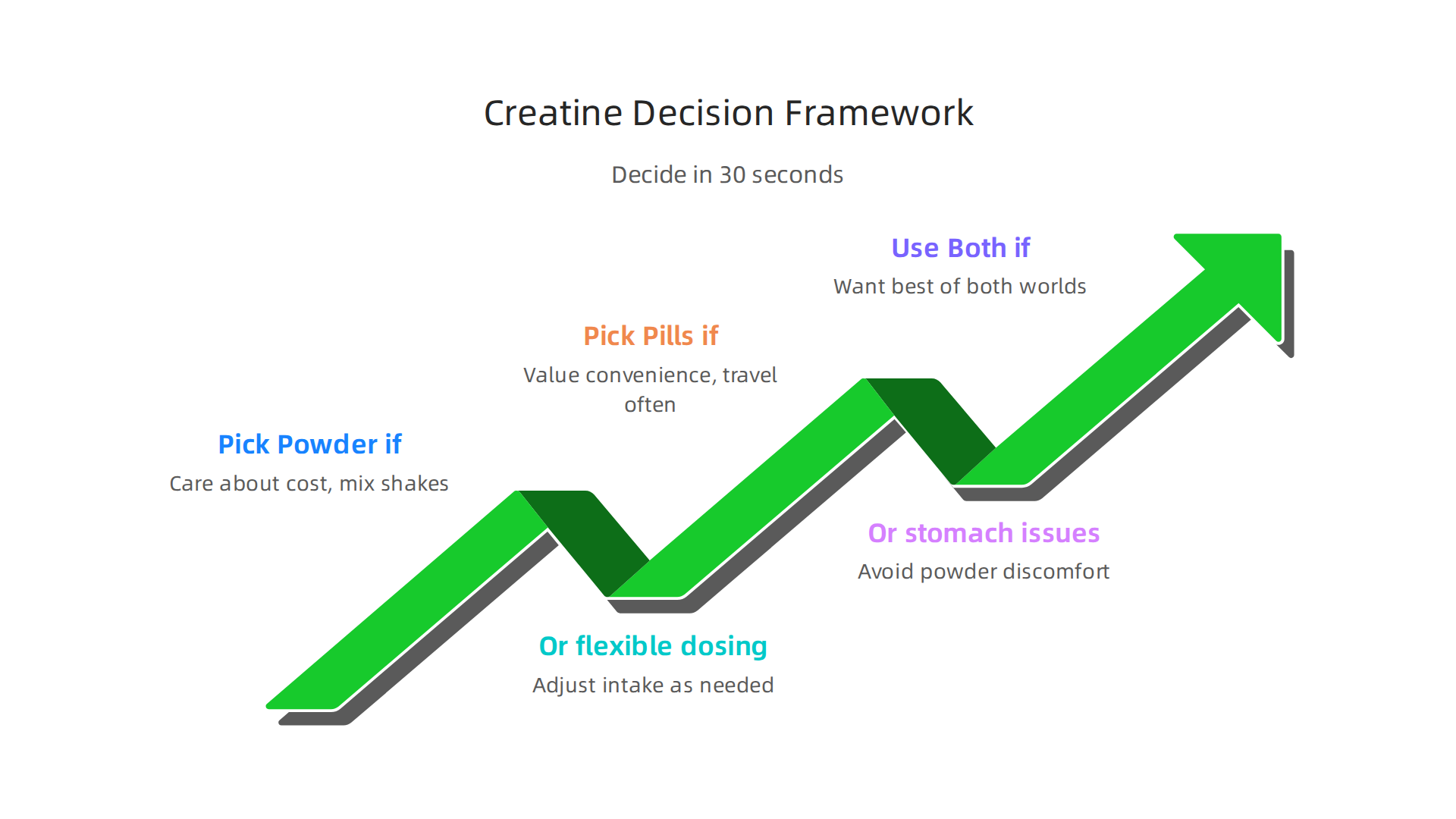
- Pick powder if you care about cost, already mix shakes, or want flexible dosing.
- Pick pills if you value convenience, travel often, or get stomach issues from powder.
- Use both if you want the best of both worlds. Keep powder at home and pills in your gym bag.
If you want to compare creatine with other options for energy, our guide on creatine vs pre-workout helps you see which supplement fits your routine best.
The creatine pills vs powder choice comes down to your goals, your schedule, and your stomach. Pick the form that fits all three and stick with it every day. That consistency is what actually gets you results.
Expert Recommendations and Best Practices
Now that you have picked your form, let us talk about how to use it right. Even the best creatine supplements for muscle growth will not work if you do not take them correctly.
Loading vs. Maintenance: Which Protocol Works Best?
You have two main ways to start your creatine pills vs powder journey. A loading phase means taking 20 grams of creatine powder or pills daily for about one week. That is four 5 gram servings spread out through the day. After that, you drop to a 3 to 5 gram maintenance dose.
The other option is to skip the loading phase entirely. Just take 3 to 5 grams every day from the start. It takes about 28 days for your muscles to fully saturate this way. An article on creatine pills vs powder protocols explains that loading helps you see results sooner, but it is not required for long term gains.
Both routes work. What matters most is picking one and sticking with it. If you want a clean, effective option, check out a creatine monohydrate supplement that fits your budget.
When Should You Take It?
Timing is not as critical as most people think. Some research suggests taking creatine after your workout is slightly better. But the real secret is consistency. Take it at the same time every day. Pair it with a meal or a habit you already have. This makes sure you do not forget. Many people find mixing creatine into their post workout shake helps them remember.
Is Creatine Safe Long Term? Do You Need to Cycle?
Creatine is one of the most studied supplements in the world. Research shows it is safe to use for years. You do not need to cycle off it. Your body produces creatine naturally, and supplementing just raises your levels. Just make sure you drink enough water throughout the day. A guide on creatine safety and long term use confirms that cycling is not necessary for most people. This applies to both forms of the best creatine supplement.
Stacking Creatine with Other Supplements
Creatine works well with other supplements. Taking it with protein and carbs may help your muscles absorb it faster. Many people mix their creatine powder into a post workout shake or their morning oatmeal. This makes it easy to stay consistent. You can also stack it with a pre workout for an extra energy boost. If you are looking for something to pair with your creatine, our guide on pre workout timing and stacking can help you build a solid routine.
When you combine these best practices with the form you chose in the previous section, you set yourself up for real, lasting results.
Debunking Common Myths About Creatine
You have probably heard some scary things about creatine over the years. Let us clear up the most common myths so you can feel confident about your choice between creatine pills vs powder.

Myth 1: Creatine Damages Your Kidneys
This is the biggest myth out there. The truth is that decades of high quality research show creatine is safe for healthy people. A comprehensive review found that supplementation does not harm kidney function even with doses up to 20 grams per day for several years. An article on settling the creatine safety debate explains that when researchers use accurate kidney markers, everything stays normal.
Why does this myth stick around? Because serum creatinine (a marker in your blood) can rise when you take creatine. But that increase comes from creatine breaking down inside your body, not from kidney damage. The Mayo Clinic confirms that creatine does not affect kidney function in healthy people when taken at recommended doses. If you have existing kidney issues, check with your doctor first. For everyone else, your kidneys are fine.
Myth 2: Creatine Causes Dehydration and Cramping
This one sounds reasonable but is not backed by science. Studies done in hot conditions with heavy sweating show that creatine users are no more likely to cramp or get dehydrated than anyone else. A short review of common safety concerns found that creatine may actually reduce muscle cramps and help with body temperature control. Some research even suggests creatine helps you hold onto fluids better during early dehydration. So drink water as you normally would, but do not worry about extra risks.
Myth 3: One Form Is Better Than the Other
Here is where the creatine pills vs powder debate gets simple. Both forms work. Both deliver the same creatine monohydrate to your muscles over time. The difference comes down to convenience and cost. Creatine powder is usually cheaper per serving but takes a few seconds to mix. Pills cost more but are easy to throw in your bag. Neither is the best creatine supplement for everyone. Pick the form you will actually take every day.
If you are still deciding between forms, our guide on creatine vs pre workout can help you build the right routine for your goals.
Conclusion: Making an Informed Choice
So here is where the creatine pills vs powder debate ends. Both forms deliver the same creatine monohydrate supplement to your muscles. Both work. The best creatine supplement for you is the one you will actually take every day.
Your choice really comes down to personal priorities. Creatine powder is usually cheaper per serving. You just mix it with water or your shake. Creatine pills cost more but are super easy to take on the go. No mixing, no mess. If you travel a lot or hate the texture of powder drinks, pills might win. If you want the best value and do not mind a quick stir, powder is your friend.
Either way, pick a high quality brand. Check the label for pure creatine monohydrate. Look for products that go through third party testing. This ensures you get what the label says without unwanted extras. Science consistently shows that creatine is safe and effective for healthy people. A systematic review on the effect of creatine on kidney function confirms that it does not harm kidney health when used at standard doses.
If you want more help finding a clean product, check out our guide on choosing a high quality creatine supplement. It breaks down what to look for on the label.
Remember, the research is clear. Creatine monohydrate is one of the most studied and safest supplements available. Do not let the myths hold you back. Pick the form that fits your lifestyle, stick with it daily, and let your training do the rest.
Summary
This article cuts through marketing noise to compare creatine pills and powder using the best available science and practical experience. It explains how creatine works in the ATP-PCr system, reviews decades of research confirming creatine monohydrate’s safety and effectiveness, and walks through differences in absorption, convenience, and cost between pills and powder. You will learn that both forms deliver the same long-term benefits as long as you take consistent daily doses, while powder generally offers better value and pills offer superior portability and simplicity. The guide also covers dosing strategies (loading vs maintenance), timing and stacking with other supplements, common myths about kidney damage and dehydration, and a quick framework to pick the right form for your lifestyle and goals. After reading, you’ll be able to choose the creatine form that fits your routine and follow best practices for safe, effective use.





Get practical training, recovery, and nutrition insights in your inbox