
Aerobic vs Weight Training for Fat Loss The Science Based Answer

Introduction
You have probably heard it a hundred times. Cardio is the only way to lose fat. Or maybe you have heard the opposite: lifting weights is what really melts fat away. The debate between aerobic vs weight training for fat loss has been going on for decades. And honestly, it leaves most people confused.

Here is the problem. Many folks spend months doing endless hours on the treadmill with little to show for it. Others lift heavy weights without seeing the body composition changes they want. Both groups waste time because they do not understand what is really happening inside their bodies.
The truth is more interesting than either side will tell you. When you exercise, your body shifts from burning carbohydrates to burning fat for fuel over time. This is something scientists have studied closely through metabolic adaptations to exercise. Your body changes how it uses energy based on what you ask it to do.
So what actually works for weight lifting vs cardio for weight loss? The answer depends on more than just calories burned during your workout. It depends on how your metabolism responds after you finish exercising. And the research shows that both resistance training vs cardio for fat loss have their own unique strengths.
This article cuts through the noise by comparing the real evidence for both approaches. We will look at what science actually says about weight training vs cardio for weight loss and how each method affects your body differently. By the end, you will know exactly which approach or combination works best for your specific goals.
No more guessing. No more following outdated advice. Just clear, useful information based on real studies.
The Science of Fat Loss: Aerobic vs Weight Training
Before we compare the two approaches, let’s talk about the foundation of fat loss. At its simplest, losing body fat comes down to a calorie deficit. You need to burn more calories than you consume. But here is the thing. Not all calories are burned the same way during exercise. And not all exercise types leave the same lasting effect on your metabolism.
So what happens inside your body when you do aerobic exercise versus weight training? The answer shapes everything about your results.
How Aerobic Exercise Uses Fuel
When you walk, jog, or cycle at a steady pace, your body prefers to use fat as its main fuel source. This shift happens gradually during prolonged activity. Your body moves from burning carbohydrates to burning more fat for energy. This is driven by hormones that signal your muscles to start using stored fat.
Studies show that regular aerobic exercise improves your body’s ability to use fat for fuel, even at rest. Over time, your muscles get better at pulling fat from your bloodstream and using it for energy. That is a big win for aerobic exercise for weight loss.
But here is the catch. Aerobic exercise burns most of its calories during the workout itself. Once you stop moving, the extra calorie burn drops off quickly.
How Weight Training Changes Your Metabolism
Weight training works differently. While you are lifting, you burn mostly carbohydrates, not fat. Surprising, right? But the real magic happens later.
When you lift weights, you build lean muscle mass. Muscle tissue is metabolically active. That means it burns calories even when you are sitting still. The more muscle you have, the higher your resting metabolic rate. This is a key reason why resistance training vs cardio for fat loss often favors weights for long term changes.
One study found that a single session of vigorous resistance training can increase your resting metabolism for up to 72 hours. Think about that. You keep burning extra calories for three days after one workout. That is the power of building muscle.
The EPOC Effect: Why Weight Training Keeps Burning
EPOC stands for Excess Post-Exercise Oxygen Consumption. It is a fancy name for the calories your body burns after exercise to return to its normal state.
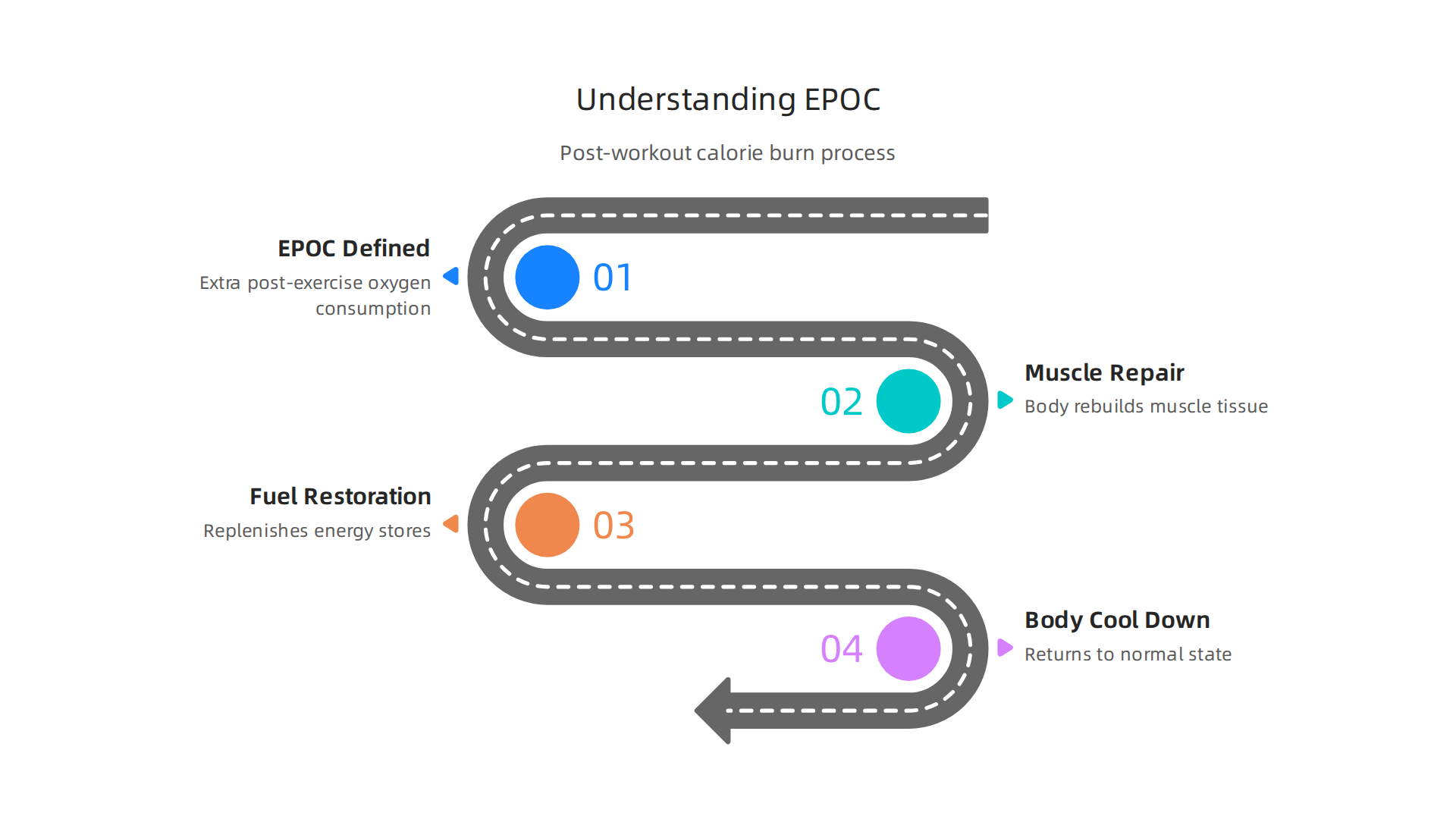
Your body needs extra oxygen to repair muscle tissue, restore fuel stores, and cool down.
Research comparing circuit style resistance training to high intensity interval training found that weight training produces a modest but prolonged elevation in post exercise metabolic rate. In plain English: when you lift weights, your body works harder to recover, and that costs calories.
Aerobic exercise, especially steady state cardio, produces a much smaller EPOC effect. Once you step off the treadmill, your metabolism returns to baseline quickly.
This is why many fitness experts prefer weight training vs cardio for weight loss when the goal is to keep burning calories long after you leave the gym.
Putting It All Together
Both methods create a calorie deficit. But they do it in different ways.
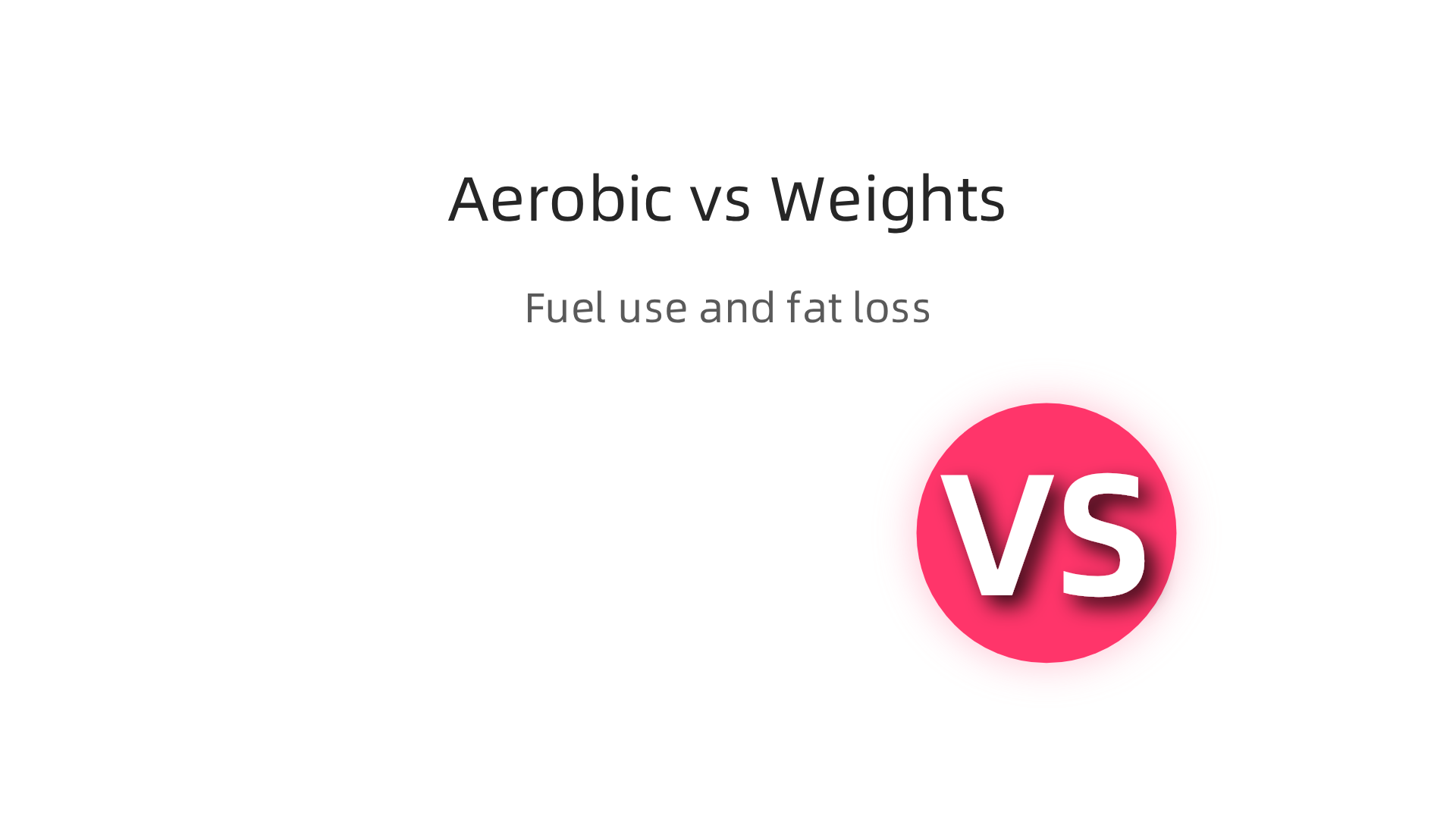
Aerobic exercise burns more fat during the workout. Weight training builds a metabolism boosting engine that burns more calories around the clock.
To get the best of both worlds, many people combine them. If you want to dive deeper into how weight training can specifically help you, check out this guide on strength training for runners.

It shows how resistance training complements endurance work.
And if you are looking for science backed supplements to support your fat loss and recovery, explore the vetted products and reviews available through RepCore.

These tools can help you get the most out of every workout.
Bottom line: when it comes to aerobic vs weight training for fat loss, the smartest approach uses both. But if you had to pick one for lasting metabolic benefits, the science leans heavily toward lifting weights.
What the Research Says: Head-to-Head Comparisons
The science we just covered is backed by real data. Researchers have run many head to head studies comparing aerobic exercise, weight training, and a mix of both.

The results are clear and helpful for anyone trying to decide where to focus their time.
Combined Training Wins for Overall Fat Loss
Multiple meta analyses (large studies that combine data from many smaller ones) show that doing both aerobic exercise and resistance training gives you the best results for losing body fat.

A 2025 systematic review compared resistance training alone, aerobic training alone, and concurrent training (both together). The researchers found that concurrent training led to the greatest reductions in body fat [1]. This matches what another big review from 2022 found: both resistance training alone and combined training can significantly lower fat mass [2].
So if your main goal is losing fat, a program that includes both running or cycling and lifting weights is your best bet. You get the calorie burn from cardio and the metabolism boost from muscle building.
Resistance Training Protects Your Muscle
Here is where things get interesting. Aerobic exercise alone can help you drop pounds fast. One study found that doing at least 150 minutes of aerobic activity per week led to significant reductions in waist size and body fat [3]. That sounds great. But there is a catch.
When you lose weight through diet and cardio only, you often lose muscle along with the fat. Losing muscle is bad news because it lowers your resting metabolism. That makes it harder to keep the weight off long term. Resistance training, on the other hand, helps you hold onto your muscle while you burn fat. A 2026 umbrella review of many studies concluded that resistance training improves body composition by reducing fat while preserving or even increasing lean mass [4].
This is a major advantage of weight lifting vs cardio for weight loss when you care about keeping your metabolism strong.
The Risk of Metabolic Slowdown
Aerobic only programs can sometimes backfire. When you lose muscle, your body burns fewer calories at rest. Your metabolism slows down. That means you might need to eat less and less to keep losing weight. It becomes a battle.
Weight training prevents that. It keeps your metabolic rate higher, even on rest days. That is why many experts lean toward resistance training vs cardio for fat loss when the goal is lasting change.
What This Means for You
The smartest approach uses both. If you want to get the most fat loss while keeping your muscle, combine your cardio sessions with two to three days of resistance work each week. And if you need gear to get started with weight training, check out this guide on dumbbells for strength training to build a simple home setup.

The research is clear. Do not pick sides. Use both aerobic and weight training to get the fat loss results that last.
[1] Comparison of concurrent, resistance, or aerobic training on body fat: meta analysis. (2025). https://pubmed.ncbi.nlm.nih.gov/40405489/
[2] Resistance training effectiveness on body composition. (2022). https://onlinelibrary.wiley.com/doi/10.1111/obr.13428
[3] Aerobic Exercise and Weight Loss in Adults: A Systematic Review. (2024). https://jamanetwork.com/journals/jamanetworkopen/fullarticle/2828487
[4] Impact of Resistance Training on Body Composition. (2026). https://waltersport.com/wp-content/uploads/2026/05/Obesity-Reviews-2026-Poon-Impact-of-Resistance-Training-on-Body-Composition-Physical-Fitness-and-Cardiometabolic.pdf
Practical Applications: Choosing the Right Exercise for Your Goals
So which one should you pick after looking at all the science? The answer depends on what matters most to you right now. Here is how to match the aerobic vs weight training for fat loss decision with your personal goals.
When Aerobic Exercise Is Your Best First Step
If your top priority is dropping pounds quickly and improving your heart health, aerobic training can give you fast results. A 2024 systematic review found that doing at least 150 minutes of cardio per week led to significant reductions in waist size and body fat [1]. For someone just starting out, walking, jogging, cycling, or swimming are easy to do without much gear.
But here is the catch. Cardio alone can cause muscle loss. If you only focus on aerobic exercise for weight loss, you might end up losing muscle along with the fat. That can slow down your metabolism over time. So if you go this route, plan to add some resistance work later. Even two days per week of simple bodyweight exercises or light dumbbell work can protect your muscle while you burn the fat.
When Weight Training Is Non-Negotiable
If your goal is long term body composition and a strong metabolism, weight lifting vs cardio for weight loss is not even a fair fight. Resistance training is your must have.
A 2026 umbrella review showed that resistance training reduces fat while preserving or even increasing lean mass [2]. That is huge. More muscle means you burn more calories at rest. And another study from 2022 found that resistance training alone can significantly reduce fat mass [3]. So you do not need to do hours of cardio to see results.
If you care about how your body looks and feels six months or a year from now, weight training is the non-negotiable piece. It keeps your furnace burning. For runners who want both speed and a toned physique, adding strength work is especially important. Check out this guide on strength training for runners to learn how to mix both without hurting your performance.
The Secret Ingredient: Adherence
Here is the truth that often gets ignored. The best exercise is the one you will actually do. Studies show that about 20 percent of people drop out of exercise programs within the first six months [4]. If you hate running, forcing yourself to run three times a week will not last. If you dread lifting weights, you will find excuses to skip.
So ask yourself: What do I enjoy? What fits my schedule? Do I like being outside or inside? Do I prefer group classes or solo sessions? Let those answers guide your choice. For some people, a mix of both keeps things interesting. For others, focusing on one type of training leads to better consistency.
A Simple Way to Decide
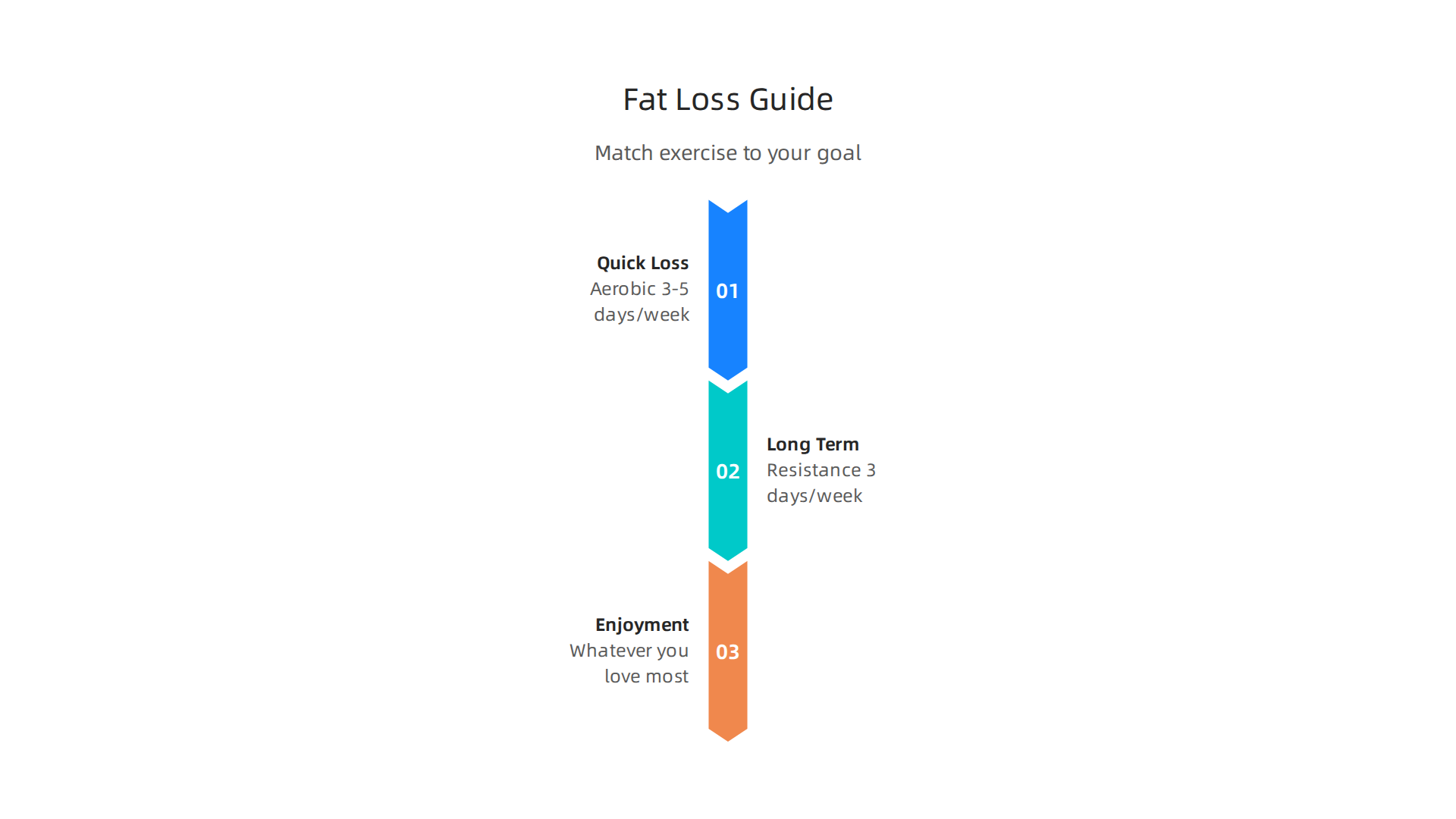
| If your goal is… | Start with… | Add later… |
|---|---|---|
| Quick weight loss and better heart health | Aerobic exercise 3 5 days per week | Resistance training 2 days per week |
| Long term body composition and metabolism | Resistance training 3 days per week | Light cardio 2 days per week for heart health |
| Enjoyment and consistency | Whatever you love most | A small dose of the other type |
The research on resistance training vs cardio for fat loss is clear. But the research on human behavior is even clearer. If you stick with it, you win. If you need gear to make your routine easier, consider this top rated starter equipment kit that can support both cardio and strength work at home.
Pick your path based on your priorities. Then stay consistent. That is the real winning formula.
[1] Aerobic Exercise and Weight Loss in Adults: A Systematic Review. (2024). https://jamanetwork.com/journals/jamanetworkopen/fullarticle/2828487
[2] Impact of Resistance Training on Body Composition. (2026). https://waltersport.com/wp-content/uploads/2026/05/Obesity-Reviews-2026-Poon-Impact-of-Resistance-Training-on-Body-Composition-Physical-Fitness-and-Cardiometabolic.pdf
[3] Resistance training effectiveness on body composition. (2022). https://onlinelibrary.wiley.com/doi/10.1111/obr.13428
[4] Determinants of Dropout from Exercise Interventions. (2022). https://pmc.ncbi.nlm.nih.gov/articles/PMC9165469/
The Synergy of Combining Aerobic and Weight Training
But what if you could get the best of both worlds? That is exactly what combined training, also called concurrent training, does. Instead of picking one side of the aerobic vs weight training for fat loss debate, you use both. And the science shows this is the smartest move for most people.
Why Combining Works Better
Here is the simple reason. Cardio burns a lot of calories during your workout. Weight training builds muscle that burns extra calories all day long. When you put them together, you get fast fat loss and long term metabolism protection.
A 2026 ACSM update on resistance training explains that for muscle growth, you want higher weekly volume with sets at a moderate load [1]. And the same ACSM guidelines recommend at least 150 minutes of moderate cardio per week for heart health [2]. Put those two pieces together and you have a full fat loss engine.
But there is a catch. Some research suggests that doing both types of training close together can reduce strength gains a little. This is called the interference effect. The good news is you can work around it.
How to Avoid the Interference Effect
The key is proper program design. The ACSM position stand on resistance training notes that the order of exercises matters [3]. If you do cardio before lifting, your legs may be too tired for heavy squats. But if you lift first or separate the sessions by at least six hours, the problem shrinks a lot.
Another smart trick is periodizing your intensity. On days you go heavy with weights, keep your cardio light, like a brisk walk or easy bike. On high cardio days, cut back on the weight volume. This way your body never gets overloaded.
Sample Weekly Plans to Get Started
Here are three simple schedules that fit different lifestyles. Pick the one that matches your routine best.
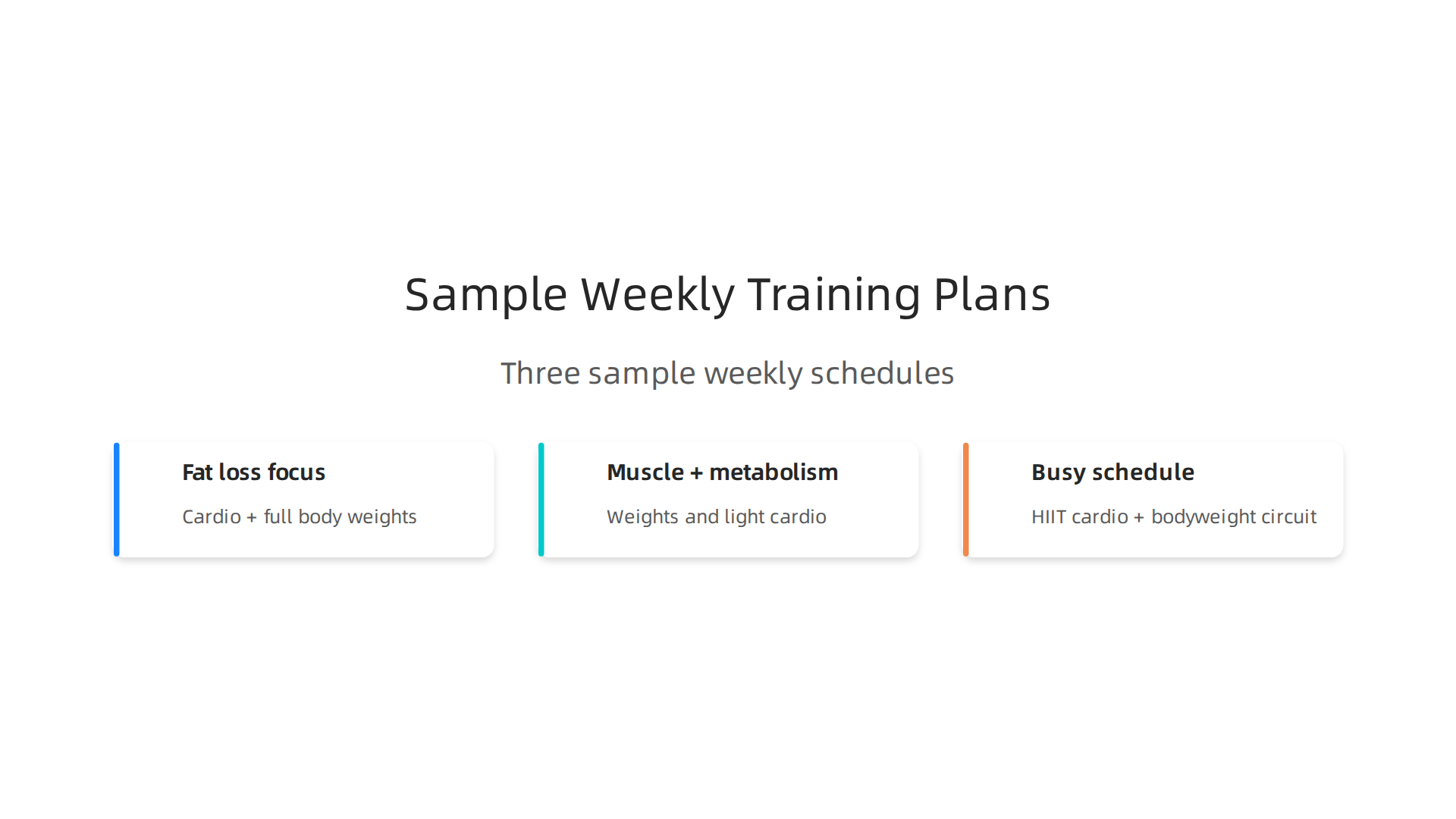
| Goal | Monday | Tuesday | Wednesday | Thursday | Friday | Saturday | Sunday |
|---|---|---|---|---|---|---|---|
| Fat loss focus | 30 min cardio + 20 min full body weights | 30 min cardio | 45 min weights (upper) | 30 min cardio | 30 min cardio + 20 min full body weights | 45 min moderate cardio or rest | Rest |
| Muscle + metabolism | 45 min weights (lower) | 20 min light cardio | 45 min weights (upper) | Rest | 45 min weights (full body) | 30 min cardio (moderate pace) | Rest |
| Busy schedule | 20 min HIIT cardio + 15 min bodyweight circuit | 30 min walk | 30 min dumbbell workout | 20 min HIIT cardio | 30 min full body weights | 45 min active recovery walk | Rest |
Notice that each plan includes both types of training but spreads them out. This reduces interference and helps you stick with it.
Practical Tips for Balanced Training
If you are new to combining both, start simple. Use the ACSM guideline of at least 150 minutes of moderate cardio and two days of resistance training each week [2]. For resistance, the 2026 ACSM position stand recommends lifting at least 80 percent of your one rep max for 2 to 3 sets per exercise to build strength [1]. But if you are focused on fat loss, a slightly lower load with more reps can work well.
To make your combined routine smoother, having the right gear helps. A set of dumbbells for strength training lets you do both types without a gym membership. If you want a full home setup, consider this versatile home gym equipment that supports both cardio and strength exercises.
One more thing. Adding supplements can support your recovery between sessions. For example, creatine helps you keep strength gains even when you are also doing cardio. Read our comparison on creatine vs pre workout to see which one fits your needs.
Combining aerobic and weight training is not about choosing one. It is about using both to get the lean, strong body you want without wasting time. Start with a simple schedule, listen to your body, and adjust as you go.
[1] ACSM Publishes Updated Resistance Training Guidelines. (2026). https://acsm.org/resistance-training-guidelines-update-2026/
[2] Physical Activity Guidelines. ACSM. https://acsm.org/education-resources/trending-topics-resources/physical-activity-guidelines/
[3] American College of Sports Medicine Position Stand. Resistance Training. (2026). https://pmc.ncbi.nlm.nih.gov/articles/PMC12965823/
Debunking Common Myths About Cardio and Weights
You have your plan from the last section on how to combine cardio and weights. But maybe old gym talk is still stuck in your head. You might wonder if you are doing it right. Let us clear up three common myths so you can feel confident in your routine.

Myth 1: ‘Weight Lifting vs Cardio for Weight Loss Is a Clear Winner’
Some people still say that aerobic exercise for weight loss is your only real option. They claim weight training does not burn fat at all.
But a 2025 review showed that resistance training alone significantly reduces fat mass [1]. Weight lifting builds muscle. More muscle means your body burns more calories even when you are resting. This is called a higher resting metabolism.
It is one of the main reasons the aerobic vs weight training for fat loss debate is misleading. Both are powerful tools for changing your body composition. If you want to start building muscle at home, having the right tools helps. A set of dumbbells for strength training can get the job done without needing a gym membership.
Myth 2: ‘Cardio Makes You Lose Hard Earned Muscle’
This fear stops a lot of serious lifters from doing any cardio at all. But moderate aerobic exercise is actually good for your muscle building goals. A strong heart and lungs pump blood and oxygen to your muscles faster. This means you recover quicker between heavy sets.
The research shows that muscle loss only happens when you do extreme volumes of exercise without eating enough protein and calories. For most active people, hitting 150 minutes of moderate cardio a week is healthy and completely safe for your muscle mass. Mass General Hospital says that a balanced program using both strength and cardio training supports fat loss better than doing cardio alone [2].
If you are a runner or a cardio lover, do not skip the weights. Learning about strength training for runners can help you get faster and stay injury free.
Myth 3: ‘The Fat Burning Zone Is the Best Way to Lose Weight’
You have probably seen the chart on the treadmill. It shows a "fat burning zone" at a low heart rate. This makes people believe that slow, steady state cardio is the best for losing fat. But this is only half the story.
Here is the catch. While your body uses a higher percentage of fat for fuel at lower intensities, total calories burned is what really drives weight loss. A 2021 study found that as long as total energy expenditure is equal, the type of exercise does not matter much for fat loss [3]. High intensity exercise burns more total calories in less time and also creates a bigger afterburn effect.
So do not feel like you have to stay in the "zone" to see results. Push yourself when you can. Every calorie burned counts.
So let these myths go. Stick with your combined plan. Your body will respond best when you ignore the old stories and follow the real science.
[1] A comparison of concurrent, resistance, or aerobic training on body fat
https://pubmed.ncbi.nlm.nih.gov/40405489/
[2] Fitness Myths: Separating Fact from Fiction
https://www.massgeneral.org/news/article/fitness-myths-separating-fact-from-fiction
[3] Effect of exercise training on weight loss, body composition changes
https://pmc.ncbi.nlm.nih.gov/articles/PMC8365736/
Summary
This article cuts through the cardio‑vs‑weights debate to explain how each approach affects fat loss and long‑term body composition. It shows that while steady aerobic work burns a higher proportion of fat during the workout, resistance training builds lean muscle that raises your resting metabolic rate and creates a longer afterburn through EPOC. The piece reviews head‑to‑head research showing combined training gives the best fat loss and that resistance work protects muscle during weight loss, preventing metabolic slowdown. It also gives practical guidance on when to prioritize cardio or weights based on short‑term versus long‑term goals, sample weekly schedules to balance both, and simple program design tips to avoid interference. Readers will finish knowing which approach fits their priorities, how to combine both safely, and what minimal frequency of cardio and resistance training produces lasting results.





Get practical training, recovery, and nutrition insights in your inbox