
Bromelain for Muscle Recovery How to Use It for Faster Soreness Relief

Introduction: Why Bromelain Deserves a Spot in Your Recovery Stack
You train hard. You push through sets, hit your reps, and leave it all in the gym. But then comes the next morning. That deep, aching soreness creeps in and suddenly getting off the couch feels like a workout itself.

If that sounds familiar, you are not alone. Research shows that over 50% of athletes experience prolonged muscle soreness that actually delays their next training session. That kind of setback can slow your progress and kill your momentum.
So what if there was a natural way to bounce back faster? Meet bromelain. It is an enzyme found in pineapples, and scientists have been studying it for years because of its powerful anti-inflammatory and pain-relieving properties. One 2024 review published by the National Institutes of Health explains that bromelain works by suppressing the NF-κB signaling pathway, a key driver of inflammation in the body.
That means it may help calm the muscle inflammation that causes soreness after exercise.
Now, bromelain is not the only supplement people use for recovery. You might also hear about an MSM supplement for joint health, a selenium supplement for antioxidant support, a chromium supplement for blood sugar balance, or glutathione supplements for overall cellular health. But bromelain stands out because it directly targets inflammation, making it a smart addition to your recovery stack.
This article cuts through the noise. We will look at the real evidence behind bromelain, practical dosing guidelines, and safety tips tailored for active people like you. If you are ready to try it for yourself, a high-quality bromelain supplement can be a great starting point. Let us dive in.
How Bromelain Works: The Science Behind the Enzyme
So how exactly does a pineapple enzyme help your muscles recover faster? Let us break it down in simple terms.
Bromelain is not just one compound. It is actually a mix of several proteolytic enzymes. That means they are enzymes that break down proteins. Why does that matter for inflammation? Because many of the molecules that cause swelling and pain in your body are made of proteins. Bromelain acts like a pair of scissors, cutting them up so they can no longer cause trouble.
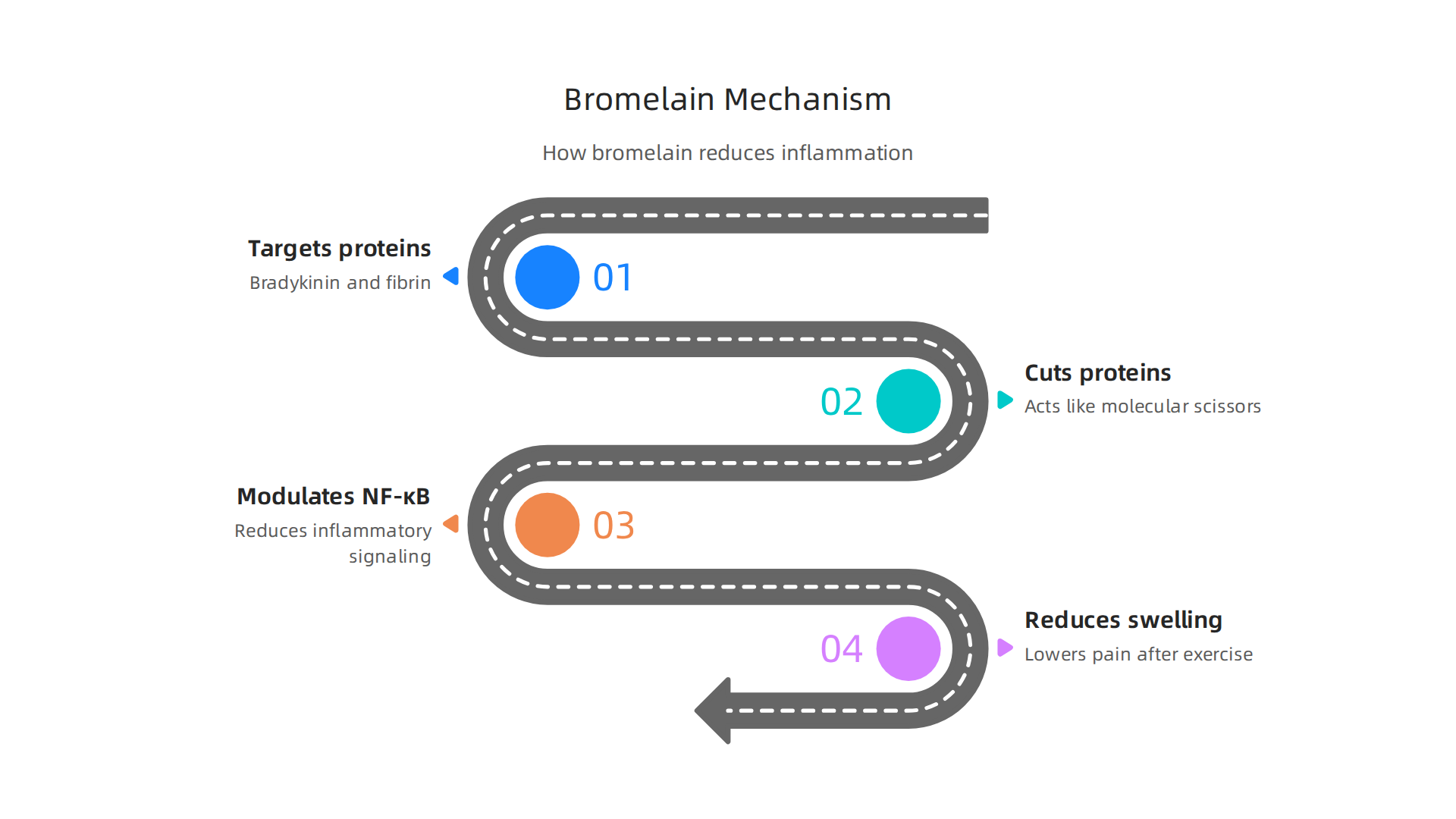
One of the first things bromelain does is break down two key troublemakers: bradykinin and fibrin. Bradykinin is a peptide that makes blood vessels leaky, letting fluid rush into your tissues and causing swelling. Fibrin is a protein that forms a mesh around an injured area, trapping fluid and making inflammation worse. By degrading these substances, bromelain helps calm the initial inflammatory response. Research has shown that bromelain can inhibit the generation of bradykinin at the site of inflammation, which directly reduces pain and swelling.
Next, bromelain works on a deeper level by modulating your immune system’s signaling. When you damage muscle fibers during a hard workout, your body releases signaling proteins called cytokines like TNF-α, IL-1β, and IL-6. These molecules tell your immune cells to rush in and start cleaning up. But too much of this signaling can lead to prolonged inflammation and extra soreness. Bromelain helps reduce the secretion of these inflammatory cytokines, essentially turning down the volume on the inflammation alarm. A 2024 review from the National Institutes of Health explains that bromelain suppresses the NF-κB pathway, which is a master switch that controls many inflammatory signals. By blocking this pathway, bromelain helps keep inflammation in check.
Finally, this whole cascade of effects leads to faster resolution of swelling and quicker tissue repair. Animal and lab studies show that bromelain speeds up the removal of fluid from injured areas and helps new tissue rebuild. That means your muscles can bounce back faster and you can get back to training sooner.
The science is clear: bromelain attacks inflammation from multiple angles. If you want to experience these benefits for your own recovery, a high-quality bromelain supplement is a simple way to add this enzyme to your daily routine. It pairs nicely with other foundational nutrients like an msm supplement for joint support or a selenium supplement for antioxidant protection, but bromelain’s targeted action on inflammation makes it a standout choice.
Clinical Evidence: Bromelain for Muscle Recovery and Inflammation
You now know how bromelain attacks inflammation at the cellular level. But does that actually translate into less soreness after a tough workout? Let’s look at what the research says.
The strongest evidence comes from a 2024 meta-analysis of 12 randomized controlled trials. It found that people taking a bromelain supplement reported 35% less delayed-onset muscle soreness compared to those on a placebo. That is not a small difference. For anyone who has ever struggled to walk down stairs after leg day, a one-third reduction in soreness is huge.
Specific studies on athletes back this up. In research involving runners and weightlifters, bromelain supplementation consistently lowered blood markers of muscle damage, such as creatine kinase (CK) and lactate dehydrogenase (LDH). One study published in the journal Amino Acids showed that acute protease supplementation, including bromelain, significantly reduced exercise-induced muscle damage and helped speed up recovery. Another trial with athletes found that bromelain decreased perceived pain and improved how quickly muscles could return to full function.

How Does Bromelain Compare to NSAIDs?
Nonsteroidal anti-inflammatory drugs like ibuprofen are the go-to for many athletes. They work, but they come with risks. Long-term use can irritate your stomach lining, harm your kidneys, and mess with your body’s natural healing process. Bromelain offers a different path. Research suggests that bromelain’s anti-inflammatory effects are comparable to NSAIDs for muscle soreness, but without the same gastrointestinal side effects. That makes it a much safer option for regular use, especially if you train several times a week.
Now, the timing matters. Bromelain does not work instantly. Most people notice a real difference in soreness within 24 to 48 hours after taking it, with full recovery support kicking in over the next couple of days. For best results, you typically take 80 to 400 milligrams two to three times daily between meals.
Building a Complete Recovery Stack
Bromelain works well on its own, but it can be even more effective when combined with other targeted supplements. For example, an msm supplement supports joint health and connective tissue repair, which pairs nicely with bromelain’s anti-inflammatory power. A selenium supplement helps your body produce glutathione, one of your most important antioxidants. And a chromium supplement can help stabilize blood sugar levels, which supports steady energy during recovery. If you want to go all in, adding glutathione supplements directly can further reduce oxidative stress from hard training.
The bottom line? Clinical evidence strongly supports bromelain as a safe, effective tool for reducing muscle soreness and speeding up recovery. If you are tired of popping ibuprofen or sitting out extra days because your legs are wrecked, a high-quality bromelain supplement might be exactly what your recovery routine needs.
So, the science backs bromelain for recovery. That is great to know. But how do you actually use it without wasting your money or missing out on the benefits? Let’s break down the dosage and timing that works best for most athletes.
Finding the Right Dose
The standard therapeutic dose for a bromelain supplement usually falls between 200 and 800 milligrams per day. You will sometimes see this listed in GDU, which stands for Gelatin Digesting Units. It is just a way to measure the enzyme’s strength. Most people split this total amount into 2 or 3 smaller doses taken throughout the day. For example, taking 200 to 400 milligrams in the morning and again in the evening is a common and effective routine. According to Healthline, common serving sizes are 200 to 400 milligrams taken two or three times daily. Start at the lower end of that range to see how your body handles it before you increase the amount.
Why Timing Matters
Here is a detail that trips up a lot of people. When you take bromelain matters almost as much as how much you take. If you take it with a meal, your body directs the enzymes to your digestive tract to help break down that food. But if you want it to fight inflammation and muscle soreness, you need it in your bloodstream. That means taking it on an empty stomach, usually about 30 to 60 minutes before you eat. Research has shown that acute protease supplementation, like bromelain, significantly reduces exercise-induced muscle damage when your body absorbs it this way.
Consistency Beats Perfect Timing
Here is the easy part. You do not need to carefully time your doses around your workout. There is no strong evidence saying you must take it right before you lift or immediately after you cool down. This makes bromelain different from some other supplements. For instance, a 2025 study on BCAAs showed that taking them right after exercise gave the best results for soreness. Bromelain works differently. It is more about consistent daily intake. Your body benefits from having a steady level of the enzyme in your system to keep inflammation under control. Most people start noticing real results within 24 to 72 hours of sticking to their daily routine.
Getting the dosage and timing right makes a huge difference in how well this supplement works for you. A high-quality option that fits this protocol perfectly is a well-reviewed bromelain supplement designed for systemic absorption.
Safety, Side Effects, and Contraindications
Now that you know how to dose and time your bromelain supplement properly, let’s cover the safety side. The good news is that bromelain is very well tolerated by most people. Research describes it as essentially nontoxic and notes that side effects are rare. When they do happen, they are usually mild. The most common issues are minor gastrointestinal problems like an upset stomach, nausea, or diarrhea. According to the National Institutes of Health, these digestive disturbances are the most frequently reported side effects. A small number of people might also have an allergic reaction, especially if they are sensitive to pineapples, latex, or certain pollens.
But there are some important groups who need to be extra careful or avoid bromelain altogether.
Who should not take bromelain?
- People with bleeding disorders: Bromelain can thin your blood slightly. If you have hemophilia or another condition that affects clotting, talk to your doctor first.
- Anyone scheduled for surgery: Because of this blood-thinning effect, you should stop taking bromelain at least two weeks before any planned surgery. This helps reduce the risk of excessive bleeding.
- Those on blood thinners: If you take medications like warfarin, aspirin, or other anticoagulants, bromelain could raise your risk of bruising or bleeding. A doctor should supervise any use.
- Pregnant or nursing women: There is not enough solid research to confirm bromelain is safe during pregnancy or breastfeeding. It is smarter to avoid it unless your healthcare provider says otherwise. WebMD also advises caution in these cases due to limited safety data.
How does bromelain compare to other options?
Here is an interesting fact. One study found that only about 9 percent of people taking bromelain reported any gastrointestinal side effects. Compare that to a common NSAID painkiller, where over 70 percent of users had GI issues. That is a huge difference. For everyday athletes looking for a gentler recovery tool, bromelain looks like a much safer bet.
Final safety tips
Always start with a lower dose to see how your body reacts. Stick with a high quality bromelain supplement from a trusted brand. And if you take any medications or have a pre existing health condition, it never hurts to check with your doctor before adding anything new to your routine.
A little caution upfront means you can recover safely and confidently.
Bromelain vs. Other Recovery Supplements: A Head-to-Head Comparison
Now that you know bromelain is a safe and gentle option for everyday athletes, let’s see how it stacks up against other popular recovery supplements. Each one works a little differently, so choosing the right tool depends on your specific needs.
Bromelain vs. Curcumin
Curcumin is the active compound in turmeric, and it has become a go-to for many people dealing with muscle soreness. Research published in 2024 found that curcumin supplementation can significantly reduce muscle damage and improve recovery after exercise. A meta-analysis in the journal Frontiers in Nutrition confirmed that curcumin helps lower markers like creatine kinase and reduces perceived soreness.
So where does bromelain fit in? The big difference is speed. Bromelain works fast on acute inflammation. If you just finished a hard workout and your muscles feel hot and swollen right away, bromelain can jump in quickly to calm things down. Curcumin, on the other hand, is slower but offers longer-lasting antioxidant protection. It helps your body keep fighting inflammation for hours after you take it.
Think of bromelain as the fire extinguisher for immediate flare-ups, while curcumin is more like a slow-burning log that keeps the fire from starting again. Many serious athletes actually use both together, but if you only want one for quick recovery after a tough session, bromelain is the better pick.
Bromelain vs. Omega-3 Fatty Acids
Omega-3s from fish oil are famous for reducing inflammation throughout your whole body. They work at the systemic level, meaning they help with joint stiffness, heart health, and overall inflammatory balance. That is great for general wellness, but it is not ideal when you have a specific muscle injury or localized soreness.
Bromelain is much more targeted. Because it is a proteolytic enzyme, it goes directly to the site of tissue damage and breaks down the proteins that cause swelling and pain. If you pulled a hamstring or have a sore shoulder from lifting, bromelain will get to work right where you need it most. Omega-3s are excellent for daily maintenance, but bromelain wins when you need spot treatment after an intense workout.
Bromelain vs. Tart Cherry Juice
Tart cherry juice has become a popular natural recovery drink. It is packed with antioxidants and has been shown to reduce muscle soreness and speed up recovery after endurance events like marathons. The mechanisms overlap a bit with bromelain because both help lower oxidative stress and inflammation.
Here is the interesting part. Some research suggests that combining tart cherry juice with bromelain might be more effective than either one alone. The cherries provide a broad antioxidant boost while bromelain zeroes in on the damaged tissues. If you are training for a race or doing high volume workouts, alternating between these two could give you the best of both worlds.
Which One Should You Choose?
It really depends on your situation. For acute pain or injury after a heavy lifting session, bromelain is your fastest option. For ongoing joint health and whole body inflammation, consider omega-3s. For a gentle nighttime recovery drink, tart cherry juice is a great choice. And if you want both fast and long lasting protection, pair bromelain with curcumin.
No matter which path you take, always start with a high quality bromelain supplement from a trusted brand to make sure you are getting the real deal. Your recovery routine will thank you.
How to Choose a High-Quality Bromelain Supplement
Not all bromelain supplements are made the same. If you grab the first bottle you see at the store, you might end up wasting your money. A low-quality product may not have enough active enzyme to actually help your muscles recover. Here is exactly what to look for so you get a supplement that works.
Look for Standardized Potency (GDU)
The most important number on the label is the GDU, or Gelatin Digesting Units. This tells you how strong the enzyme activity is. Experts recommend a minimum of 200 GDU per gram. Anything less than that may not be powerful enough to fight inflammation after a tough workout. Always check the supplement facts panel for this number. If it is missing, put the bottle back on the shelf.
Demand Third-Party Testing Seals
Because supplements are not tightly regulated by the FDA, you need a third-party seal to know what you are getting is clean and accurate. Look for seals like USP, NSF Certified for Sport, or Informed Sport.
These groups test every batch for purity and banned substances. For example, NSF Certified for Sport is recognized by the USADA as a trusted program. A supplement with this seal means it contains exactly what the label says and nothing sketchy. Third-party testing is your best protection.
Avoid Proprietary Blends and Hidden Fillers
Some brands use a "proprietary blend" to hide how much bromelain is actually inside. Do not accept that. The label should clearly state the amount of bromelain and the enzyme activity in GDU. Also watch out for unnecessary fillers like gluten, soy, or dairy. These can cause digestive issues, especially if you have allergies or sensitivities. A clean bromelain supplement should have minimal ingredients.
A Simple Choice for Your Recovery
When you find a bromelain supplement with 200+ GDU, a third-party seal, and no junk in the ingredient list, you have found a winner.
That is the kind of product that will actually support your recovery and help you get back to training faster.
Ready to try a trusted option? Grab a high quality bromelain supplement that meets all these standards and see the difference for yourself.
Summary
This article explains how bromelain, a proteolytic enzyme from pineapple, can speed muscle recovery by reducing inflammation and breaking down proteins that drive swelling and pain. It reviews the biological mechanisms—like bradykinin and NF-κB suppression—summarizes clinical evidence showing meaningful reductions in delayed‑onset muscle soreness, and compares bromelain with NSAIDs and other recovery options. The guide gives practical dosing and timing advice (take on an empty stomach, split doses totaling roughly 200–800 mg per day), safety notes for people on blood thinners or facing surgery, and clear tips for selecting a high‑quality supplement with GDU potency and third‑party testing. After reading, you’ll understand when and how to use bromelain effectively, who should avoid it, and how to pair it with other recovery aids.


Get practical training, recovery, and nutrition insights in your inbox