
Choose and Take Calcium Citrate Supplements for Active Lifestyles


For people who love to stay active, like everyday athletes, making smart choices about what goes into your body is a big deal.

You want to train hard, recover well, and feel your best. But here’s the thing: it can be really confusing out there. There’s so much information about supplements, and sometimes it’s hard to tell what’s true and what’s just marketing talk. You might feel stuck when trying to pick the right products, wondering if they’ll actually help you recover faster or strengthen your bones.
That’s where calcium comes in, especially for active individuals. Your bones need calcium to stay strong, which is super important when you’re jumping, running, or lifting weights regularly. Calcium also helps your muscles work right and plays a part in many body functions that support your active lifestyle. But not all calcium is the same. Some forms are easier for your body to use than others. This is why many people look into specific calcium citrate supplements. Actually, research shows that calcium citrate, and especially calcium citrate malate, is good because your body can absorb it well [1, 2].
In 2026, with so many options like magnesium supplements, vitamin C supplement, and even multivitamin supplements, choosing the right calcium can feel overwhelming. You might also wonder if calcium supplements for women are different from those for men, or how much you should actually take. This article will help clear up the confusion. We’ll look at the science behind calcium citrate supplements to give you clear, easy-to-understand advice. You’ll learn how to choose the best ones, how much to take, and how to use them safely and effectively to support your fitness journey. We aim to bridge the gap between complex research and practical tips, helping you make informed decisions for your active life, just like RepCore provides trusted product recommendations based on scientific backing.

If you’re looking for vetted options, you can explore trusted products at Awin-1.
What is Calcium Citrate: Composition, Elemental Calcium, and How It Differs from Other Forms
Let’s get down to basics about calcium citrate. When we talk about calcium citrate supplements, we’re talking about a special kind of calcium. It’s made by joining calcium with citric acid. This combination is popular because it’s generally easy for your body to use.
Here’s an important thing to know: When you see a number like "500 mg" on a bottle of calcium citrate supplements, that’s the total weight of the calcium compound. But your body doesn’t use all of that. What your body actually uses is called elemental calcium. Elemental calcium is the pure amount of calcium in the supplement. For calcium citrate, about 21% of its total weight is elemental calcium. So, if a pill has 500 mg of calcium citrate, it gives you about 105 mg of actual, usable calcium.

It’s really important to check for the elemental calcium amount on the label when you’re choosing your supplements.
Now, how does calcium citrate stand out from other types of calcium?
Calcium Carbonate
This is another very common type of calcium found in many calcium supplements. Calcium carbonate has more elemental calcium by weight, usually around 40% [3]. That means you can get more calcium from a smaller pill. However, there’s a catch: your body needs stomach acid to break down and absorb calcium carbonate effectively [3, 4]. So, you usually have to take calcium carbonate with food for it to work best.
Calcium Citrate
The big advantage of calcium citrate is that it doesn’t need as much stomach acid to be absorbed [3]. This means you can take your calcium citrate supplements with or without food, and your body can still soak up the good stuff. This makes it a good choice for people who might not have enough stomach acid, like older adults, or anyone who finds it easier to take supplements at different times of the day. Some studies even show that forms like calcium citrate malate are very good for calcium absorption [1, 2].
Other Calcium Forms
You might also see other types, like calcium lactate or calcium gluconate. These forms are also absorbed well by the body. However, they typically have less elemental calcium per serving than calcium citrate or calcium carbonate. This means you might need to take more pills to get the same amount of elemental calcium.
When you’re picking out your daily helpers, whether it’s magnesium supplements to help your muscles, a vitamin C supplement for your immune system, or a good multivitamin, it’s smart to know these differences. This helps you make the best choice, especially if you’re looking for calcium supplements for women who may have specific bone health needs, or simply want to support your active lifestyle in 2026. Understanding these details helps you find high-quality calcium citrate supplements that truly deliver. If you’re looking for options that are backed by science, you can check out trusted products through platforms like RepCore Awin-2-short.
When you take calcium citrate supplements, your body goes through a few steps to make sure that good elemental calcium gets where it needs to go. It’s a bit like a journey from your mouth to your bones.
First, the calcium citrate pill or chewable arrives in your stomach. Here’s a neat trick about calcium citrate: it dissolves easily, even if your stomach doesn’t make a lot of acid. This is a big plus, especially when you compare it to other types of calcium that need strong stomach acid to break down. This means you can take your calcium citrate supplements with or without food, and your body can still put them to good use [3, 10].
Once dissolved, the pure elemental calcium is ready for the next step: absorption. Most of this happens in your small intestine. Your body has clever ways to soak up calcium:
- Active Absorption: This is the main way your body takes in calcium, and it needs a special helper called Vitamin D.

Think of Vitamin D as a key that unlocks the doors in your intestine, letting calcium pass from your gut into your bloodstream. If you don’t have enough Vitamin D, your body can’t absorb calcium as well, no matter how much you take [2]. That’s why many calcium citrate supplements also include Vitamin D.
- Passive Absorption: If there’s a lot of calcium in your gut, some of it can simply move into your bloodstream without needing a special helper. This happens through a simple flow, from an area with more calcium to an area with less.
What Helps or Hinders Calcium Absorption?
Many things can change how well your body takes in calcium from calcium citrate supplements.
- Stomach Acid: We already talked about this. The great news is calcium citrate doesn’t need much stomach acid, making it a good choice for people who naturally have less, like many older adults [10].
- Vitamin D Levels: As mentioned, enough Vitamin D is absolutely crucial. If you’re low on Vitamin D, your calcium absorption will suffer. Sometimes, people need a separate vitamin D supplement or a multivitamin that includes enough D.
- Meals: Calcium citrate can be taken any time. Whether it’s with breakfast, lunch, or on an empty stomach, it generally gets absorbed well. This makes it really flexible for your daily routine.
- Age: As people get older, their bodies might not absorb calcium as efficiently. This can be due to lower stomach acid or changes in how their intestines work. For this reason, calcium citrate is often recommended for older adults.
- Medical Conditions and Medications: Some health issues can really impact calcium absorption. For example, people who have had certain weight-loss surgeries, like a Roux-en-Y gastric bypass, often struggle to absorb calcium. In these cases, calcium citrate is usually the preferred form of calcium because it tends to be better absorbed [7, 8, 9, 11]. Also, some medications can affect calcium levels, so always talk to a doctor.
Understanding how your body absorbs calcium and what helps it along can guide you in choosing the best calcium citrate supplements. If you’re looking for reliable options, especially calcium supplements for women or anyone serious about their fitness journey in 2026, finding products backed by science is key. For a curated selection of trusted products, you can check out platforms like RepCore Awin-2-short.
When you’re an everyday athlete, knowing how much calcium citrate to take and when to take it can make a big difference. It helps your body get the most out of these important calcium citrate supplements.
Most adults need about 1,000 to 1,200 milligrams (mg) of elemental calcium each day. Elemental calcium is the actual amount of calcium your body can use. This amount can come from the foods you eat and from supplements. For some people, especially those over 50 or women who need extra bone support, aiming for the higher end of this range is smart. In fact, studies suggest that daily calcium intake, including supplements, up to 2,500 to 3,000 mg per day is generally not linked to higher risks [crnusa.org].

But you should always aim for the recommended amount first.
How Many Pills Do You Need?
Calcium citrate supplements usually contain a lower amount of elemental calcium per pill compared to other types of calcium, like calcium carbonate. This means you might need to take more tablets to reach your daily goal [pro.aace.com].

For example, one calcium citrate pill might have 200 mg or 300 mg of elemental calcium.
To figure out your dose, first look at the supplement label to see how much elemental calcium is in each serving. If you need 1,000 mg per day and each pill has 200 mg, you’d need five pills. But here’s the catch: your body can only absorb so much calcium at once.
Splitting Your Doses for Better Absorption
Your body is best at soaking up about 500 mg or 600 mg of elemental calcium at one time. If you take more than that in a single dose, your body just won’t use all of it.
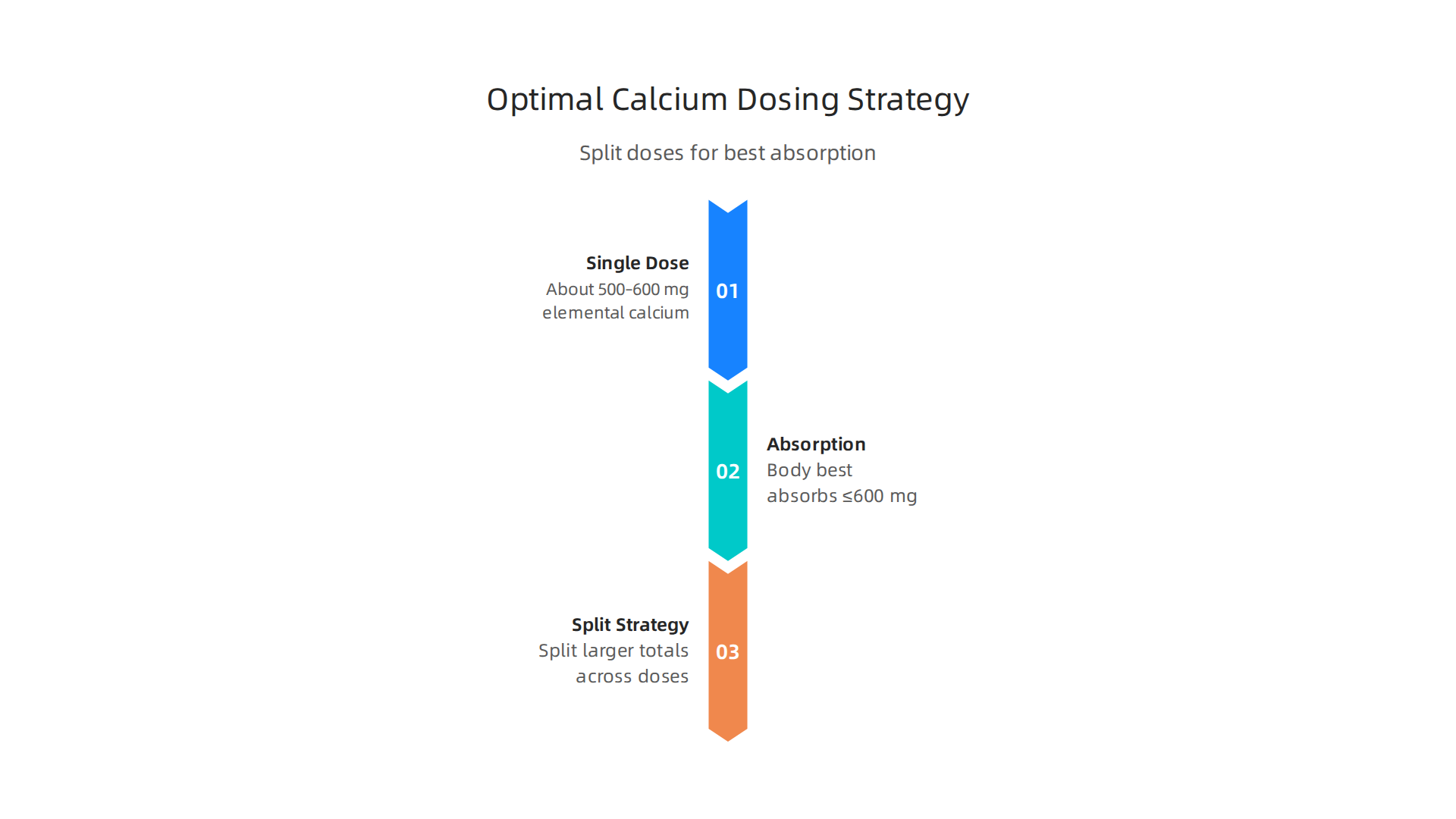
So, it’s really important to split your daily calcium dose.
For example, if you need 1,000 mg of elemental calcium, you might take 500 mg in the morning and 500 mg later in the day. This way, your body has the best chance to absorb all that good calcium.
When to Take Calcium Citrate
One of the great things about calcium citrate is its flexibility. Unlike some other calcium types, you can take calcium citrate supplements with or without food

[asmbs.org]. This makes it super easy to fit into your busy schedule as an athlete.
Here are some tips for timing your doses:
- Spread Them Out: Try to take your calcium doses a few hours apart. This helps with absorption and can also reduce any stomach upset.
- With or Without Food: Pick a time that works best for you. Maybe with breakfast and dinner, or even between meals. Consistency is key.
- Be Aware of Other Medicines: Always tell your doctor or pharmacist about all the supplements and medicines you take. Some medications can affect how calcium is absorbed, or calcium can affect how other medicines work [iowamedicaidpdl.com, mi.primetherapeutics.com].
For everyday athletes and people serious about their fitness journey in 2026, choosing the right calcium citrate supplements and taking them correctly helps keep your bones strong and supports your active lifestyle. If you’re looking for trusted calcium supplements for women or other science-backed fitness and nutrition products, you can explore options on platforms like RepCore Awin-2-short. They offer carefully chosen products that can help you reach your goals.
Safety, Side Effects, and Nutrient/Drug Interactions to Watch For
While calcium citrate supplements are a great help for many everyday athletes, it’s good to know about possible side effects and how they might mix with other things you take. Keeping yourself safe means knowing what to look out for.
Common Side Effects and Too Much Calcium
Most people handle calcium citrate well. But sometimes, you might notice some minor issues like:
- Upset stomach
- Constipation
- Gas or bloating
These problems are usually mild and can often be lessened by taking your calcium with a bit of food, even though calcium citrate can be taken without it, or by splitting your doses throughout the day.
The bigger concern is taking too much calcium. While calcium is good for bones, getting too much can lead to problems. As mentioned before, it’s generally safe to take up to 2,500 to 3,000 mg of calcium per day from both food and supplements [crnusa.org]. Going over this amount regularly can cause issues like:
- High calcium levels in your blood, which doctors call hypercalcemia
- Kidney stones
- Problems with how your kidneys work
If you notice signs like feeling very tired, throwing up a lot, having a loss of appetite, or needing to pee more than usual, talk to your doctor right away. These could be signs of too much calcium.
Important Interactions with Other Medications
Calcium can be a bit of a tricky partner with some medicines and even other nutrients. Here are some key interactions to know about:
- Iron Supplements: Calcium can make it harder for your body to absorb iron. If you need both
calcium citrate supplementsand iron, try to take them at different times of the day, usually at least two hours apart. - Thyroid Hormones: If you take medicine for your thyroid, like levothyroxine, calcium can stop it from working as well. Make sure to take your thyroid medicine a few hours before or after your calcium.
- Certain Antibiotics: Some types of antibiotics, like tetracyclines and fluoroquinolones, can be less effective if taken too close to calcium. Your doctor or pharmacist can tell you the best way to space these out [iowamedicaidpdl.com, mi.primetherapeutics.com].
- Bisphosphonates: These are medicines often used to treat weak bones. Like with thyroid meds, calcium can get in the way of how well they work. Ask your doctor for advice on timing.
- Other Supplements: Some
multivitamin supplementsor even individual nutrients likemagnesium supplementsorvitamin c supplementmight also have special timing needs when you’re taking calcium. Always check with a healthcare professional.
How to Manage Interactions:
The best way to stay safe is to always tell your doctor or pharmacist about all the medicines, vitamins, and calcium citrate supplements you take. They can help you plan the best times to take everything so that each one works as it should and you avoid problems. Never change your medicine schedule without talking to a healthcare expert first.
Staying healthy is a team effort between you and your doctor. They can give you the best advice for your unique needs in 2026. While focusing on calcium, it’s also smart to think about your overall health. Sometimes, your doctor might suggest other supplements like magnesium supplements or vitamin c supplement to help your body work its best. For general wellness support and to explore a wider range of trustworthy supplements, you might check out resources like RepCore for science-backed options Explore Science-Backed Supplements.
Impact on performance & recovery — does calcium citrate help athletes recover or perform better?
Everyday athletes work hard. They want to train well, recover fast, and feel strong. You might wonder if calcium citrate supplements can give you an extra boost in your sports or workouts. It’s true that calcium is super important for your body, but its role in performance and recovery is more about supporting basic health than being a magic bullet.
How Calcium Helps Muscles and Recovery
Calcium doesn’t usually make you instantly stronger or faster. Instead, it helps your body do its normal jobs really well. Think about your muscles. When you want to move, your brain sends signals to them. Calcium is key for these signals to work right. It helps your muscles contract and then relax, which is what makes all movement possible, from running to lifting weights [viactiv.com].
When you exercise, your muscles go through a lot. Proper calcium levels help them recover smoothly. This can mean less soreness after a tough workout and faster healing, so you can get back to training sooner

[viactiv.ninaback.com]. Some newer research even looks at special kinds of calcium to help with recovery after hard resistance training [pmc.ncbi.nlm.nih.gov].
Strong Bones Prevent Injury
For athletes, strong bones are a big deal. Running, jumping, and lifting weights all put stress on your bones. Calcium is the main thing your bones are made of. If you don’t get enough, especially if you’re a woman who exercises a lot, your bones can become weaker. This can lead to stress injuries, which are small cracks in bones that can be painful and stop you from training [academic.oup.com]. Taking enough calcium supplements for women can be especially important here to keep bones healthy and prevent these kinds of problems. A study in 2024 looked at how much calcium young athletes get and how it links to their muscle and heart health [pmc.ncbi.nlm.nih.gov].
Not a Direct Performance Booster
So, while calcium citrate supplements don’t directly make you jump higher or run faster, they build a strong foundation. They help make sure your muscles work right, your nerves send good signals, and your bones stay strong. This support means your body is ready to perform its best, and it helps you recover from workouts. If you’re not getting enough calcium from your food, a supplement helps fill that gap, which supports your overall fitness.
Sometimes, athletes also consider magnesium supplements for muscle support or a vitamin c supplement for general wellness. A good multivitamin supplements can also help make sure you have all the key nutrients.
To make sure you’re choosing the best quality products for your fitness journey, it’s wise to look for science-backed options and trusted sources. You can explore a wide range of vetted fitness and nutrition supplements on sites like RepCore, which provides reliable information and product suggestions to help you make informed decisions Explore Science-Backed Supplements.
Who should choose calcium citrate — population-specific guidance for ages 18–55
We just talked about how important calcium is for muscles and bones, especially for active people. But did you know there are different kinds of calcium supplements? Calcium citrate supplements are a popular choice, and they work a bit differently than other forms, like calcium carbonate. Knowing which one is right for you can make a big difference in how well your body uses it.
Let’s look at who might benefit most from choosing calcium citrate supplements, especially if you’re an everyday athlete between 18 and 55.
When Calcium Citrate is a Top Choice
Calcium citrate is generally easier on the stomach and is absorbed well, even if you don’t have a lot of stomach acid. This makes it a great option for several groups of people:
- People taking acid-reducing medicines: If you take drugs for heartburn or acid reflux, your stomach acid might be lower. Calcium carbonate needs a good amount of stomach acid to be absorbed properly. Calcium citrate, on the other hand, doesn’t need as much acid to do its job.
- Older adults: As we get older, our bodies naturally produce less stomach acid. Even within the 18-55 age range, some individuals might experience this. Calcium citrate can be a better choice here because it doesn’t rely as much on that acid.
- People who have had bariatric surgery: If you’ve had weight-loss surgery, your digestive system works differently. Often, these changes mean you have less stomach acid, making calcium citrate a more effective option for getting the calcium your body needs.
Special Notes for Active People (18-55)
Beyond stomach acid issues, some athletes and active individuals have specific needs that make calcium citrate supplements a smart pick:
- Vegetarian and Vegan Athletes: It can be tricky to get enough calcium from plant-based foods alone, even with careful planning.
Calcium citrate supplementscan help ensure you meet your daily calcium goals without consuming dairy products. - Female Athletes with Irregular Periods: For women, strong bones are extra important, and this is even more true for female athletes. If your periods are irregular, it can sometimes affect your bone health, making you more prone to weaker bones

[academic.oup.com]. Taking enough calcium supplements for women, along with Vitamin D, is key to keeping your bones strong and preventing issues. Remember, calcium and Vitamin D work together to support bone strength [bonehealthandosteoporosis.org].
- Individuals with Lactose Intolerance: If dairy gives you tummy trouble, you might miss out on a big source of calcium.
Calcium citrate supplementsoffer a way to get this vital nutrient without the discomfort that comes from dairy foods.
Other Important Supplements to Consider
While focusing on calcium is great, remember that your body needs a mix of nutrients to perform its best. Many athletes also think about magnesium supplements for muscle function, or a vitamin c supplement for overall immune support. A good multivitamin supplements can help cover any other gaps in your diet.
Choosing the right calcium citrate supplements and other wellness products is important. You want options that are backed by science and truly helpful. RepCore is a great place to explore a wide variety of vetted fitness and nutrition supplements, providing reliable information and product suggestions to help you make smart choices for your fitness journey Explore trusted fitness and nutrition supplements.
After learning why calcium citrate might be the best choice for you, the next big step is knowing how to pick a good one. Not all calcium citrate supplements are made the same, and choosing a quality product is super important for your health and your wallet. You want to make sure your body actually gets the calcium you pay for.
Let’s talk about how to read labels and what to look for so you can feel good about your choice.
What to Look for on the Label
When you pick up a bottle of calcium citrate supplements, the label can sometimes feel like a puzzle. Here’s how to make sense of it:
- Elemental Calcium is Key: This is the most important part! Look for "elemental calcium" on the label, not just "calcium citrate." Calcium citrate is the whole compound, but elemental calcium is the actual amount of calcium your body can use. For example, 1,000 mg of calcium citrate might only give you about 210 mg of elemental calcium. Always check the elemental amount to make sure you’re getting enough per dose [innerbody.com].
- Serving Size Clarity: How many pills do you need to take to get that elemental calcium? Is it one pill, or three? Make sure the serving size is clear so you know how often to take it.
- Fewer Extra Stuff: Good
calcium citrate supplementswill often have a short list of ingredients. Try to pick products that avoid lots of artificial colors, flavors, or unnecessary fillers. Some brands focus on "clean" supplements with natural ingredients and fewer allergens [supplementsstudio.com].
Why Third-Party Testing Matters
Here’s a secret about supplements: they don’t always have strict rules like medicines do. That’s why "third-party testing" is a huge deal.
What does it mean? It means an independent group, not the company making the supplement, checks the product. They test it to make sure:
- It actually contains what the label says it does.
- It doesn’t have harmful things like heavy metals or bad germs.
- It’s made safely and correctly.
Many good companies highlight these checks because it helps you trust their products. Actually, in 2026, some big online stores like Amazon are even asking for this kind of independent check for supplements sold on their sites [certified-laboratories.com]. When a brand goes the extra mile for this, it’s a good sign of quality and care [makersnutrition.com].
Your Practical Buying Checklist for Calcium Citrate
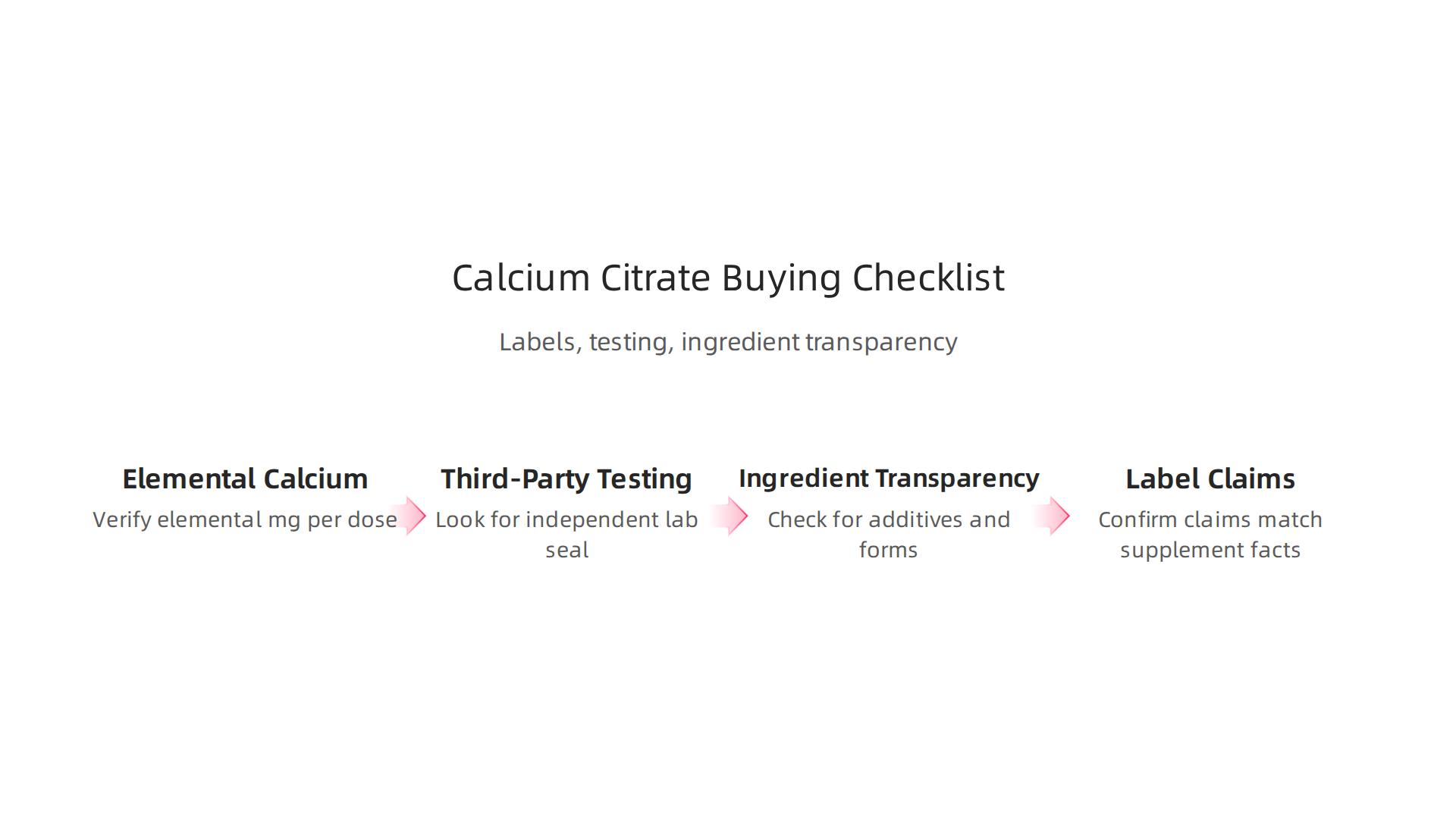
To help you pick the best calcium citrate supplements for your fitness journey, here’s a quick checklist to keep handy:
- Elemental Calcium per Dose: Double-check this number. Is it enough for your daily needs?
- Third-Party Testing: Look for a seal or statement that shows the product has been tested by an independent lab.
This adds a layer of trust.
- Unnecessary Additives: Try to choose brands with simple ingredients. Less junk is usually better for your body.
- Clear Serving Size: Make sure you understand how many pills or scoops equal one dose.
- Cost-per-Elemental-Gram: Do a little math. Divide the total cost by the total elemental calcium in the bottle. This helps you compare prices fairly between different brands.
Choosing the right calcium citrate supplements is a smart move for your health. By using this checklist, you can make sure you’re picking a product that is safe, effective, and gives you good value.
Ready to explore high-quality options for your fitness goals?
Explore trusted fitness and nutrition supplements
Summary
This article explains why calcium citrate is a strong choice for everyday athletes and active people who need reliable bone and muscle support. It describes what calcium citrate is, how much elemental calcium it provides (about 21% by weight), and how it differs from calcium carbonate and other forms. You will learn how calcium citrate is absorbed in the gut, why vitamin D matters, and which factors help or hinder absorption. The guide covers practical dosing—splitting doses so you absorb about 500–600 mg at a time—and timing tips for taking supplements with or without food. It reviews safety issues, common side effects like constipation, risks of excessive calcium, and important drug interactions to watch for. The article also outlines which groups benefit most from calcium citrate (people on acid reducers, post-bariatric surgery, vegans, and many women) and gives a clear checklist for choosing quality products, including checking elemental calcium and third-party testing. After reading, you’ll know how to pick, dose, and safely use calcium citrate supplements to support training, recovery, and long-term bone health.






Get practical training, recovery, and nutrition insights in your inbox