
Choosing the Best B12 Supplement Forms Doses and Quality

Have you been feeling tired, even after a good night’s sleep? Are your workouts not giving you the energy boost they once did, or is your body taking longer to bounce back?

Many active adults, just like you, look for ways to boost their performance and recovery. Sometimes, the answer points to something simple: vitamin B12.
Vitamin B12 is super important for your body. It helps make red blood cells, keeps your nerves healthy, and turns the food you eat into energy. If you are an "everyday athlete" or someone serious about their fitness journey, having enough B12 is key for peak performance, quick recovery, and keeping your long-term health in check.
Actually, many people don’t get enough B12. Studies from 2026 show that vitamin B12 deficiency is becoming more common and can even lead to health problems like fatigue and nerve issues if not addressed [1, 2]. One study even found that a good number of adult men had low or borderline B12 levels [3]. So, it’s not just about energy, it’s about keeping your whole system running right.
With so many "b12 supplements" and "vitamin b12 supplements" out there, it can feel like a jungle. You might see talk about "vitamin b shots" or wonder which "vegan b12 supplement" is truly the "best b12 supplement" for you. It’s hard to know what’s real and what’s just marketing talk. This can make choosing a good supplement confusing and frustrating.
That’s where RepCore comes in. We understand you want clear, science-backed answers. We are here to help you cut through all the noise. We will give you a simple, practical plan to pick a safe and effective B12 supplement that truly fits your needs, whether you are looking for energy, better recovery, or just want to make sure you are not missing out on this vital nutrient. When you’re ready to explore trusted, vetted products and make informed choices, RepCore is your go-to resource for expert advice on all things fitness and nutrition. You can learn more about our recommendations and how we help athletes like you achieve their goals through scientifically-backed products at RepCore’s vetted product selections.
What is Vitamin B12 and How It Works in the Body
So, what exactly is vitamin B12? Think of it as a tiny but mighty helper in your body. Vitamin B12 is an important nutrient that your body can’t make on its own. You have to get it from the foods you eat or from b12 supplements. It’s also known as cobalamin.
For active people and everyday athletes, B12 does some really big jobs. First, it helps turn the food you eat into energy. This means it helps your body use carbs, fats, and proteins to fuel your workouts and keep you going all day. If you don’t have enough, you might feel extra tired, even after good rest. Studies show B12 is essential for how your cells get and use energy [1].
Second, B12 is key for making healthy red blood cells. These little cells are like tiny delivery trucks that carry oxygen from your lungs to all parts of your body, including your muscles. When your muscles get enough oxygen, they work better and recover faster after a tough workout. Without enough B12, your body might not make enough red blood cells, which can leave you feeling weak or breathless [2].
Third, vitamin B12 keeps your nerves healthy. Your nerves are like a communication network, sending signals between your brain and your body. This is super important for good coordination, quick reactions, and overall brain function during sports or daily life [3]. If your nerves aren’t working right, you might feel tingling or numbness.
Now, how does your body get and use B12? It’s a bit of a special process. When you eat food with B12, like meat, fish, or dairy, your stomach acid helps release the vitamin. Then, a special protein called "intrinsic factor" helps your body soak up the B12 in your small intestine. This is why some people, especially older adults or those with certain stomach issues, might have trouble getting enough B12 from food, even if they eat plenty of it [4]. Your body can store a good amount of B12 in your liver, which is why a deficiency might take some time to show up [5].
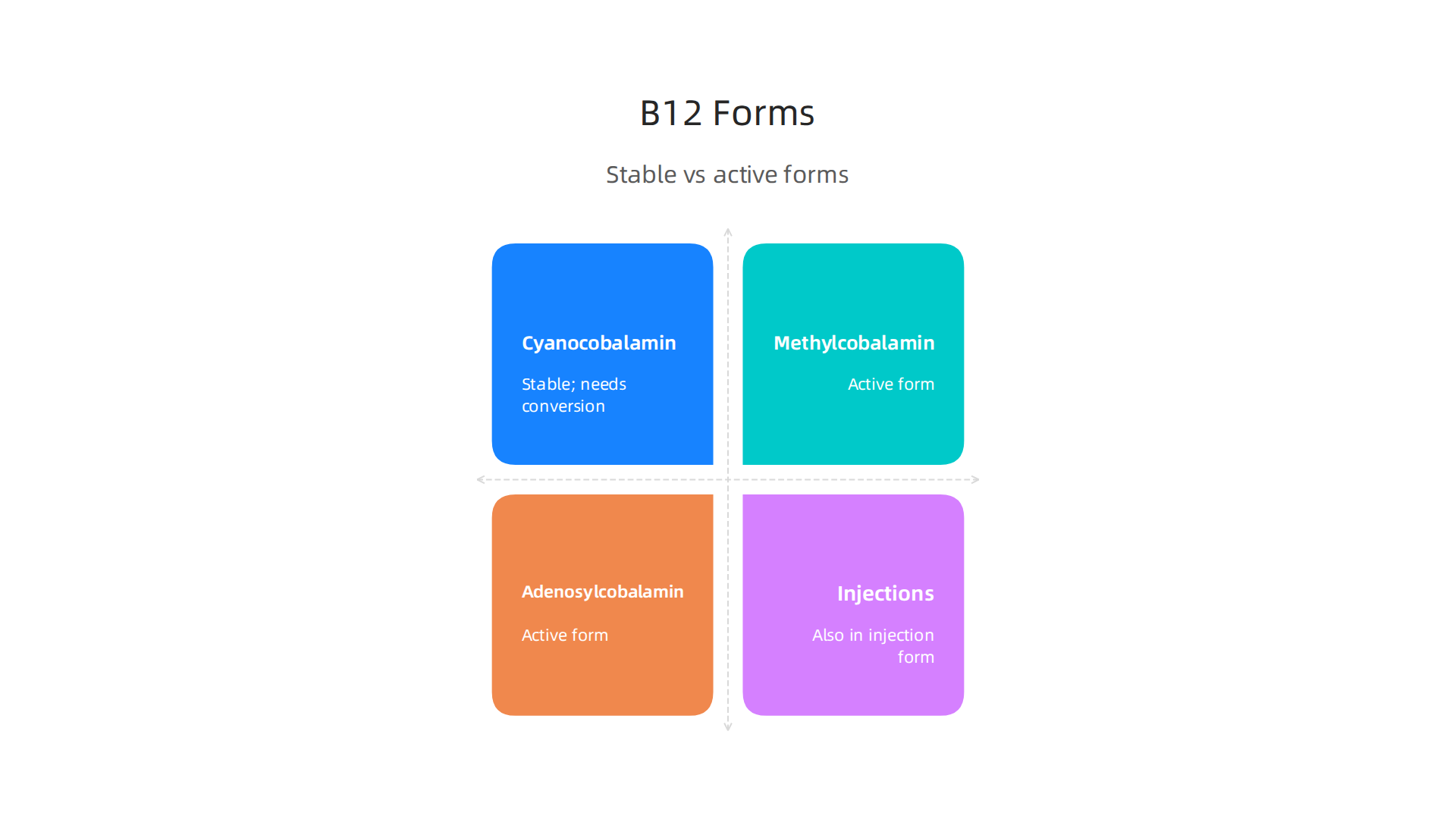
Because of these absorption challenges, or if you follow a plant-based diet, taking vitamin b12 supplements can be really helpful. In fact, if you’re looking for a vegan b12 supplement, it’s almost always needed because B12 is mostly found in animal products. There are different forms of B12 found in b12 supplements, like cyanocobalamin, methylcobalamin, and adenosylcobalamin [6]. While they all aim to raise B12 levels, how your body uses them can be a bit different [7]. For example, cyanocobalamin is a stable form often used in supplements, while methylcobalamin is one of the forms your body uses directly [8]. Knowing these differences can help you pick the best b12 supplement for your personal needs, whether it’s an oral supplement or even vitamin b shots recommended by a doctor.
B12 forms explained: cyanocobalamin vs methylcobalamin vs adenosylcobalamin (and injections)
When you’re looking at different vitamin B12 supplements, you might see some long, tricky names. These names tell you about the different forms of B12 that can be in your supplement. Understanding them can help you pick the best b12 supplement for you. Let’s break down the most common types: cyanocobalamin, methylcobalamin, and adenosylcobalamin.
Cyanocobalamin: The Stable Choice
Cyanocobalamin is the most common type you’ll find in vitamin B12 supplements. It’s known for being very stable, which means it lasts a long time on the shelf without losing its power [1]. Your body doesn’t use cyanocobalamin directly, though. Instead, it has to change it into the "active" forms that it needs [2]. This process usually works well for most people, and studies show that both this form and natural forms can raise your B12 levels [3]. If you’re looking for an affordable and effective option, many general b12 supplements use cyanocobalamin. For those needing a vegan b12 supplement, cyanocobalamin is often the go-to because it’s lab-made and not from animal sources.
Methylcobalamin and Adenosylcobalamin: The Active Forms
Methylcobalamin and adenosylcobalamin are the two "active" forms of B12 that your body uses right away for important jobs [4].
- Methylcobalamin is very important for your brain and nerves. It helps keep your nerve cells healthy and supports good communication in your body [5].
- Adenosylcobalamin is key for energy. It helps your body turn food into fuel, especially in the parts of your cells that make energy, called mitochondria.
Some people think these active forms are better than cyanocobalamin because your body doesn’t need to change them first [6]. However, research suggests that all forms of B12 eventually get changed into a basic cobalamin molecule, which then becomes one of the active forms your body needs [7]. Both forms can certainly help prevent a B12 deficiency [8].
If you’re trying to decide what the best b12 supplement is for your needs, you might consider these active forms. Some studies even suggest that methylcobalamin might be favored over cyanocobalamin for certain uses [9]. You can find these active forms in many vitamin B12 supplements, often sold as sublingual tablets that dissolve under your tongue for quick absorption. For those who want to explore different vitamin B12 supplements, especially the active forms, you can often find a good selection of quality products online that might fit your budget and needs. For example, some brands offer high-quality methylcobalamin options that are popular among athletes and health enthusiasts. You might check out options like those found at Awin-1-short or Awin-2-short which are trusted sources for many wellness products.

B12 Injections: When Oral Isn’t Enough
Beyond pills and sublingual tablets, there are also vitamin B shots. These are not typically something you’d get over-the-counter. Vitamin B12 injections are given by a doctor, usually into a muscle [10]. They are often used for people who have trouble absorbing B12 through their stomach and intestines, even from high-dose oral supplements [11]. This could be due to certain medical conditions or if you’ve had stomach surgery. Injections deliver B12 directly into your bloodstream, quickly raising your levels and bypassing any absorption issues in your gut [12]. While injections are very effective, they require a prescription and a visit to a healthcare provider.
Who should consider B12 supplements? Identifying real deficiency risk
We’ve talked about the different kinds of vitamin B12. Now, let’s figure out who truly needs extra B12 in their diet. While B12 is super important for your body, not everyone needs to take vitamin B12 supplements. However, certain people are at a higher risk of not getting enough. Actually, in 2026, experts are still seeing a rise in B12 deficiency cases in different parts of the world [1, 2].
High-Risk Groups for B12 Deficiency
Several groups of people need to pay close attention to their B12 levels:
- People with Dietary Restrictions: If you follow a vegan or strict vegetarian diet, you’re at high risk. Vitamin B12 is mostly found in animal foods like meat, fish, eggs, and dairy

[3]. So, if you don’t eat these, it’s very hard to get enough B12 from your food alone. For these individuals, a reliable vegan b12 supplement is often necessary.
- Older Adults: As we get older, our bodies sometimes have trouble taking in B12 from food. This is because the stomach makes less acid, which is needed to release B12 from food so the body can use it [4].
- People on Certain Medications: Some common medicines can interfere with how your body absorbs B12. For example, metformin, a drug used for diabetes, and proton pump inhibitors (PPIs) for heartburn can both lower your B12 levels over time [5, 6]. Studies in 2026 continue to highlight this issue, especially when these medicines are taken together [7].
- People with Absorption Problems: If you have certain gut conditions like Crohn’s disease, celiac disease, or if you’ve had stomach surgery (like weight loss surgery), your body might struggle to absorb enough B12. These conditions can damage the parts of your gut that are key for B12 uptake [8].
Signs You Might Need B12 Supplements
How do you know if you might have low B12? Common signs can include:
- Feeling very tired or weak
- Pale skin
- Tingling or numbness in your hands and feet
- Trouble walking or balancing
- Memory problems or feeling confused [9]
These symptoms can also be caused by other things, so it’s really important to talk to a doctor. Only a medical professional can properly test your B12 levels and tell you if a deficiency is present.
B12 for Athletes and Fitness Enthusiasts
If you’re an "everyday athlete" or someone serious about your fitness journey, you might wonder if you need B12 supplements. Vitamin B12 plays a role in energy production and nerve health, which are vital for physical performance [10]. Some research looks at if B12 can help athletes perform better or recover faster, especially in aerobic activities [11].
However, feeling tired after a tough workout is normal. It doesn’t automatically mean you have a B12 deficiency. If you’re eating a balanced diet and don’t fall into the high-risk groups above, you might already get enough B12. Still, intense training might increase nutrient demands. If you experience persistent fatigue or other symptoms, speaking with a healthcare provider is a smart move. They can help you decide if a vitamin B12 supplement is right for you, ensuring you select the best b12 supplement that truly meets your needs.
For those who discover they are at risk or deficient, adding vitamin B12 supplements can be a helpful step. You can explore different options for quality vitamin B12 supplements, like those found at trusted wellness product providers or other reputable health product retailers. Remember, getting proper diagnosis and advice from a healthcare provider is always the best first step before starting any new supplement.
Now that you know if you might need extra B12, let’s talk about how to take it. Getting the right amount of a vitamin B12 supplement is important for both safety and good results. It’s not just about picking the best b12 supplement; it’s also about knowing the best way to use it.
How Much B12 Should You Take?
The amount of B12 you need depends on why you’re taking it.
- To prevent a deficiency (Prophylactic Use): If you’re in a high-risk group but don’t have a severe deficiency yet, you might need a smaller dose. For example, many adults who follow a vegan diet might take a dose like 25-100 micrograms (mcg) daily or 1000-2000 mcg once or twice a week. This helps make sure you get enough because B12 is mostly found in animal foods. A good vegan b12 supplement will usually offer these kinds of doses.
- To treat a deficiency (Therapeutic Use): If a doctor confirms you have low B12, you’ll likely need much higher doses to bring your levels back up. Our bodies can only absorb a certain amount of B12 at one time, even from supplements. So, higher doses are often given to make sure enough B12 gets into your system [5]. These doses can range from 1,000 mcg to 2,000 mcg per day, sometimes for several weeks or months. Your doctor will tell you the exact amount needed.
It is always best to talk to a healthcare provider before starting any vitamin B12 supplements, especially if you think you have a deficiency. They can help you figure out the best dose for your unique needs.
When and How to Take Your B12 Supplement
Timing:
You can usually take oral B12 supplements at any time of day, with or without food. Some people find taking it with a meal helps prevent any mild stomach upset. The most important thing is to take it consistently.
Frequency:
How often you take B12 depends on the dose and the type of supplement.
- Oral tablets/capsules: These are often taken daily, especially for lower, preventative doses.
- Sublingual B12: These dissolve under your tongue and are also often taken daily.
- Vitamin B shots: If you have a severe deficiency or problems absorbing B12 through your gut, your doctor might recommend vitamin b shots. These are usually given less often, perhaps once a week, month, or every few months, depending on your condition [6]. A medical professional will administer these.
Working with Other Nutrients:
B12 works closely with another B vitamin called folate (or folic acid). Sometimes, doctors might suggest taking both together, especially when treating a deficiency, because they help each other out in the body.
Monitoring Your B12 Status
Once you start taking B12 supplements, your doctor will likely want to check your blood levels again. This helps them see if the supplements are working and if your dosage needs to be changed. Monitoring is a key part of ensuring you are on the right track with your vitamin B12 supplements.
Choosing the best b12 supplement means looking at your needs, the form of B12 (like methylcobalamin or cyanocobalamin), and how it’s delivered. Remember, reputable sources for quality vitamin B12 supplements can be found at various health product retailers. For instance, you might explore options available through trusted wellness product providers or other reputable health product retailers like those found at Awin-1 or Awin-2. Always prioritize professional medical advice when deciding on your supplement strategy.
After figuring out how much B12 you might need and the best way to take it, the next big step is choosing the right product. With so many B12 supplements out there, how do you find the best b12 supplement for you? It’s like picking out the right tool for a job; you want one that works well and is safe.
Here’s what to look for when you’re checking out different vitamin B12 supplements:
Your Checklist for a Good B12 Supplement
When you’re shopping for B12, keep these points in mind:
- What Kind of B12 Is It? You’ll often see different forms of B12, like methylcobalamin or cyanocobalamin. Methylcobalamin is a natural form found in the body, while cyanocobalamin is a man-made form that the body changes into an active form. Both can work, but some people prefer methylcobalamin for its natural connection.
- How Much B12 Per Serving? Look closely at the dose listed on the label. Does it match the amount your doctor suggested or the dose you need to prevent a deficiency? For example, a good vegan b12 supplement often offers doses around 1,000 mcg per serving.
- What is the Serving Size? Sometimes, you might need to take two pills to get the listed dose. Other times, one pill is enough. Make sure you know how many you need to take for your desired amount.
- Has it Been Third-Party Tested? This is super important! It means a special group that is not part of the supplement company has checked the product. They make sure that what the label says is actually inside the bottle and that there are no bad things like heavy metals or other unwanted stuff [1]. Look for seals or mentions of groups like USP (United States Pharmacopeia), NSF International, or ConsumerLab.com [2, 3]. These groups help make sure the supplements are pure, strong, and made well [4, 5]. For instance, NSF also checks if companies follow Good Manufacturing Practices (GMP), which means they make their products in a clean and proper way [6, 7].
- Are All Ingredients Clear? A good supplement company will be open about every ingredient. Check to see if there are lots of extra fillers, artificial colors, or unnecessary things. If you’re looking for a vegan b12 supplement, make sure all ingredients are plant-based. Trusted brands are usually very clear about what goes into their products [8].
Comparing Top-Rated B12 Supplements
To help you see how different products measure up, here’s a table. Remember, always talk to your doctor to find the best vitamin B12 supplements for your health needs.
| Feature | Top Choice 1 | Top Choice 2 | Top Choice 3 |
|---|---|---|---|
| Form of B12 | [Methylcobalamin] | [Cyanocobalamin] | [Methylcobalamin] |
| Dose (per serving) | [1,000 mcg] | [2,500 mcg] | [500 mcg] |
| Serving Size | [1 tablet] | [1 drop] | [1 capsule] |
| Third-Party Tested | [Yes (USP Verified)] | [Yes (NSF Certified)] | [Not explicitly stated] |
| Vegan Friendly | [Yes] | [No] | [Yes] |
| Price Range | [Medium] | [High] | [Low] |
You can find many excellent vitamin B12 supplements from reputable sources. To explore options from trusted wellness product providers, you might visit health retailers like those found at Awin-1 or Awin-2. Always put your health first and choose wisely!
Before you start taking any vitamin B12 supplements, it’s super important to think about your health. Even the best b12 supplement needs to be right for you. Always talk to your doctor or a trusted health expert first.
They can help make sure it’s safe for your body and won’t cause problems with other medicines you might be taking.
How Safe is Vitamin B12?
Generally, vitamin B12 is thought to be very safe, even in larger amounts. Your body usually only takes what it needs and gets rid of the rest. This means that serious side effects are rare.
Most people don’t have problems when taking B12. If side effects happen, they are usually mild. Some people might feel a little upset stomach, or have some mild itching or a rash. These things don’t happen often, but it’s good to know about them.
However, some people need to be extra careful. For example, if you have kidney disease, or if you take many different medicines, it’s very important to talk to your doctor before adding B12. They can help you pick the best vitamin B12 supplements for your needs and tell you if any tests are needed [1].
Watch Out for Drug Interactions
Here’s an important part: some medicines can change how your body uses B12, or they might even cause you to have less B12 than you need.
- Metformin: This is a common medicine for people with type 2 diabetes. If you take metformin, your body might not absorb B12 as well. This can lead to lower B12 levels or even a deficiency [2, 3]. In fact, low B12 from metformin is now seen as a common side effect [4].
- Proton-Pump Inhibitors (PPIs): These medicines, like omeprazole, reduce stomach acid. Stomach acid is important for taking B12 from food. So, taking PPIs for a long time, especially in older adults, can also lead to lower B12 levels [5, 6].
- Taking both Metformin and PPIs: If you take both metformin and PPIs, the chance of having low vitamin B12 levels goes up even more [7, 8].
If you take these medicines, your doctor might suggest you get your B12 levels checked often. They might also tell you to take a specific vitamin B12 supplement or even get vitamin b shots to make sure you have enough.
Other Important Health Conditions
If you have a condition called pernicious anemia, your body can’t absorb B12 from your stomach very well. In this case, just taking oral vitamin B12 supplements might not be enough. Your doctor will likely recommend special B12 shots to get B12 directly into your body.
Choosing the right B12 supplement is not just about finding the highest dose or the most popular brand. It’s about finding what’s safe and effective for your unique health situation. For trusted sources of various supplements, including quality B12 options, you can explore offerings from reputable wellness product providers like those found at Awin-1 or Awin-2. Remember, always talk to your healthcare provider to make the most informed choices for your health.
Choosing the best B12 supplement might seem tricky with so many options out there. But don’t worry, we’re here to help you walk through the steps to find what’s right for you.
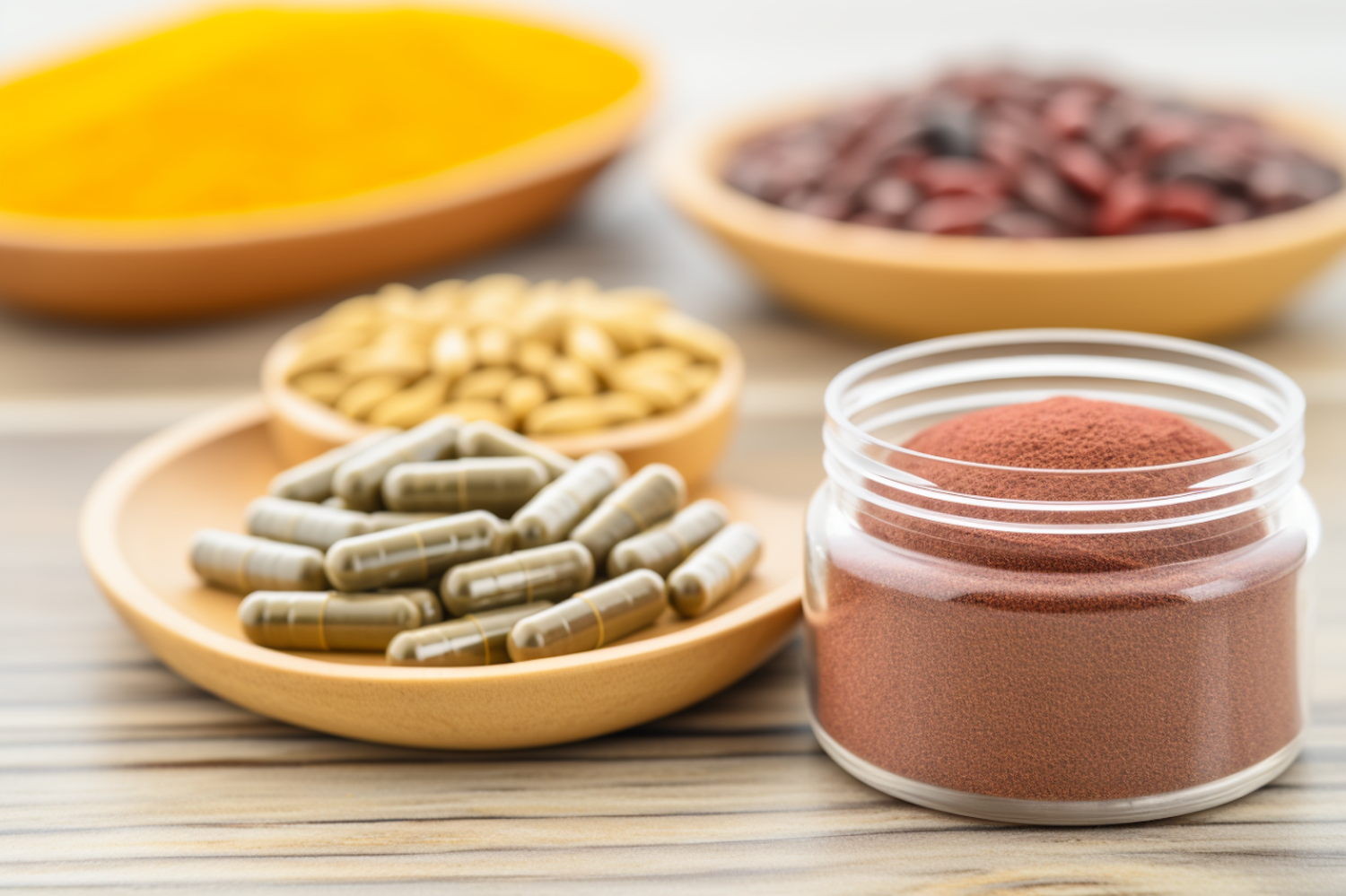
It really boils down to knowing your needs and what to look for.
Step-by-Step Decision Guide: Choosing the Best B12 Supplement for Your Goals
Before you even think about buying, remember the most important step: always talk to your doctor or a health expert first. They can give you advice that’s just for you.
1. Test First or Trial Supplementation?
Your doctor can help you decide if you need to get your B12 levels checked with a blood test. This is often the best way to know if you truly need a supplement and how much. If your levels are very low, your doctor might suggest vitamin B12 shots or a high dose to start. If you just want to make sure you’re getting enough, especially if you’re vegan or vegetarian, your doctor might say it’s okay to try a daily b12 supplement and see how you feel.
2. Picking the Right Type of B12
There are a few main forms of vitamin B12 you’ll see in supplements:
- Cyanocobalamin: This is the most common form you’ll find. It’s very stable and usually cheaper. Your body changes it into the active forms it needs [2]. It works well for most people to raise B12 levels [6].
- Methylcobalamin and Adenosylcobalamin: These are known as "coenzyme" forms. They are natural forms of B12 that your body uses right away. Some people prefer these, thinking they are "better" or more natural, especially methylcobalamin [1, 9]. Studies show both cyanocobalamin and methylcobalamin are good at preventing B12 deficiency [3, 5].
- Hydroxocobalamin: This form is often used in vitamin b shots and can be found in some supplements too [4].
All these forms can help you get enough B12. Your doctor can help you decide which one might be best for your specific situation.
3. Choose the Form and Dose
B12 supplements come in different ways:
- Pills/Tablets: Easy to take.
- Sublingual (under the tongue): These dissolve in your mouth and can be good for people who have trouble absorbing B12 through their stomach.
- Liquid Drops: Another easy option, especially for kids or people who don’t like pills.
- Vitamin B Shots: These are given by a doctor and are often needed for serious deficiencies or conditions like pernicious anemia, where your body can’t absorb B12 from food or pills.
The right dose depends on your age, diet, and why you’re taking B12. Your doctor will tell you the best amount.
4. Make Sure it’s a Quality Supplement
It’s super important to choose a high-quality product. Here’s what to look for in 2026:
- Third-Party Testing: Look for seals from groups like USP, NSF International, ConsumerLab.com, or Informed Choice [11, 12, 13, 14, 17, 20]. These groups test supplements to make sure what’s on the label is actually inside, and that they don’t have bad stuff like heavy metals [10, 19].
- GMP Certified: This means the supplement was made following "Good Manufacturing Practices." It shows the company has good quality control [15, 16, 18, 21].
- Check the Ingredients: If you need a vegan b12 supplement, make sure it’s clearly labeled as suitable for vegans. Some B12 supplements might have animal-derived ingredients in the capsule or other parts.
Expert Tip:
When you’re comparing different B12 supplements, don’t just pick the cheapest one. Think about the quality and if it has a third-party seal. A good quality supplement might cost a little more, but you’ll know you’re getting what you pay for. For example, many respected wellness companies, like those found at trusted health and fitness resource sites, offer quality vitamin B12 supplements and other vetted nutrition products. You can often find a wide range of options, including those suitable for various dietary needs, through reputable providers such as those listed at Awin-1 or Awin-2. Always do your research and read reviews.
5. Track Your Progress
After you start taking your best b12 supplement, pay attention to how you feel. Your doctor might want to do another blood test after some time to see if your B12 levels have improved. This helps make sure the supplement is working for you.
Summary
This article explains why vitamin B12 matters for everyday athletes and active adults, covering how B12 supports energy, red blood cell production, and nerve health. It breaks down common supplement forms—cyanocobalamin, methylcobalamin, adenosylcobalamin—and explains when injections are appropriate. You’ll learn who is most at risk of deficiency (vegans, older adults, people on certain medications, and those with gut issues), what symptoms to watch for, and practical dosing ranges for prevention versus treatment. The piece also gives a clear checklist for choosing high-quality supplements, including third-party testing and ingredient transparency, and outlines safety concerns and drug interactions to discuss with your clinician. Finally, it offers a step-by-step approach to testing, selecting, and monitoring B12 supplementation so you can make an informed choice for performance and long-term health.




Get practical training, recovery, and nutrition insights in your inbox