
Creatine vs Pre Workout Which One You Actually Need for Strength and Energy

Introduction
You are standing in the supplement aisle, staring at two bottles. One says creatine. The other says pre workout. Both promise to boost your performance. But which one do you actually need?

This is the exact question that trips up so many fitness enthusiasts. The hype around both supplements is loud, and the misinformation is even louder. It is easy to waste money on the wrong choice or miss out on real gains because you picked the wrong powder.
Here is the truth. These two supplements work completely differently in your body. Creatine helps your muscles produce more energy during short, intense efforts like lifting heavy weights. Pre workout is a blend of stimulants and other ingredients designed to give you a burst of energy and focus before you train.
Research from 2025 and 2026 continues to show that creatine is generally safe and effective when used correctly. One review confirmed that creatine supplementation is well tolerated and not linked to serious side effects. Another analysis from the International Society of Sports Nutrition reinforces its benefits for muscle strength.
So how do you decide between creatine vs pre workout? This guide breaks down the science in plain language. We will compare how each one works, what benefits you can expect, the risks to watch for, and which choice fits your specific goals. By the end, you will know exactly which supplement deserves a spot in your routine.
If you are ready to make an informed choice, check out evidence backed supplement guides and product reviews at RepCore to find options that match your fitness journey.
What Is Creatine? The Science Behind the Most Researched Supplement
You have probably heard that creatine is one of the most studied supplements out there. But what actually is it?
Creatine is a natural compound your body already makes. Your liver, kidneys, and pancreas produce it from amino acids. You also get small amounts from foods like red meat and fish. The problem is that the amount your body makes plus what you get from food is often not enough to fully saturate your muscles for peak performance.
Here is how it works. When you lift a heavy weight or sprint, your muscles use a molecule called ATP for energy.

ATP gets used up fast. Creatine steps in to help regenerate ATP so you can keep pushing harder for a few extra reps or seconds. That is why creatine is so effective for high intensity exercise.
The research backs this up. A 2025 review in PMC confirmed that creatine monohydrate supplementation is generally safe when used appropriately. Another analysis from 2025 showed that creatine is well tolerated and not linked to clinically significant side effects. The International Society of Sports Nutrition also reinforces that creatine boosts muscle strength and power.
Most people start with a loading phase. You take around 20 grams per day for 5 to 7 days. Then you drop to a maintenance dose of 3 to 5 grams per day. Some people skip the loading phase and just take 3 to 5 grams from day one. It takes longer to saturate your muscles, but both approaches work.
Individual results vary. Your muscle fiber type, diet, and even your baseline creatine levels affect how quickly you respond. Vegetarians often see bigger gains because their starting levels are lower.
If you want to add creatine to your routine, start with a clean, unflavored creatine monohydrate powder. It is the most researched form and the one that works best. You can find trusted supplement options through RepCore’s curated picks that have been vetted for purity and effectiveness.
Now let us look at pre workout. Because while creatine works quietly in the background to fuel your muscles, pre workout takes a very different approach.
What Is Pre-Workout? A Breakdown of Common Ingredients and Their Roles
So if creatine works quietly in the background to fuel your muscles, what does pre-workout do? Think of it as the opposite. Pre-workout supplements are designed to give you a quick burst of energy, focus, and endurance right before you exercise. You take them about 20 to 30 minutes before your workout, and they hit fast.
Most pre-workouts are a blend of several ingredients. The main ones you’ll see are caffeine, beta-alanine, citrulline malate, and sometimes creatine itself. A 2026 expert review from Fortune noted that the most common ingredients are caffeine, L-citrulline, L-theanine, beta-alanine, and betaine anhydrous. Each one plays a different role.
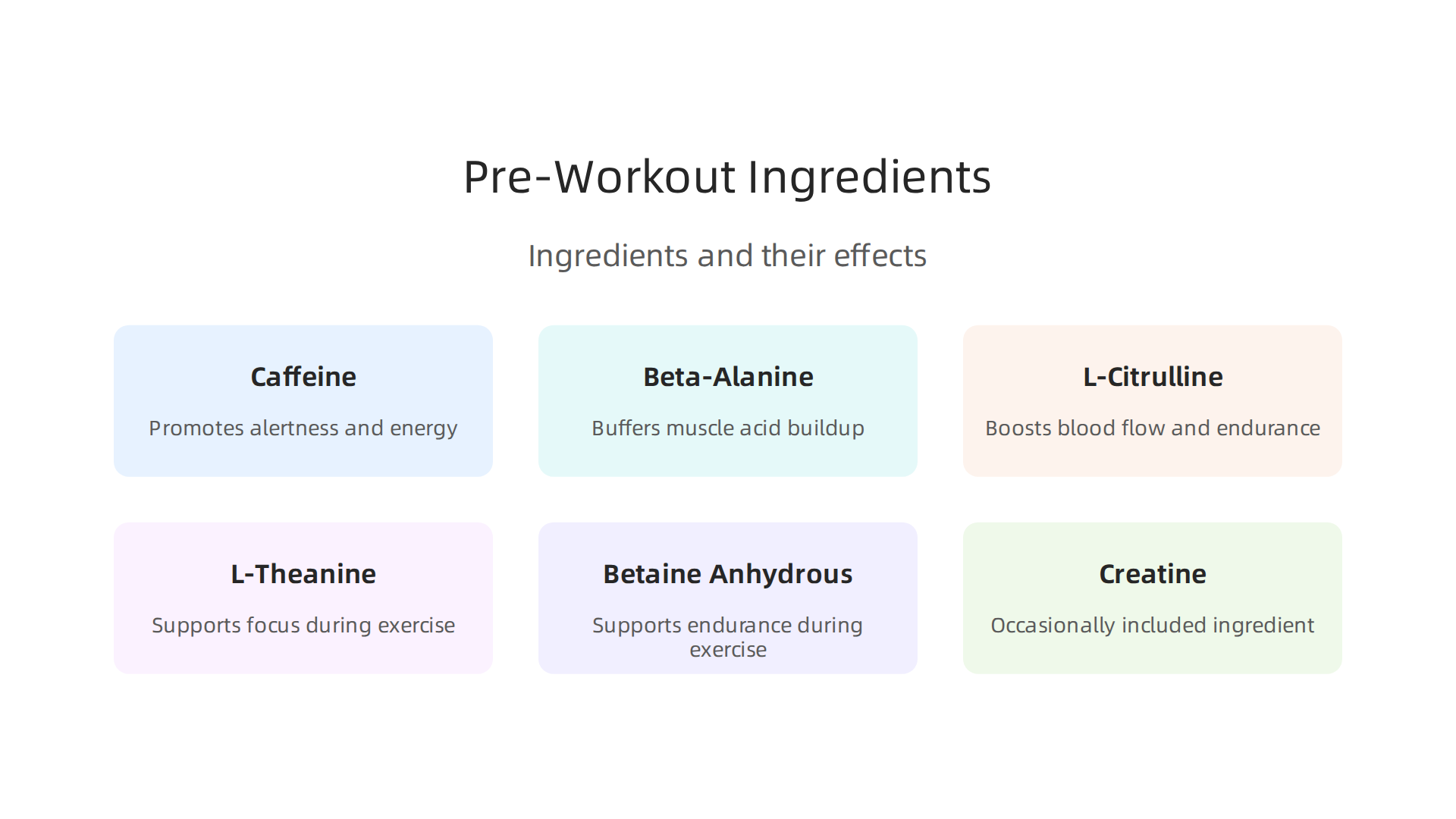
Caffeine is the star. It blocks adenosine, the chemical that makes you feel tired. That’s why you feel more alert and can push harder. But too much can cause jitters or heart issues, so dosing matters.
Beta-alanine is what causes that tingling or “pins and needles” sensation on your skin. It helps buffer acid in your muscles during high intensity work, so you can keep going longer. The International Society of Sports Nutrition states that beta-alanine is safe at recommended doses.
Citrulline malate boosts blood flow. It helps your muscles get more oxygen and nutrients, which can give you a better pump and reduce fatigue. Most studies use 6 to 8 grams of citrulline malate per serving.
Other ingredients like betaine, B vitamins, and branched-chain amino acids are sometimes added, but the evidence for them is weaker.
You also have two types of pre-workouts. Stimulant versions contain caffeine. Non-stimulant versions skip the caffeine, which is useful if you train late at night or are sensitive to stimulants.
Here’s the thing. The evidence for each ingredient varies. Caffeine and beta-alanine have strong science backing them. Citrulline malate has good support too. But some other ingredients are less proven. That’s why reading labels is important.
If you’re looking for a clean, effective pre-workout that uses science-backed doses, check out RepCore’s curated supplement picks for vetted options.
Now that you understand the roles of creatine and pre-workout supplements, let’s put them side by side. The creatine vs pre workout decision comes down to how each one works in your body, when you take it, and what side effects you might notice.
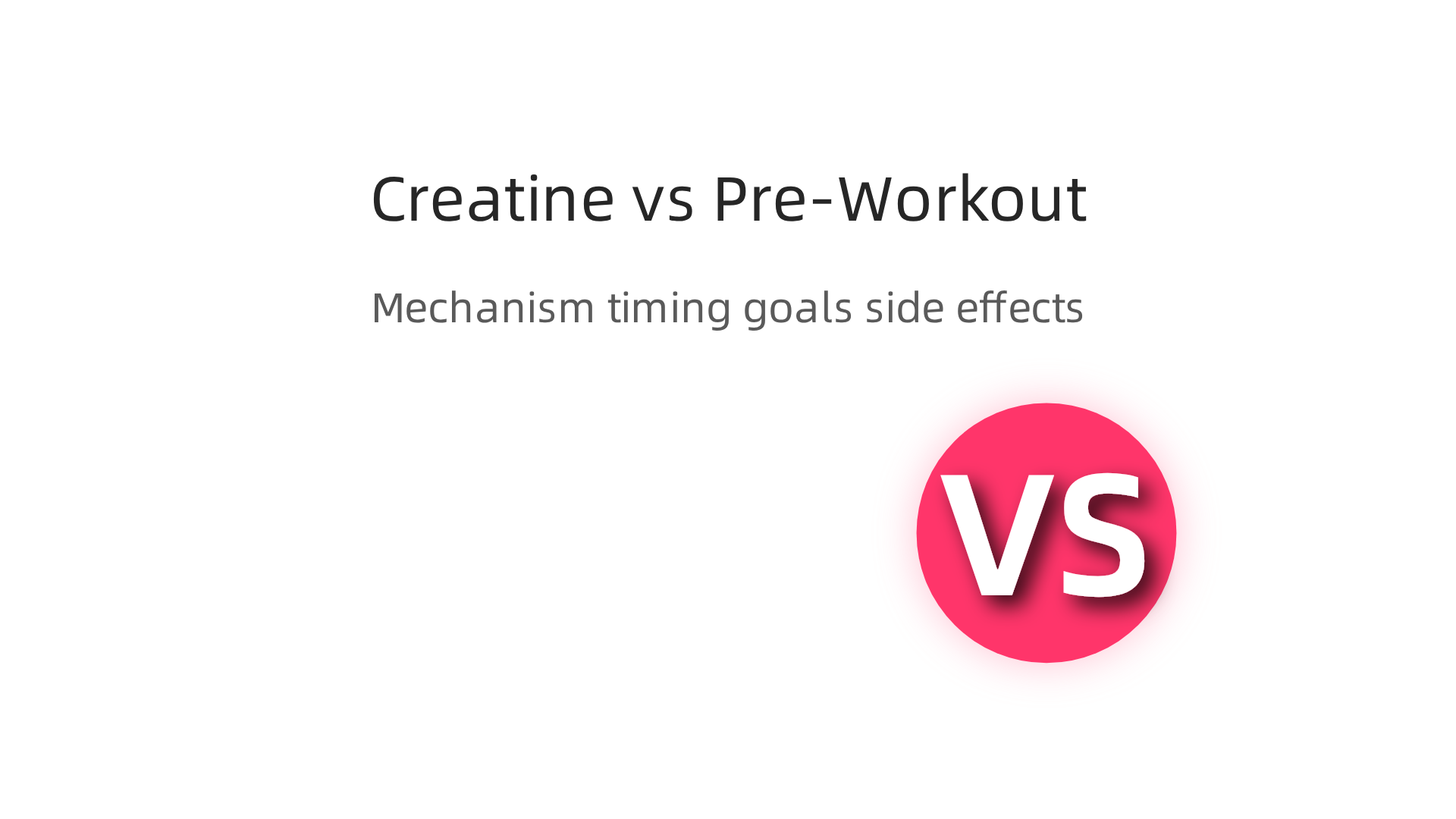
| Feature | Creatine | Pre-Workout |
|---|---|---|
| Mechanism | Boosts ATP regeneration for quick energy during heavy lifting. Works best for short, intense bursts. | Increases alertness and blood flow through caffeine and other stimulants. Helps you feel focused and ready. |
| Timing | Take daily, any time, without relying on your workout schedule. Some research suggests post-workout may be slightly better for muscle gains. | Take 30 to 60 minutes before exercise. It works fast and wears off after a few hours. |
| Main Goal | Long-term strength and muscle growth. Consistent daily use builds your body’s energy reserves over weeks. | Immediate energy and focus for today’s workout. No long-term buildup required. |
| Common Side Effects | Water retention, mild stomach discomfort. Very safe at normal doses, according to studies. | Jitters, anxiety, trouble sleeping (from caffeine), and the familiar tingling from beta-alanine. |
How Their Safety Compares
Creatine has a strong safety track record. The International Society of Sports Nutrition confirms that creatine is safe when used as directed. Research published in 2025 also shows creatine is well tolerated and not linked to serious problems.
Pre-workout ingredients are also safe for most healthy adults, but the caffeine content can cause issues. A 2026 guide from Mito Health notes that core ingredients like caffeine, beta-alanine, and citrulline have strong safety profiles, but dosing matters. Too much caffeine can raise heart rate and blood pressure.
Which One Should You Choose?
It depends on your goal. If you want steady, long-term strength gains, creatine is the better choice. If you need a boost of energy right before a tough session, pre-workout fills that role.
Many people use both. You can take creatine daily and use pre-workout only on training days. They work through different pathways, so they pair well together.
If you are ready to try quality options, check out RepCore’s curated supplement picks for vetted creatine and pre-workout products that meet scientific standards.

In the creatine vs pre workout debate, there is no single winner. The right choice depends on your training style and what you want to get out of each workout.
Which Supplement Fits Your Fitness Goals? A Decision Guide
Still unsure which path is right for you? Let’s break it down by your main goal.
Choose creatine if your priority is long-term strength and muscle growth. Creatine helps you build more strength and muscle over time by boosting your muscles’ energy reserves. If you want to see steady progress in the gym over weeks and months, this is your supplement. As one expert explains, daily creatine use gradually improves strength and performance of muscles over time.
Choose pre-workout if you need a quick energy boost before a tough session. Pre-workout supplements are designed for immediate effects: they help you feel energized, focused, and ready to perform during your workout. If you struggle with low energy before training or want an extra push for heavy sets, a pre-workout can help.
Consider these individual factors before deciding:
- Caffeine tolerance. If caffeine makes you jittery or disrupts your sleep, a stimulant-free pre-workout or simple creatine may be a better fit.
- Training time. Evening workouts can be ruined by caffeine that keeps you awake. Creatine works any time of day without affecting sleep.
- Budget. Creatine is generally cheaper per serving than pre-workout blends. A single tub of creatine monohydrate lasts months.
- Stacking. Many people use both: creatine daily for long-term gains, and pre-workout only on training days for acute energy.
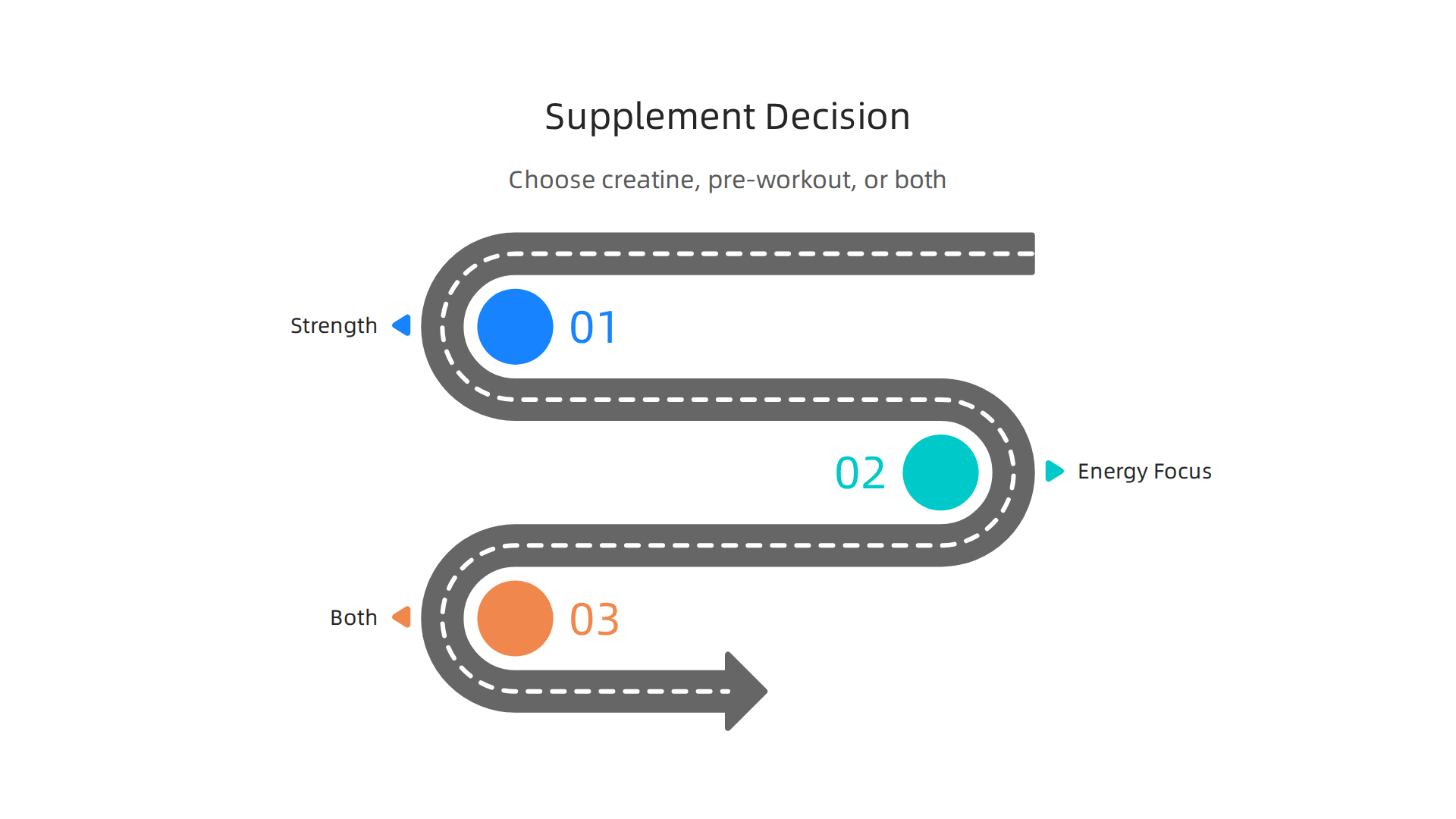
Here is a simple decision flow:
- Primary goal is strength or muscle size? Go with creatine.
- Primary goal is energy and focus for today’s workout? Go with pre-workout.
- Want both long-term results and a workout boost? Take creatine daily and add pre-workout before hard sessions.
The beauty of the creatine vs pre workout decision is that you do not have to pick just one. They work through different pathways in your body, so they pair well together.
If you are ready to try quality options, check out RepCore’s curated supplement picks for vetted products that match your goals.
Can You Combine Creatine and Pre-Workout? Safety, Efficacy, and Timing
So you want the long-term muscle-building power of creatine and the instant energy boost from a pre-workout? You are not alone.

This is one of the most common questions in the creatine vs pre workout debate. The simple answer is yes, you can take them together. In fact, they make a great team.
Is This Stack Safe?
For most healthy people, combining pre workout supplements with creatine is perfectly safe. As long as you stick to the recommended serving sizes, you should have no issues. One expert notes that creatine is safe and highly compatible with most other supplements. A stacking guide also confirms it is generally safe for healthy individuals when following dosage instructions. The core ingredients found in pre-workouts, like beta-alanine and citrulline, have strong safety profiles too.
Does Caffeine Affect Creatine?
A common myth is that caffeine stops creatine from working. You do not need to worry about this. Current evidence suggests there is no major negative interaction between the two. So mixing your daily creatine into your pre-workout shake is a totally effective strategy. This makes the creatine pre workout combo very convenient.
What Is the Best Timing?
This is where you can get the most out of your stack.
- Pre-workout: Take your pre-workout about 20 to 30 minutes before you train. This lets the caffeine, beta-alanine, and citrulline kick in so you feel focused and powerful.
- Creatine: Your total daily intake is what really matters. You do not have to take it at a precise moment. Some research suggests that taking creatine after your workout might be slightly better for muscle uptake. But if you want to keep it simple, mixing it into your pre-workout drink works wonderfully.
The best approach for creatine benefits is consistency. Take it every day.
Your Simple Stacking Plan
- Mix your pre-workout with water and drink it before you warm up.
- Take your 5-gram dose of creatine whenever it fits your routine. Before, during, or after your workout all work.
If you are wondering what is pre workout doing inside a stack, think of it as the gas pedal for your workout, while creatine is the engine upgrade for your long-term growth.
Looking for a clean, effective pre-workout or a high-quality creatine to start your stack? You can find trusted options in one convenient place with RepCore’s curated supplement picks.
How to Choose a High-Quality Supplement Without Getting Misled
Now you know that creatine and pre-workout can work together safely. But here is the real challenge. How do you pick a product that actually contains what the label claims? The supplement world is full of flashy promises and confusing terms.

Let me show you how to cut through the noise and choose a product you can trust.
Look for Third-Party Testing Seals
This is your number one shortcut to quality. When a supplement has a seal from an independent testing organization, it means someone checked the product for purity and accurate labeling. The most trusted seals are NSF, Informed Choice, USP, and ConsumerLab.

Each certification works a bit differently. For example, NSF does not just look at test data from the brand. They run their own tests to verify the product actually contains what the label says. This is a big deal. A 2026 comparison guide explains what each certification verifies and how often they test.
If you are an athlete or someone who gets drug tested at work, you should look for the NSF Certified for Sport or Informed Sport seal. These programs test for over 200 banned substances and require ongoing batch testing.

You can search for certified products on the NSF Sport website.
For everyday use, Informed Choice is another solid option. It is a globally recognized program that monitors and tests dietary supplements for quality. You can check their list of certified brands to find trusted products.
The bottom line is simple. If a product does not have a third-party seal, you are taking a gamble. The brand might be honest, but you have no way to know for sure.
Avoid Proprietary Blends
You will see this term on many pre-workout labels. It looks like this: "Proprietary Blend 5,000 mg" followed by a list of ingredients. The problem is you do not know how much of each ingredient you are getting.
A proprietary blend hides the exact doses. The brand could put 4,900 mg of one cheap filler and only 100 mg of the active ingredient. You would never know.
Always choose supplements with transparent labels that show exact amounts for every ingredient. This is how you can compare products and know you are getting effective doses.
Beware of Marketing Gimmicks
A label might say "clinically studied" in big letters. That sounds great, right? But here is the catch. Sometimes the clinical study was done on a single ingredient at a specific dose, while the product uses a different form or a much smaller amount.
Do not fall for flashy claims. Look at the actual ingredient list and compare it to what research shows is effective. If you want to understand what each ingredient does, learn more about what is pre workout.
The easiest way to stay safe? Stick with products from brands that have a reputation for quality and transparency. You can find trusted options at places like RepCore’s curated supplement picks. They focus on products that actually work and meet high standards.
Take a few extra minutes to check the label. Your body will thank you.
Practical Tips from Experienced Athletes and Coaches
Knowing the science is great. But hearing from people who use these supplements day in and day out is even better. I have talked to coaches and athletes who have stacked creatine and pre workout for years. Here is what they have learned.
Real-World Timing Protocols
Most experienced athletes do not overthink timing. The key is consistency. Research suggests that total daily creatine intake matters way more than when you take it. So you do not need to stress about the perfect window.
Here is how many athletes set up their routine:
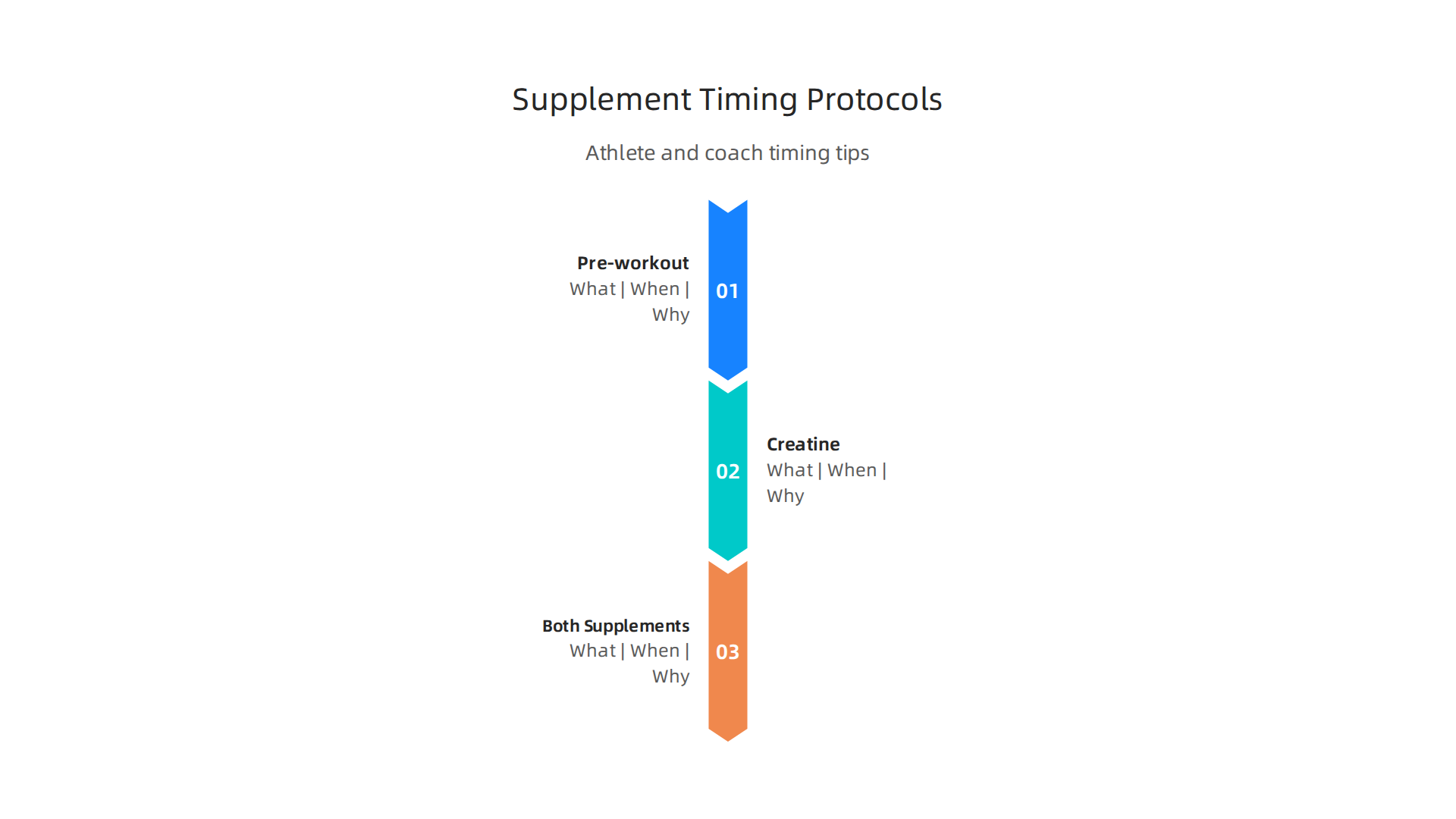
| What | When | Why |
|——|——|—–|
| Pre-workout supplement | 20-30 minutes before training | Gives caffeine and focus ingredients time to kick in |
| Creatine | Any time of day, same time daily | Builds up saturation in your muscles over time |
| Both together in one shake | Right before workout | Convenient, especially if using a pre workout that already has creatine |
Some athletes prefer taking creatine pre workout because it is easier to remember. Others take it post-workout with their protein shake. Both work. Just pick a time and stick to it.
On rest days, many athletes still take their creatine but skip the pre-workout. Your muscles need that daily dose of creatine even when you are not training. A pre-workout supplement is really only useful on days you actually work out.
Common Mistakes to Avoid
Beginners often make these mistakes. Learn from them so you do not have to.
Starting with too high a dose. This is the biggest one. A full scoop of pre-workout might have 300-400 mg of caffeine. If you are not used to that, you will feel jittery, anxious, and maybe even sick. Start with half a scoop and see how you feel.
The same goes for creatine. Some people try to load with 20 grams per day for the first week. That can cause bloating and stomach discomfort. You can just take 3-5 grams daily and reach full saturation in about three to four weeks.
Ignoring hydration. Pre-workout supplements contain caffeine, which is a mild diuretic. And creatine pulls water into your muscles. Combine the two, and you need to drink extra water throughout the day. Dehydration can lead to headaches, fatigue, and worse performance.
Expecting instant results. Creatine takes time to build up in your system. You will not feel stronger after one dose. Give it at least two weeks of consistent use before judging the results. Pre-workout will give you an immediate energy boost, but the real gains come from showing up and training hard over time.
Expert Advice on Cycling and Tolerance
Here is the thing. You do not need to cycle creatine. Your body handles it fine with long-term daily use. Many athletes take it for months or years without breaks.
Pre-workout is a different story. Your body builds tolerance to caffeine and stimulants pretty quickly. If you use a high-stim pre-workout every day, you will eventually need more to feel the same effect.
Here is what coaches recommend:
- Use pre-workout only on training days, not every day of the week
- Take a break from stimulants every 4-8 weeks for one to two weeks
- Switch to a non-stimulant pre-workout during your break
- Keep your caffeine intake from other sources (coffee, tea, energy drinks) consistent
One coach I know tells his athletes to use pre-workout for six weeks, then take one week off. During that off week, they hydrate well and rely on caffeine from coffee or tea only. This keeps the pre-workout effective when they go back to it.
If you are sensitive to caffeine, you might want to try a stimulant-free pre-workout. That way you still get the focus and pump ingredients without the jitters. You can mix creatine with it safely.
The bottom line? Be smart about your routine. Start low, stay hydrated, and give your body time to adjust. Stacking creatine vs pre workout is safe and effective when you follow these simple rules.
If you want to find products that match these best practices, you can check out RepCore’s recommended supplements. They only suggest things that actually work and meet high quality standards.
Summary
This article explains the real differences between creatine and pre-workout supplements so you can choose what fits your goals. It covers how creatine works to regenerate ATP for short, intense efforts and why daily use (3–5 g maintenance, optional loading) builds long-term strength, while pre-workouts deliver fast energy and focus through caffeine, beta-alanine, and citrulline when taken ~20–30 minutes before training. You’ll learn evidence-based safety notes, typical side effects, and practical timing so you can stack them safely—creatine does not get blocked by caffeine. The guide also shows how to pick trustworthy products (third-party testing, transparent labels), common athlete routines, and mistakes to avoid like overdoing stimulants or skipping hydration. By the end you’ll know which supplement matches your priorities, how to use both together when appropriate, and what to check on labels before buying.





Get practical training, recovery, and nutrition insights in your inbox