
Gym Launch Step by Step Guide to Opening a Successful Fitness Center


Introduction
More people than ever are investing in their health and wellness. The numbers prove it. In 2026, the global health and fitness club market hit USD 121.58 billion, and experts expect it to grow at a strong 9.1% rate through 2030, according to the latest Health and Fitness Club Market Report. Here in the US, the gym industry has grown steadily at 3.6% per year between 2021 and 2026, as reported by IBISWorld.
This growth means opportunity. But here is the thing. A gym launch is one of the most exciting projects you can take on, and also one of the most complex. You are not just buying equipment and hanging a sign. You are stepping into a business that demands smart planning across many areas.

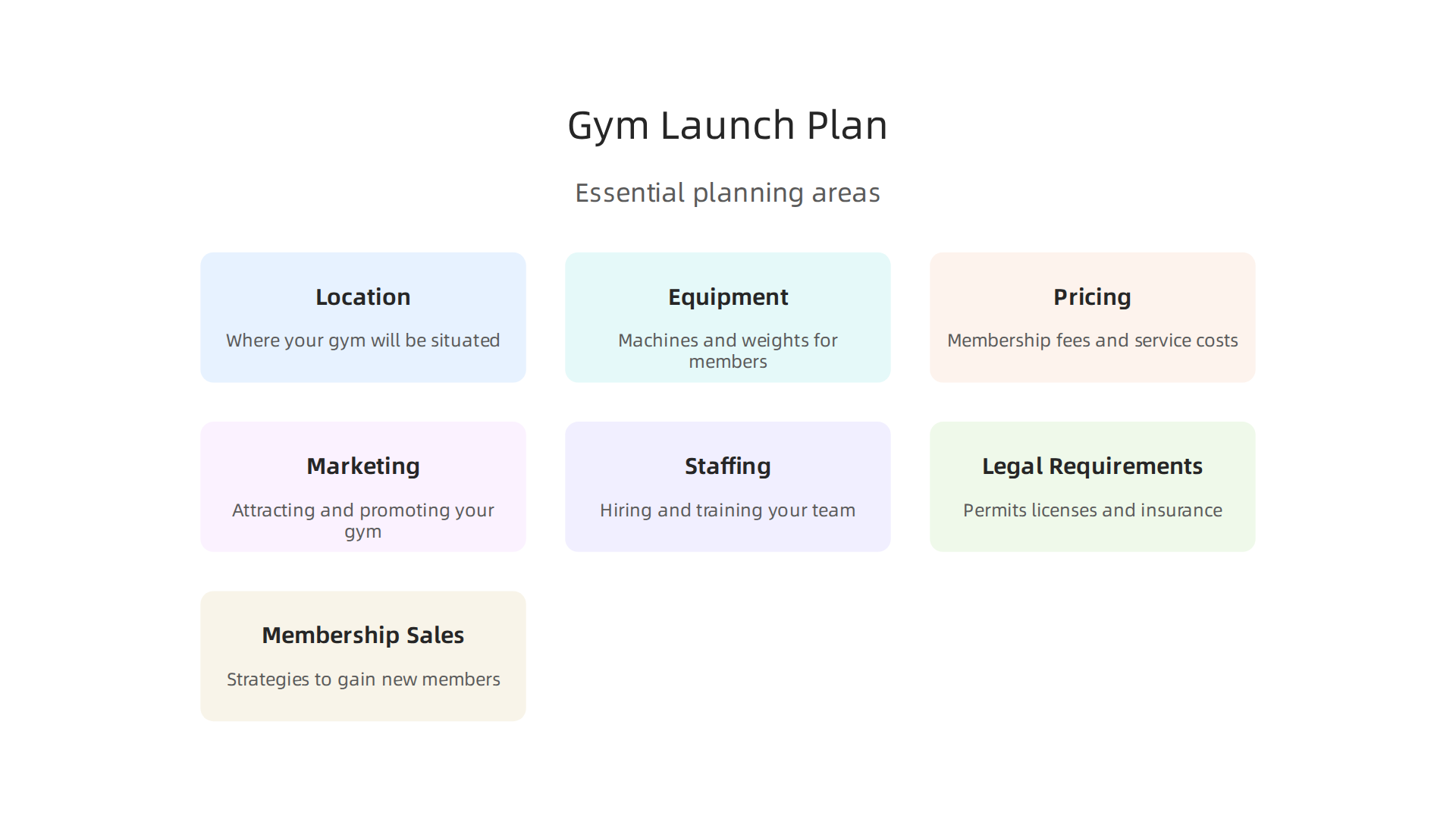
You have to think about location, equipment, pricing, marketing, staffing, legal requirements, and membership sales.
Big gym brands make it look easy, but they have teams of experts behind them. For local gyms starting from scratch, every decision matters more.
Whether you plan to compete with Anytime Fitness gyms or open a boutique studio, the basics are the same. You need a clear vision, a solid business plan, and the right strategy to attract and keep members.
This guide will walk you through every step of your gym launch, from the first idea to opening day. We will use real industry data, expert advice, and practical tips so you can avoid common mistakes. If you are serious about opening the gym, this is your starting point.
Ready to get started? Let us look at the first big step: what kind of gym you should build.
1. Define Your Gym Concept and Niche
You cannot be everything to everyone. The biggest mistake new gym owners make is trying to compete directly with giant gym brands like Anytime Fitness gyms on their own terms. You will lose that fight on price and square footage.
Instead, the smartest gym launch strategy starts with a niche.
Think about who you want to serve. Are you targeting busy professionals who need 45 minute workouts? Are you building a space for serious strength athletes? Or maybe you want a calming yoga studio for stress relief?
Your answer changes everything.
According to the 2026 ACSM Fitness Trends survey, functional fitness training remains a top trend year after year. Boutique studios and specialized local gyms are growing faster than traditional big box clubs because they offer a focused experience.
Your niche dictates your entire business model. It decides what equipment you buy. It sets your pricing. It tells you how to market. A CrossFit box needs barbells and plyo boxes. A Pilates studio needs reformers. A general the gym approach needs a little of everything, but it rarely builds a loyal community.
If you want to build a business that earns more per member, focus on a specific problem. Our guide on how to build a profit training gym that earns 50 percent more per member shows exactly how specialization drives revenue.
When you define your concept clearly, every other decision you make becomes easier. Your branding, your location, and the staff you hire all flow naturally from this one choice. Take the time to get it right before you move to the next step.
2. Create a Solid Business Plan with Financial Projections
You have your niche picked out. Now comes the part that scares most new gym owners: the money part.
Here is the truth. You cannot build a successful gym launch without a solid business plan. This document is not just for banks or investors. It is your roadmap. It keeps you from making expensive mistakes.
So what goes into it?
Start with your financial projections. You need to know three things:
- How much cash you need to open
- How much it costs to run the place each month
- How many members you need to stay alive
Let us look at the numbers for 2026. The cost to open a gym varies a lot. According to industry benchmarks, the average gym startup cost for an independent facility ranges from $50,000 to $250,000. A small specialty studio can start around $10,000, while a larger facility can easily go over $500,000. Your biggest costs will be your space and your equipment.
Here is a simple breakdown of common startup costs:
- Facility lease and build-out: Rent, deposits, renovations, and construction
- Equipment: Weights, machines, flooring, and accessories
- Licenses and permits: Business registration, liability insurance, and fire safety permits
- Marketing and branding: Website, signage, and launch campaign
- Working capital: Cash to cover expenses until you break even
One study shows that you need at least $314,000 in working capital to sustain operations until you hit your breakeven month, which is often around month nine. That is a lot of cash sitting in the bank before you see a profit.
Many people under estimate cash flow needs. They also overestimate how many members they will sign up in the first few months. Those two mistakes kill more gyms than anything else.
Take a step back. Look at local gyms in your area. Visit Anytime Fitness gyms and other big brands. Watch how they price their memberships. Then build your own numbers from reality, not hope.
Use this section of your business plan to test your assumptions. If your revenue forecast looks too good, it probably is. Be honest with yourself.
Want to see how specialization affects your bottom line? Check out our guide on how to build a profit training gym that earns 50 percent more per member. It shows you exactly how a focused concept changes your financial picture.
When you have a clear business plan with real numbers, everything else gets easier. You know what equipment to buy. You know what to charge. And you know how many members you really need. That confidence makes your entire gym launch smoother.
3. Choose the Perfect Location and Secure a Lease
You have your business plan with real numbers. Now comes the part where you actually find a home for your gym. This decision can make or break your entire gym launch.
Here is the thing. Location is not just about square footage. It directly affects how many people see you, walk through your door, and stick around.
Start with visibility and demographics. A gym in a high traffic area gets noticed. People are more likely to join a gym they pass every day. According to Markel Insurance, visibility is one of the most important factors for a new fitness business. But you also need the right people nearby. Look for areas with high population density and an average household income above $75,000. That is a strong signal that locals can afford your memberships.
Think about where your ideal members spend their time. Do they live nearby? Do they commute through your area? A location right next to work or on the way home is gold.

People cannot go far on their lunch breaks, so convenience is everything.
Now, check the competition. Map out all the other fitness facilities within a few miles. You do not want to open next to three other gym brands that offer the same thing you do. The goal is to find a spot where your specific concept fills a gap. For example, if there are already several big box gyms but no small group training studios, that is your opening.
Parking and accessibility matter a lot too. If people cannot find a spot or have to walk through a sketchy alley, they will not come back. Make sure your space is on ground level or has easy elevator access.
When you find a promising space, do not sign the lease right away. Use a lease negotiation checklist. Look at the length of the lease, rent escalation clauses, and who pays for repairs. One bad lease can drain your cash before you even open.
Need help evaluating what makes a gym truly worth joining? Our guide on 7 critical criteria to evaluate before joining a hiit gym gives you the same lens to use when scouting your own location.
To make smarter location decisions, many gym owners use a site selection tool that pulls demographic data and traffic patterns. The right tool saves you from guessing. Check out this site selection platform to compare neighborhoods before you commit.
Your location sets the stage for everything else. Get it right, and your gym launch gets a whole lot easier.
4. Design Your Gym Layout and Select Equipment
You locked in the lease. Now comes the fun part: turning an empty space into a place people actually want to sweat in.
Your layout and equipment choices directly affect how your members feel the second they walk through the door. A well designed gym feels safe, spacious, and easy to use. A bad layout feels cramped, confusing, and honestly, a little stressful.
Start with a smart floor plan.
Think about how people move through the gym. You need a clear path from the entrance to the locker rooms and onto the training floor. Zone your space by purpose. Put free weights in one area. Keep machines in another section. Leave plenty of open floor space for stretching and functional movements. This keeps the flow smooth and prevents accidents.
Pick equipment that matches your concept.
This is where your vision becomes real. If you are opening a strength focused gym, spend your money on heavy duty racks, barbells, and a quality set of dumbbells for strength training. If your model is closer to Anytime Fitness gyms, you might lean toward selectorized machines and cardio equipment. According to Two-Brain Business, matching your equipment to your specific training concept is far more effective than buying whatever is on sale. A smart mix of free weights, a few versatile machines, and targeted functional tools works best for most local gyms.
Here is the thing. You do not have to buy everything at once. Start with the essentials for your most popular training styles. You can always add more equipment later as your membership grows.
Save cash with leasing and financing.
Buying brand new equipment for your entire gym can cost over $50,000. That is a huge hit right before your grand opening. Many smart gym owners choose to lease or finance their equipment instead. This keeps more cash in the bank for marketing, staffing, and unexpected repairs. It also lets you get higher quality gear from top gym brands right away. You can explore affordable gym equipment packages online to compare your options without pressure.
When your layout is smart and your equipment is dialed in, your whole gym launch feels more professional. Members notice the difference. They feel safe, comfortable, and motivated. That is exactly the kind of reputation you want to build from day one.
5. Navigate Permits, Licenses, and Insurance
Designing the floor plan and picking equipment is the exciting part of a gym launch. But here is the part many new owners skip by accident. You have to get the legal paperwork right before anyone steps foot on your floor.
Every gym needs to follow local, state, and federal rules about building codes, health, and safety. The exact list changes by city, but most local gyms need a few standard items.
Common permits and licenses you must get:
- Business license – This is your basic permission to operate.
- Occupancy permit – Your space must pass fire and safety checks before people can train there.
- Weights and measures inspection – If you charge by weight or offer any measured service, inspectors will check your scales.
- Liability insurance – This is not a permit, but it is just as critical. You need coverage in case a member gets hurt.
The cost for permits, registration, and insurance can range from about $500 to $2,000 depending on your city, according to a 2026 guide for starting a CrossFit gym 🔗. That is a small price compared to the fines or even closure you face without them. The Economics of Owning a Gym in 2026 report lists licenses and permits as a standard startup category that every founder must budget for.
Insurance deserves extra attention. General liability insurance protects you if a member drops a weight on their foot. Property insurance covers damage to your equipment. Some landlords also require you to have additional coverage. Do not skip this step. The cost is small compared to the risk.
If you want to go deeper on how to structure your gym for long term profit, check out this guide on how to build a profit training gym that earns 50 percent more per member. It covers the full business side, including financial planning.
One more thing. Failure to secure proper permits can lead to fines, delays, or even forced closure. That would kill your gym launch before it starts. So get your paperwork sorted early. Talk to your local city hall or a small business attorney. They can tell you exactly what your specific location needs.
When your licenses and insurance are locked in, you can open your doors with confidence. No surprises. No legal headaches. Just a clean, safe, and fully legal gym ready to serve your community.
6. Build a Strong Brand and Marketing Strategy
Your permits are sorted. Your floor plan is set. Now comes the part that actually fills your gym: getting people to walk through your doors.
A successful gym launch needs more than great equipment. You need a brand that stands out and a marketing plan that brings in members. Let us break down how to do both.
Start with your brand identity.
Your brand is how people feel about your gym before they ever visit. That starts with your name, logo, and the message you share.
Think about what makes your gym different from other gym brands. Are you a hardcore strength facility? A welcoming space for beginners? A boutique class studio? Your brand should match that vision perfectly.
According to Marcom, building a connected brand strategy is key for scaling your presence and attracting the right members
🔗. Your colors, tone, and imagery should all feel consistent across your website, social media, and signage.
Build buzz before you open.
Do not wait until your grand opening to start marketing. Start promoting at least 4 to 6 weeks before your gym launch.
Post behind-the-scenes content showing your space coming together. Introduce your trainers on social media. Run a pre-sale campaign offering discounted founding member rates. This builds excitement and generates leads early.
One effective way to fill classes fast is by building connected online systems that capture sign-ups right away 🔗. Pair this with local partnerships. Team up with nearby coffee shops or running stores for cross-promotions.
Use an integrated marketing mix.
Once you open, keep the momentum going. An integrated marketing plan uses several channels to reach potential members.
- Hyperlocal paid ads: Focus on people within a short drive of your location. Proximity is the number one factor in gym choice 🔗.
- Referral programs: Give current members a reason to bring friends. Offer a free week or discount for each referral.
- Community events: Host free open houses, charity runs, or fitness challenges. These local marketing tactics build real relationships 🔗.
- Local SEO: Claim your Google Business profile so you show up when people search for local gyms.
For a complete system to manage your marketing, memberships, and website, check out this platform designed specifically for gym owners. It helps you streamline everything from lead capture to member retention. (Affiliate link: streamline your gym’s marketing and member management).
Your brand is your promise. Your marketing is how you deliver that promise to your community. Get both right, and your gym launch will turn into a thriving business.
To learn more about structuring your entire gym business for higher revenue, read our full guide on how to build a profit training gym that earns 50 percent more per member.
7. Hire and Train the Right Team
Your marketing plan is set. People know about your gym launch. But what makes them stay? Your team.
The people at the front desk and on the training floor are the face of your gym brand. They build trust and community. This is how you keep members. It sets you apart from other local gyms.
Here is the thing. You can teach someone how to use a squat rack. It is harder to teach them to be friendly. Hire for attitude first. Look for people who truly care about helping others. The right personality fits your culture better than a perfect resume ever could.
The competition for good staff is real. In cities like Knoxville and Atlanta, the gym job market is very active 🔗. You need to offer a great place to work. Offer competitive pay and a positive environment. Unlike some big anytime fitness gyms, you can offer a personal touch and real growth opportunities.
Once you hire the right people, keep investing in them. Hold regular training sessions.

Cover topics like:
- New exercise techniques
- Customer service scripts
- Basic nutrition and recovery tips
A trainer who can answer questions about something like the best omega-3 supplement for athletes adds real value. This makes your staff more confident and your members more loyal.
Ongoing training also helps with employee retention. Staff who feel valued stay longer. This saves you money on constant hiring and keeps your culture strong.
A well-trained team is the key to hitting your revenue goals. Learn how to build a system that works in our guide on how to build a profit training gym that earns 50 percent more per member.
Invest in your team. They are the ones who turn a first visit into a long-term membership. That is how you win after your gym launch.
8. Set Up Your Membership Management Software and Tech Stack
Your team is ready. Now they need the right tools to do their best work. A good gym management system is the backbone of your operations after your gym launch.
Here is the thing. Running a gym without proper software is like trying to lift without a spotter. It just does not work well. You end up with double bookings, billing mistakes, and frustrated members. None of that helps your gym brand grow.
A solid system handles everything in one place. It manages scheduling so your trainers know when clients arrive. It takes care of billing automatically so you stop chasing payments. It tracks check-ins so you know who is actually showing up. And it sends member communications like class reminders or renewal notices without you lifting a finger.
Look for software that connects with your other tools. You want integration with your marketing platform, your access control system for doors, and your reporting dashboard. Good reporting is how you spot trends early. You can see which classes fill up, which times are dead, and which members are at risk of quitting. This helps you make smart decisions fast.
Here is the truth about many local gyms. They pick a cheap system at the start. Then they realize they have outgrown it. Migrating your data from one platform to another is a nightmare. It is expensive and you can lose member history. Choosing the right software early prevents these costly migrations later.
Take your time with this choice. Compare features and read reviews. Unlike some large anytime fitness gyms that use corporate systems, you can pick something built for your exact needs as an independent operator. That is your advantage.
Getting this right at your gym launch saves you headaches for years. If you are still comparing options, check out our breakdown of what to look for in our guide on 7 critical criteria to evaluate before joining a HIIT gym. The same thinking applies when you choose software for your own place.
Set your tech stack right from day one. Your team will work faster. Your members will have a smoother experience. And you will sleep better knowing your business runs like a machine.
9. Plan a Grand Opening with Pre-Sales Strategy
Your software is set. Your team is trained. Now it is time to get people through the door before you even open.
Here is a secret many new owners miss. You do not have to wait until your doors open to start selling memberships. Pre-selling creates early cash flow and builds a waiting list of excited members. It turns your gym launch from a quiet start into a loud event.
Start pre-selling at least four to six weeks before your opening day. Offer a limited number of founder memberships at a steep discount. People love being first. They love a deal even more. This creates urgency and gives you real revenue before your first class.
While you pre-sell, build hype for your grand opening. Use local strategies that actually work in 2026. One smart tactic is to partner with small local businesses for cross-promotions. A coffee shop down the street can hand out flyers. A nearby running store can mention your opening to their customers. This is how you reach people who already live close to your local gyms area.
Another powerful tool is limited time offers. Give early buyers a referral code. If they bring a friend who signs up, both get a discount. Word of mouth spreads fast when there is a reward attached. Research shows that gym brands grow fastest when their current members become their best salespeople.
Your grand opening day itself should feel like an event, not just a normal day.

Host a community fitness challenge. Bring in a local influencer for a free workout. Offer tours and free trials. The goal is to convert the curious into committed members. A study from Vertical Impression notes that proximity is the number one factor in gym choice, so concentrate your marketing on people within a 15 to 20 minute commute of your space.
You can track everything with simple sign up forms during the event. Then follow up fast with each person who showed interest. Do not let a hot lead go cold.
If you want to learn more about building a training business that earns more from every member, read our guide on how to build a profit training gym that earns 50 percent more per member. The same pricing and upsell principles apply to your opening offers.
A strong pre-sales and grand opening strategy turns your gym launch into a moment people remember. It fills your schedule from day one and sets the tone for your entire first year. Start selling before the paint is dry. That is how you win in 2026.
10. Launch Day: Execute and Gather Feedback
Your pre-sale strategy got people in the door. Your grand opening event created real buzz. Now it is time for the real test. Launch day is where all your planning meets reality.
Focus on flawless execution.
Your team needs to be ready. Hiring the right people takes real effort. In fact, hundreds of gym jobs are listed on sites like Indeed at any given time. Did you train your staff on your specific systems? Can they greet a member, solve a problem, and clean a machine the right way? Every single interaction sets the tone for your gym brands reputation. Focus on the small wins. Make sure the music is at the right volume. Make sure the water fountain works. These tiny details separate great local gyms from average ones.
Collect feedback immediately.
Here is the hard truth. You will have problems on day one. Something will break. A schedule will conflict. A member will feel confused. Your job is not to be perfect. Your job is to find those problems fast. Ask every new member how their first visit went. Use a simple five question text survey. Listen carefully to what people say. One piece of honest feedback can save you months of frustration.
Document everything for the first 90 days.
Keep a simple log of issues and fixes. Write down what worked in your classes and what did not. Track your member check ins and retention numbers from day one. This log becomes your blueprint for the next quarter. When you see a trend, you can fix it before it becomes a big problem. The first 90 days are a testing phase. Treat them that way. Be willing to change your schedule, your pricing, or your setup based on real data.
Your gym launch is just the start. The real work begins when you listen and adapt.
Once you have your operations running smoothly, start thinking about how to make your business stronger. Read our guide on how to build a profit training gym that earns 50 percent more per member. The strategies there will help you turn your great launch into a profitable long term business.
Summary
This guide walks you step-by-step through launching a successful local gym, from picking a profitable niche to executing a smooth opening day. It explains why specialization matters, how to build realistic financial projections, and what startup costs and working capital you’ll likely need. You’ll learn how to evaluate and negotiate a location, design an efficient layout, and choose equipment that matches your concept while conserving cash through leasing or financing. The article also covers crucial legal items like permits and insurance, plus how to create a brand, run pre-sales, and run a grand opening that fills classes. It emphasizes hiring for attitude, training your team, and selecting a membership management system that prevents costly migrations. Finally, it shows how to use launch-day feedback and 90-day tracking to iterate and build long-term profitability.






Get practical training, recovery, and nutrition insights in your inbox