
How a Vitamin B2 Supplement Can Boost Athletic Performance and Recovery

Introduction: Why Vitamin B2 Deserves a Spot in Your Supplement Stack
You might think you’re getting enough B vitamins from food alone. But here’s a surprising truth. Research from early 2026 shows that nearly half of women in the UK and Ireland who don’t take supplements are deficient in riboflavin, also known as vitamin B2. Children are also at high risk. This deficiency crisis is a big deal because vitamin B2 plays a critical role in how your body turns food into energy.
If you’re serious about your fitness, every micronutrient matters. Vitamin B2 helps break down carbohydrates, fats, and proteins so your cells can produce energy. That directly affects your workout performance and recovery. According to the Linus Pauling Institute at Oregon State University, people who are very active physically, like athletes and laborers, may have slightly increased riboflavin requirements. That means you might need more than the average person.
But here’s the kicker: many active people still don’t get enough from diet alone. Whether it’s due to poor food choices, restrictive eating, or high training volume, a gap can form. And that gap can lead to fatigue, slower recovery, and even plateaus in your progress.

This article cuts through the misinformation with evidence based insights. We’ll help you decide if adding a vitamin B2 supplement to your stack makes sense for your goals.
We’ll also look at how vitamin B2 works alongside other B vitamins like vitamin B12 and vitamin B-6, and whether a vitamin B complex supplement might be a smarter choice. For a deeper look at how other supplements support your energy and recovery, check out our guide on vitamin Q10 supplements for energy and recovery.
Ready to optimize your nutrition? If you decide to supplement, choosing a quality product matters. You can explore a high quality vitamin B complex supplement here that includes riboflavin along with other essential B vitamins.
Let’s dive into what the science really says about vitamin B2 for athletes.
1. Boosts Energy Production for Higher-Intensity Workouts
Ever hit a wall halfway through a tough set or felt your legs turn to lead during the last interval of a sprint workout? That sudden drop in power often comes down to one thing: your cells running out of fuel fast. Here’s where vitamin B2 steps in as a behind-the-scenes workhorse.
Riboflavin acts as a precursor to two critical coenzymes called FAD and FMN. Think of these as tiny batteries that your mitochondria, the energy factories inside your cells, need to run the electron transport chain.
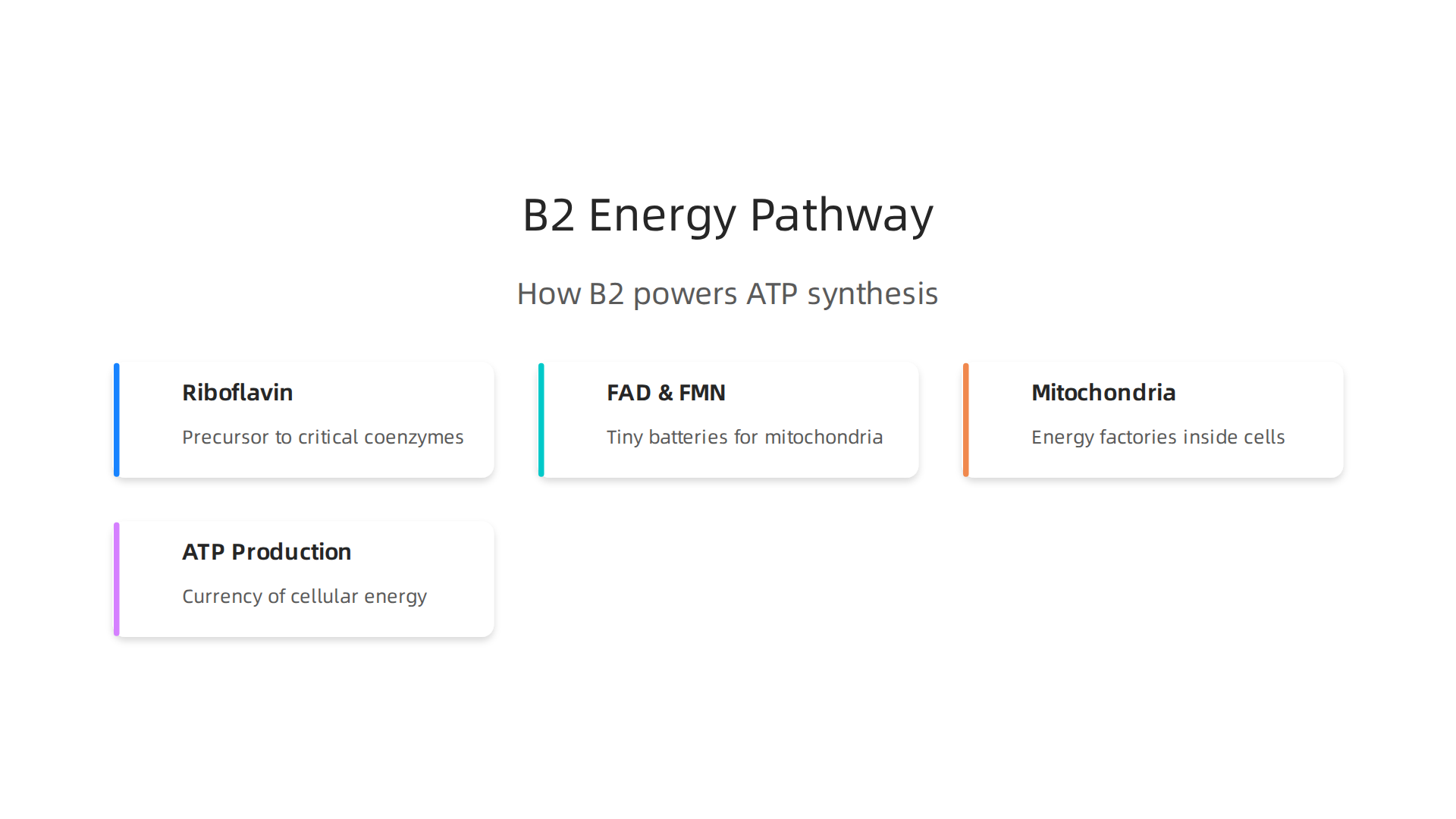
That chain is the main pathway your body uses to produce ATP, the currency of cellular energy. Without enough B2, that entire assembly line slows down. As research in Juniper Publishers explains, B complex vitamins have potential ergogenic effects because they adjust the energetic metabolism of physical activities [1].
When your intake of a vitamin b2 supplement is low, your body struggles to keep up with ATP demands during higher intensity work. The result is early fatigue, slower recovery between sets, and a noticeable drop in power output. A 2023 study published in Medical Science Monitor found that 28 days of vitamin B complex supplementation significantly improved exercise endurance [2].
Even better, a double blinded, placebo controlled trial specifically looking at riboflavin’s influence on sports performance suggested that supplementing before and during training can help [3]. If you want to understand how other nutrients support your energy systems, check out our guide on vitamin Q10 supplements for energy and recovery for a fuller picture.
So if your diet falls short, and remember the intro showed how common that is, adding a targeted supplement can help close the gap. A solid vitamin b complex supplement provides riboflavin alongside other B vitamins that work together in these pathways. The bottom line: optimizing your B2 status means your engine keeps running at full power when the workout gets hard.
References
[1] Complex B Vitamins in Physical Exercise. Juniper Publishers. https://juniperpublishers.com/jojph/JOJPH.MS.ID.555642.php
[2] A functional evaluation of anti-fatigue and exercise performance. Medical Science Monitor. 2023. https://www.medsci.org/v20p1272.htm
[3] Vitamin Supplementation in Sports: A Decade of Evidence-Based Review. PMC. 2026. https://pmc.ncbi.nlm.nih.gov/articles/PMC12845069/
2. Supports Red Blood Cell Formation and Oxygen Delivery
You have the energy ready to go thanks to ATP. But your muscles also need oxygen to turn that energy into movement. Think of oxygen as the spark plug for your engine. Without it, you stall out fast.
This is another place where a vitamin b2 supplement shines. Riboflavin is essential for the maturation of red blood cells. It also works as a key partner to iron. Together, they help your body build hemoglobin.
Hemoglobin is the protein inside red blood cells that grabs oxygen from your lungs and delivers it to your working muscles. In fact, some researchers suggest B2 is just as important as iron itself for maintaining healthy hemoglobin levels.
When your B2 levels are good, your oxygen delivery system runs smoothly. This directly translates to better endurance and a delay in that burning muscle fatigue. A 2023 study found that just 28 days of B complex supplementation significantly improved exercise capacity and helped athletes sustain high intensity efforts for longer [2].
Here is the hidden risk for athletes. A lack of riboflavin can lead to subclinical anemia. This is a mild form of anemia that standard blood tests might miss. But your body definitely feels it. Your red blood cells are not as efficient. Your oxygen carrying capacity drops just enough to hurt your performance. A 2026 review in PMC confirmed that riboflavin status has a direct impact on athletic output, with low levels leading to decreases in endurance and recovery speed [3].
For the everyday athlete, this means a simple vitamin fix can have a real impact on how you feel during a long run or a tough gym session. A well rounded vitamin b complex supplement gives you the riboflavin you need to support healthy red blood cell production along with other helpers like vitamin b12 supplements and vitamin b-6.
For a deeper look at how other nutrients keep your cellular engine running strong, read our breakdown of vitamin Q10 supplements for energy and recovery. It pairs perfectly with the benefits of B2 for overall stamina.
3. Enhances Recovery and Reduces Muscle Soreness
You crushed that workout. Now comes the part nobody likes: the soreness. That ache you feel the next day is partly caused by oxidative stress and inflammation from your muscles working hard. But here is some good news. A vitamin b2 supplement can help you bounce back faster.
Riboflavin plays a big role in keeping your body’s natural antioxidant defense system strong. It helps recycle glutathione, which is one of your cells’ main shields against damage [4]. Glutathione needs to be regenerated after it neutralizes harmful molecules called reactive oxygen species (ROS). B2 is the key that makes that regeneration happen [5]. When your glutathione levels stay high, your body can clear out those ROS faster. That means less muscle damage and less soreness after your workout.
Early research backs this up. A 2025 study looked at how different antioxidants affect exercise induced oxidative stress. The results showed that supplements like riboflavin can help lower markers of muscle damage [6]. Another clinical trial from 2025 is specifically testing riboflavin for preventing delayed onset muscle soreness in ultra-marathon runners [7]. Even older research confirms that riboflavin has a natural antioxidant effect that protects the body during tough training [8].
What does this mean for you? Less pain after leg day. Faster recovery between sessions. And the ability to hit your next workout with less stiffness.

A good vitamin b complex supplement gives you the riboflavin you need to keep that recovery system running. Pair it with other smart recovery habits like sleep and stretching, and you will feel the difference.
Want to learn how another nutrient helps your body recover? Check out our guide on vitamin Q10 supplements for energy and recovery. It complements B2 perfectly.
4. Protects Against Oxidative Stress During Exercise
You already know that soreness after a workout is tough. But what is actually happening inside your muscles? When you push hard, your body produces more free radicals. These are unstable molecules that can damage your cells. That damage is called oxidative stress. The good news is that a vitamin b2 supplement can help you fight back.
Riboflavin is essential for an enzyme called glutathione reductase. This enzyme takes used up glutathione and turns it back into its active form [5]. Glutathione is one of your cells’ main defenders against free radicals [4]. Without enough B2, this recycling process slows down. Your cells stay under attack for longer. With adequate riboflavin, you maintain a healthy balance and keep oxidative stress under control.
The science backs this up. A 2025 review showed that different antioxidants, including riboflavin, can lower muscle damage markers after intense exercise [6]. Another clinical trial from 2025 is actively testing riboflavin for preventing delayed onset muscle soreness in ultra-marathon runners [7]. And a long standing review confirms that riboflavin has a natural antioxidant effect that protects the body during tough training [8].
This makes a vitamin b2 supplement especially useful for endurance athletes. Runners, cyclists, and swimmers who pile up high oxidative loads get the most benefit. But anyone who trains hard can use this protection. Less cellular stress means better recovery and more consistent progress.
Want to pair this with another recovery tool? A good vitamin b complex supplement gives you the riboflavin you need along with other B vitamins that work together. For another nutrient that tackles oxidative stress differently, check out our guide on vitamin Q10 supplements for energy and recovery.
5. Helps Prevent Migraines and Headaches – A Game Changer for Active Individuals
You might not expect a vitamin b2 supplement to help with headaches. But the research is very clear. High doses of riboflavin can lower how often you get migraines and how bad they feel.
The key dose is 400 mg per day. That is much more than what you get from food. One early study compared 400 mg of riboflavin against a placebo. After three months, the riboflavin group had about 68 percent fewer migraine attacks. A systematic review agreed, saying riboflavin is safe, cheap, and works well for cutting down migraine frequency. The American Migraine Foundation also notes that riboflavin can lower how severe and how frequent headaches are.
How does this work? Riboflavin helps your brain cells make energy more efficiently. When your mitochondria work better, your brain is less likely to experience a wave of electrical activity called cortical spreading depression. That wave is a main trigger for migraines. So B2 actually calms your brain at the cellular level. Multiple studies confirm this mechanism.
This is a game changer for athletes. Some people get migraines triggered by hard exercise. If you are one of them, you know the pain can ruin your training. Regular painkillers can make things worse or cause side effects. But B2 is a non-drug option that will not slow you down. It protects your brain without dulling your focus or energy. Research shows B2 is safe with minimal side effects.
For the best results, look for a high quality b vitamin complex that gives you 400 mg of riboflavin along with other B vitamins. A good vitamin b complex supplement can also provide vitamin b6 and vitamin b12 supplements that support your nervous system in different ways. To learn about another nutrient that supports mitochondria in a similar way, read our guide on vitamin Q10 supplements for energy and recovery.
6. Supports Thyroid Function and Metabolic Rate
You might think of your thyroid as a dial for your whole metabolism. When it works well, you burn energy efficiently, feel alert, and recover faster from workouts. But here is something many active people miss: your thyroid cannot do its job without enough riboflavin.
Riboflavin (vitamin B2) is required to convert the less active thyroid hormone called T4 into the active form called T3. T3 is the version that actually tells your cells to burn energy and regulate your metabolic rate.
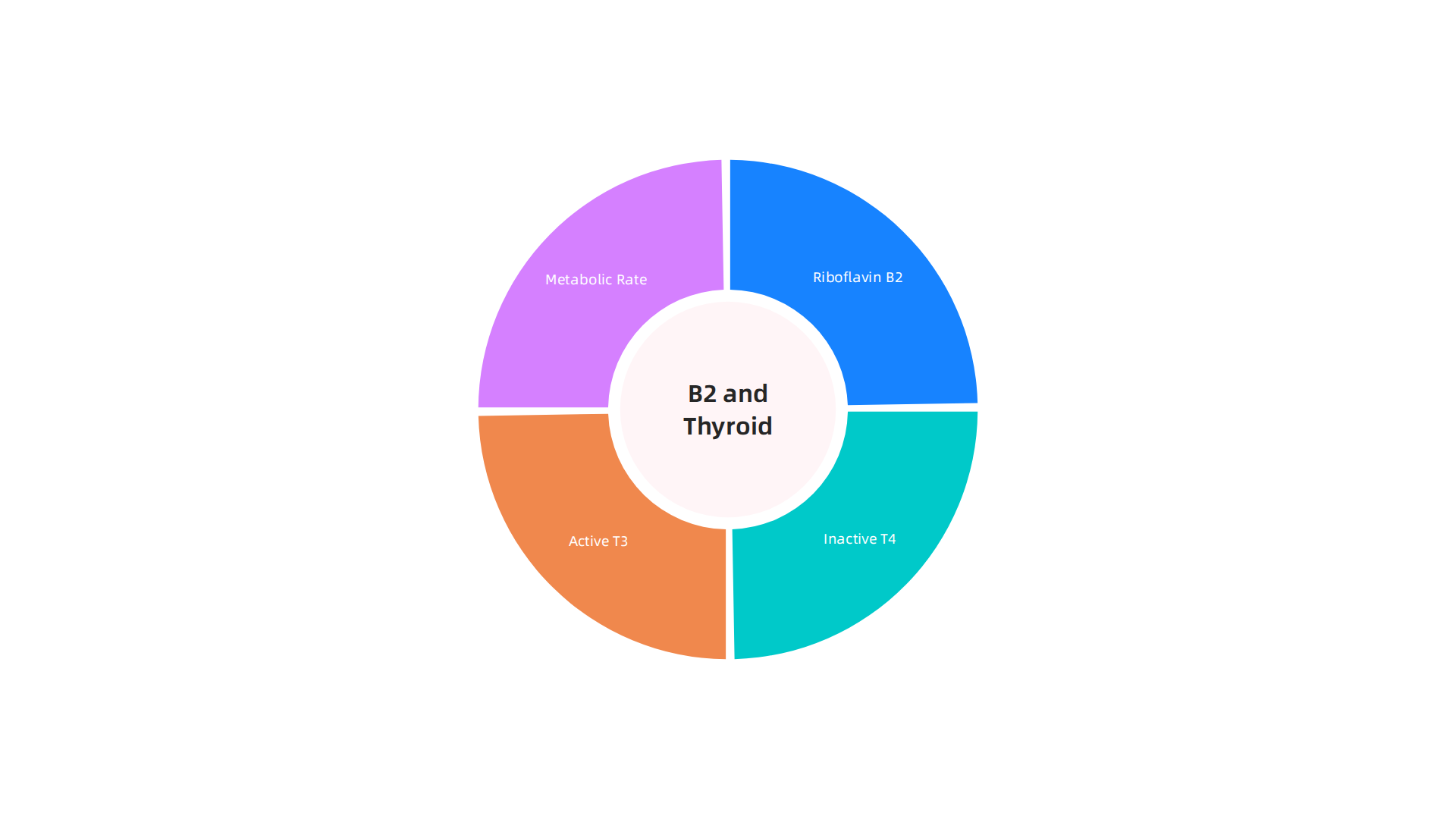
Without enough B2, this conversion slows down. Your thyroid can still produce T4, but it stays in storage mode instead of doing the work.
This matters a lot for anyone serious about fitness. When your T3 levels drop, your basal metabolic rate can fall too. You might feel tired, gain weight more easily, or struggle to keep up with your training. These are classic signs of hypothyroidism, and poor B2 status can make them worse. A
review of B vitamins in physical exercise
notes that B complex deficiencies are common among athletes and can directly impact energy metabolism.
Here is the tricky part. If you are in a calorie deficit or training hard, you may already have higher nutrient needs. Your body uses more B2 for energy production, leaving less for thyroid conversion. Over time, this can drag your metabolism down just when you need it most.
A 2023 study on vitamin B complex supplementation found that 28 days of B complex intake improved exercise endurance significantly. Part of that benefit probably comes from better thyroid function. When your thyroid works properly, your body burns fuel more cleanly and spares glycogen for longer efforts.
The good news is that getting enough riboflavin is simple with the right
vitamin b complex supplement. A quality
b vitamin complex gives you 400 mg of riboflavin along with other B vitamins like
vitamin b6 and
vitamin b12 supplements that also support energy and nerve function.
To keep your metabolism running strong, look for a supplement that covers all your bases. For more on how other nutrients help your cells make energy, check out our guide on
vitamin Q10 supplements for energy and recovery.
7. Plays a Role in Iron Absorption and Utilization
Here is something many runners and female athletes do not realize. You can take iron every day and still feel wiped out if your body cannot use it properly.

That is where riboflavin comes in.
Vitamin B2 helps your body mobilize iron from your storage sites. It also helps incorporate that iron into hemoglobin and myoglobin. These are the proteins that carry oxygen through your blood and into your muscles. Without enough B2, this process slows down. You end up with enough iron on paper but not enough in action.
This matters a lot for active people. Endurance athletes, especially female runners, are at high risk for iron depletion. Heavy training, sweat losses, and menstrual blood loss can all drain your iron stores. Taking iron alone might not fix the problem if your riboflavin levels are low.
Combined iron and riboflavin supplementation may work better than iron alone for correcting deficiency. When you give your body both nutrients together, it can actually use the iron you are taking. This teamwork between nutrients matters for real world performance.
The same principle applies here as with thyroid support. A quality vitamin b complex supplement gives you the riboflavin you need to support iron utilization and energy production. This is especially useful if you are training hard or following a plant based diet where iron absorption is already more challenging. If you are looking for a complete option, try this b vitamin complex with 400 mg of riboflavin to cover your bases.
For more on how specific nutrients work together for recovery, check out our guide on how to choose the best zinc supplement for athletes and active people.
To support your iron metabolism, energy, and overall performance, a solid b complex is a simple and effective tool. Add it to your daily routine and let your body do what it does best.
8. May Improve Skin, Hair, and Nail Health – More Than a Cosmetic Benefit
You might not link your cracked lips or brittle nails to a vitamin deficiency. But if you are training hard and eating on the run, your body might be short on riboflavin. And that shows up on your skin, hair, and nails before you feel it anywhere else.
When you do not get enough of this vitamin b2 supplement, you can develop cheilitis (those painful cracks at the corners of your mouth), angular stomatitis, and red, scaly skin. These are not just cosmetic issues. Cracked skin is an open door for bacteria. For an athlete who is already dealing with chafing, blisters, and minor cuts from training, this makes recovery slower and infection risk higher.
Here is the thing. Riboflavin plays a direct role in collagen cross-linking. Collagen is the protein that gives your skin strength and elasticity. It also helps your skin repair itself after damage. Without enough B2, that repair process drags. Your hair follicles and nail beds depend on the same nutrient pathways. So weak, brittle nails and dull hair can be a sign that your body is not getting the building blocks it needs.
Right now in 2026, more athletes are paying attention to the outside of their body as a window to the inside. Healthy epithelial tissue (the layer that lines your skin, mouth, and gut) needs riboflavin to stay strong and fight off infections. When you support your B2 levels, you are helping every barrier in your body hold up against the stress of training.
The easiest way to cover this is with a quality vitamin b complex supplement. That way you get riboflavin plus the other B vitamins that work together for tissue repair. For a complete option, check out this b vitamin complex with 400 mg of riboflavin to keep your skin, hair, and nails in top shape.
If you are into tracking nutrient timing, you might also want to read our guide on how to choose the best zinc supplement for athletes and active people. Zinc is another mineral that helps skin heal and keeps your immune system strong.
Bottom line: your skin is a mirror of your internal nutrition. Feed it right, and it will handle the wear and tear of training much better.

A simple b complex is a cheap, effective way to do that.
9. Dosage Recommendations and Safety for Athletic Populations
So how much riboflavin do you actually need? And is it safe to take more than the label says?
The general recommended daily allowance for riboflavin sits at about 1.1 to 1.3 mg per day for most adults. But here is the thing. That number is designed for a sedentary person, not for someone who trains hard and sweats a lot. The European Food Safety Authority (EFSA) has set slightly higher targets for active populations.

They recommend around 1.6 mg per day for adult men and women, with pregnant women needing 1.9 mg and breastfeeding mothers up to 2 mg per day (EFSA advice on riboflavin).
If you are an athlete, you might need even more. Your body uses riboflavin to turn food into energy. When you train harder, you burn through more of it. You also lose some through sweat. So the standard RDA often falls short for active people.
Most vitamin b2 supplement doses on the market range from 10 mg to 400 mg per day. That might sound like a lot compared to the RDA. But here is why that is safe. Riboflavin is water-soluble. Your body takes what it needs and flushes out the rest through your urine. That is also why you might notice your pee turns bright yellow after taking a b vitamin complex. It is harmless. It just means you have more than enough.
According to the German Federal Institute for Risk Assessment, no tolerable upper intake level (UL) has been set for riboflavin because no adverse effects have been observed even at high intakes (BfR report). The EFSA agrees that riboflavin has very low toxicity (EFSA Journal).
That said, you do not need to go crazy. A standard vitamin b complex supplement with 10 to 50 mg of riboflavin is plenty for most athletes. If you use an extremely high dose like 400 mg, it is usually for migraine prevention under medical guidance.
For a simple and effective option, try this b complex with riboflavin to cover your daily needs without overthinking it.
If you want to learn more about how different supplements work together for recovery, read our guide on DIM supplements for athletes and how they support hormone balance. It pairs well with a solid B vitamin routine.
Bottom line: riboflavin is one of the safest supplements you can take. Start with a standard dose from a quality b complex and adjust based on how you feel and how hard you train.
Summary
This article explains why vitamin B2 (riboflavin) deserves attention in an athlete’s supplement routine, showing how it helps turn food into usable energy, supports red blood cell formation and iron use, protects cells from oxidative stress, and speeds recovery after hard training. It reviews evidence that B2 — often best taken as part of a B‑complex — can boost endurance, reduce muscle damage, improve thyroid conversion and metabolic rate, and even lower migraine frequency at higher doses. The piece covers common deficiency risks in active people, practical dosing ranges (from dietary RDAs to higher therapeutic doses), safety notes about its low toxicity, and how to choose a quality supplement. After reading, you’ll understand when B2 could help your performance, what benefits to expect, and how to use a B‑complex safely to close nutritional gaps and support training goals.



Get practical training, recovery, and nutrition insights in your inbox