
Lion’s Mane Mushroom Supplement for Athletic Focus and Faster Recovery

Introduction: Why Lion’s Mane Is Gaining Traction in Fitness Circles
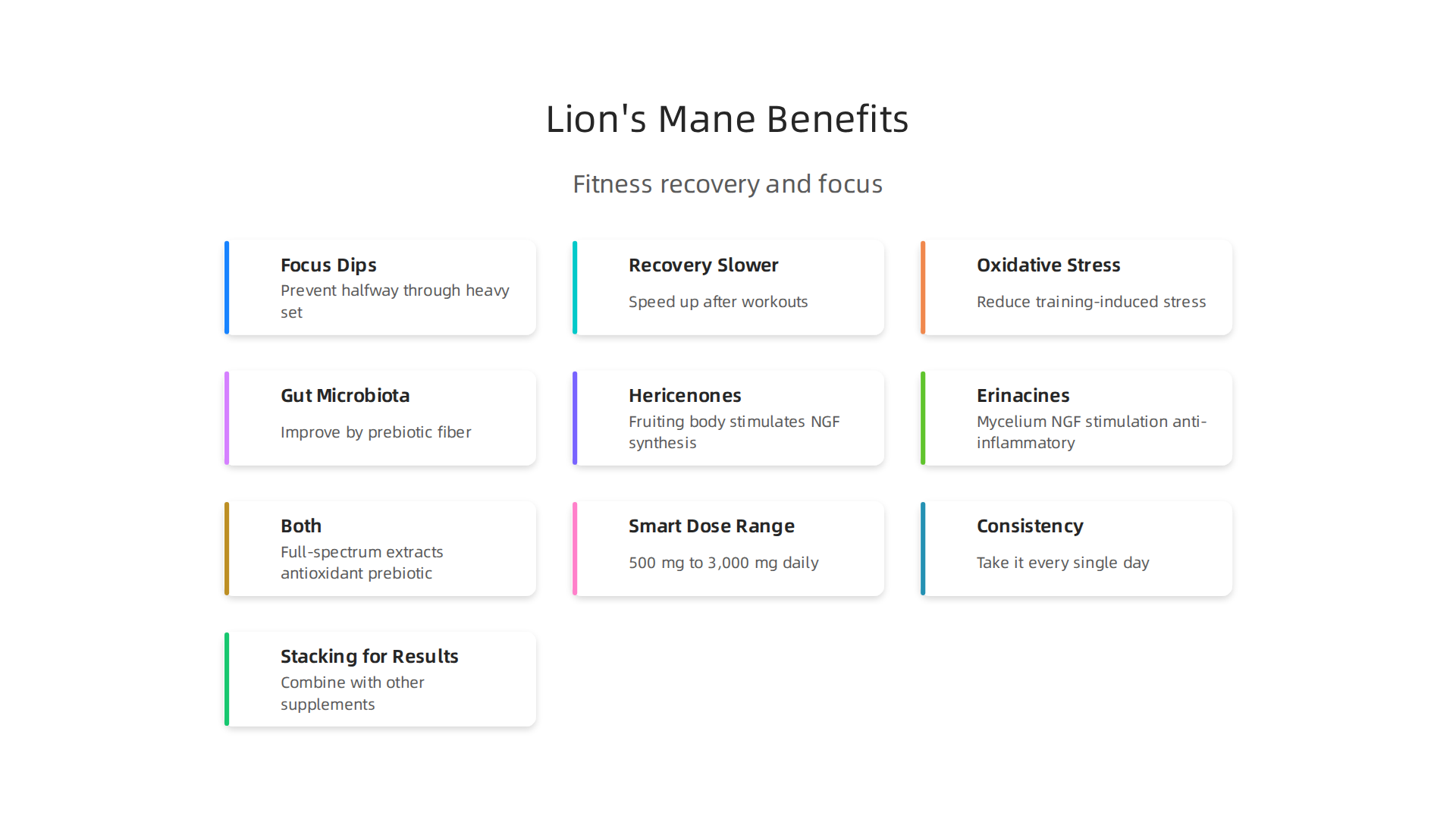
You train hard. You track your macros. You get your protein in. But lately, something feels off. Maybe your focus dips halfway through a heavy set. Maybe recovery feels slower than it used to. Or maybe you are just looking for an edge that goes beyond what your standard pre-workout or protein shake can give you.
That is exactly where the lion’s mane mushroom supplement enters the picture.
For centuries, this shaggy white mushroom was a staple in traditional East Asian medicine. But today, researchers are taking a much closer look at what is actually inside it. The fruiting bodies contain hericenones, and the mycelium contains erinacines. These are bioactive compounds that may stimulate nerve growth factor (NGF) synthesis, which supports brain health and cognitive function source. Beyond the brain, early evidence suggests lion’s mane can also reduce oxidative stress, support healthy blood sugar levels, and improve gut microbiota by acting as a prebiotic fiber source.
Fitness enthusiasts are starting to take notice. And it makes sense. Training demands both physical output and mental sharpness. A foggy mind can sabotage a heavy squat session just as fast as tired legs.

Better recovery, lower inflammation, and sharper focus? Those benefits matter whether you are training for a competition or just trying to stay consistent week after week.
But here is the catch. Misinformation about lion’s mane is everywhere online. Some sources exaggerate the effects. Others push low-quality products that simply do not deliver the active compounds you need. You deserve reliable, science-backed information to make a smart choice.
That is what this guide is for. We will walk through what the research actually says about lion’s mane mushroom supplements. We will also look at how they fit alongside other staples you might already use, like magnesium supplements for recovery or vitamin B12 supplements for energy. And we will give you practical, no-nonsense advice for using lion’s mane in your routine.
Let us cut through the noise and get to what actually works.
What Is Lion’s Mane Mushroom? A Primer for the Performance-Minded
You have probably seen the name popping up on supplement shelves and social media feeds. But what exactly is this fuzzy white fungus, and why should someone who cares about strength and endurance give it a second look?
Lion’s mane, known scientifically as Hericium erinaceus, is a medicinal mushroom that grows on hardwood trees in North America, Europe, and Asia. It looks nothing like the typical button mushroom you toss into a stir fry. Its long, cascading spines give it a shaggy appearance that resembles a lion’s mane, hence the name. For centuries, it was used in traditional East Asian medicine to support digestion, vitality, and mental clarity source.

But here is what makes it interesting for athletes. The real magic lies in two groups of bioactive compounds: hericenones and erinacines. Hericenones are found mainly in the fruiting body of the mushroom, the part you would see above ground. Erinacines are concentrated in the mycelium, the root like network that grows underground source. Both compounds are small enough to cross the blood-brain barrier, and research shows they can stimulate the synthesis of nerve growth factor (NGF) source. NGF is a protein that helps maintain and repair nerve cells, which matters for everything from reaction time to muscle signaling.
Beyond the brain, these bioactive compounds also show anti-inflammatory and antioxidant properties source. That means lion’s mane may help reduce the oxidative stress that builds up during intense training sessions and support a healthier gut microbiome by acting as a prebiotic fiber source. For someone pushing hard in the gym, lower inflammation can translate into better recovery between sets and faster healing after tough workouts.
Understanding this basic composition is the first step. Not all lion’s mane supplements are created equal. Some products use only the fruiting body, others use only the mycelium, and some blend both. If a supplement lacks the right compounds, you simply will not get the effects the research describes.
Before you jump into buying a bottle, it also helps to see how lion’s mane fits alongside the rest of your supplement stack. For instance, pairing it with a quality magnesium supplement can support both recovery and cognitive sharpness. That kind of strategic combination is where the real performance gains happen.
Key Bioactive Compounds: Hericenones and Erinacines — The Brain-Body Connection
You are halfway through a tough set of deadlifts. Your muscles feel heavy, and your focus starts to slip. That moment is where the brain-body connection really matters. This is exactly where hericenones and erinacines, the two star compounds in lion’s mane, come into play.
Let us break down what these compounds actually do in your body.
Hericenones are found mainly in the fruiting body of the mushroom. Erinacines are more concentrated in the mycelium, the root-like network underground. Both are small enough to cross the blood-brain barrier. Once inside, they stimulate the production of nerve growth factor (NGF). NGF is a protein that helps maintain and repair nerve cells source. For an athlete, that means faster reaction times, better coordination, and sharper focus during training.
A small human study showed that younger adults who took lion’s mane mushroom powder experienced improved mental performance speed source. That kind of edge can make a real difference when you are pushing through a high-intensity workout or trying to nail your form on a complex lift.
Here is a quick summary of how these compounds stack up:
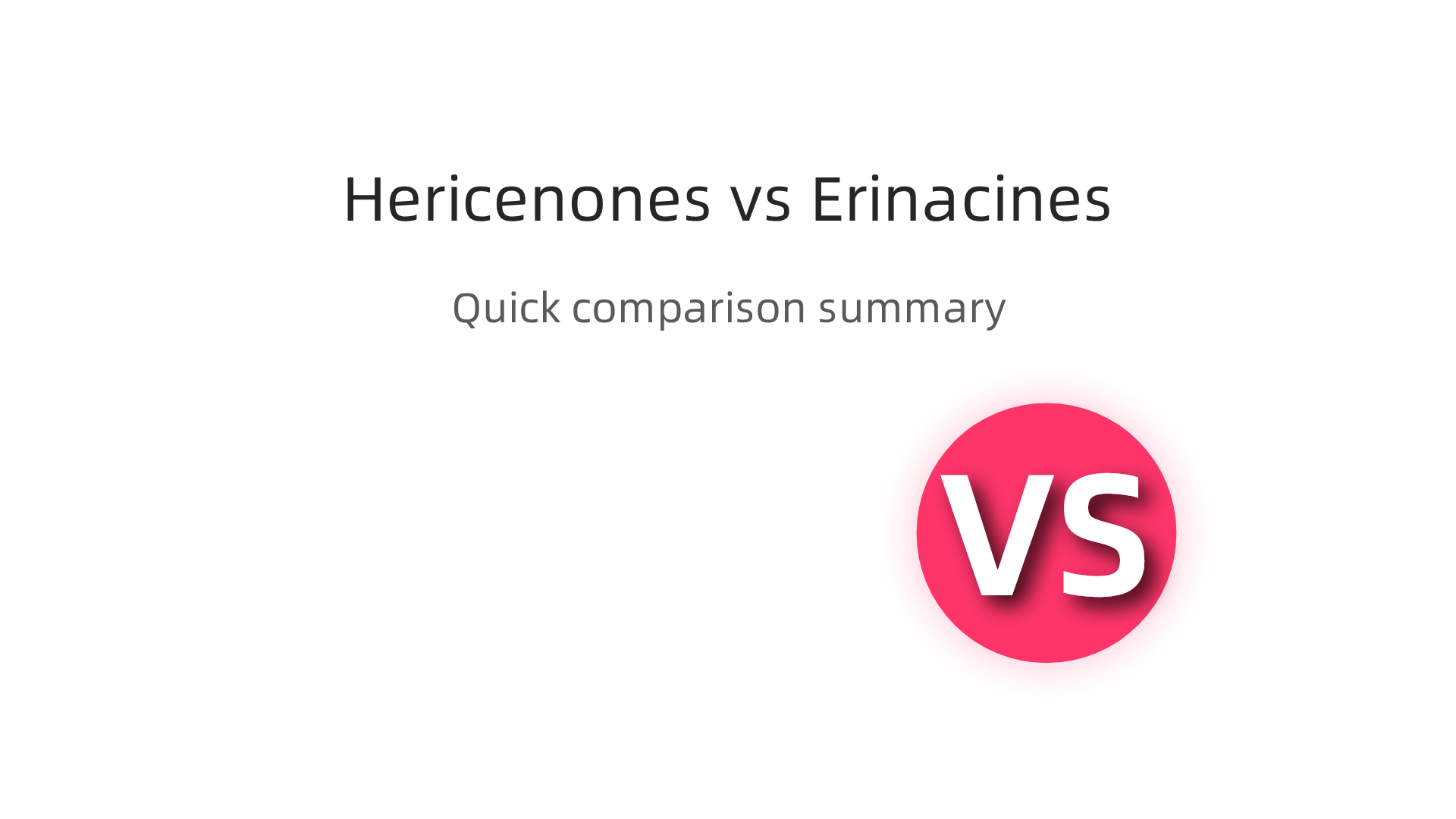
| Compound | Where It Comes From | Primary Role | Athletic Benefit |
|---|---|---|---|
| Hericenones | Fruiting body | Stimulates NGF synthesis | Sharper focus, better mind-muscle connection |
| Erinacines | Mycelium | More potent NGF stimulation, anti-inflammatory | Faster recovery, reduced stress |
| Both | Full-spectrum extracts | Antioxidant and prebiotic support | Lower oxidative stress, healthier gut |
The anti-inflammatory and antioxidant properties of these compounds also matter a lot for recovery. Intense training creates oxidative stress that can slow down your progress. Lion’s mane helps reduce that stress source. It also acts as a prebiotic fiber, supporting a healthy gut microbiome. A happy gut means better nutrient absorption and less systemic inflammation.
Some research suggests that lion’s mane may help delay fatigue and support both mental and physical endurance source. Another study found that it could reduce subjective stress in healthy young adults, which is a big deal for anyone juggling training, work, and life source.
Now, not all lion’s mane mushroom supplements deliver these benefits. You need a product that contains both the fruiting body and the mycelium to get the full spectrum of hericenones and erinacines. That is something to check on the label before you buy.
If you want to support both brain function and physical recovery, pairing lion’s mane with the right foundation matters. A quality magnesium supplement can help round out your recovery stack by supporting muscle relaxation and sleep quality source. That kind of strategic pairing gives you the best chance to feel the difference in your training.
The Science: How Lion’s Mane May Benefit Athletic Performance and Recovery
Now that you know how hericenones and erinacines work inside your body, the natural next question is this: does the science back up the hype for actual athletes?
The answer is promising, though we are still learning.
Several human studies suggest that a quality lion’s mane mushroom supplement can sharpen your mental game. One review highlights how lion’s mane supports nerve growth factor, which plays a big role in attention and memory source. That matters when you need to lock in during a heavy set or stay focused through a long training session. Right now, researchers are even running new clinical trials to measure how lion’s mane affects short-term memory and reaction time in active people source. The interest is growing fast.
But it is not just about your brain. Recovery is where lion’s mane might really earn its place in your stack. Intense exercise creates oxidative stress and inflammation in your muscles. That soreness you feel the next day? A big part of that is inflammation. Lion’s mane is known for its antioxidant properties, which can help your body manage that stress and speed up the recovery process source. Some research even suggests that taking lion’s mane before a workout could improve exercise performance and boost recovery after source.
Here is another benefit that often gets overlooked. Stress and sleep quality play a huge role in how well you recover and adapt to training. High stress levels and poor sleep can stall your progress fast. Some studies indicate that lion’s mane may help reduce feelings of stress in healthy young adults source. When you combine better stress management with improved sleep quality, your body has a much easier time repairing muscle and building strength.

To be fair, the research is not one-sided. One study found that taking 10 grams of lion’s mane daily for four weeks did not change metabolic flexibility or cognition in college-age participants source. That tells us that results may depend on dosage, product quality, and individual factors. It is not a magic pill, but for many athletes, the potential upsides are worth exploring.
If you want to support faster recovery after tough workouts, pairing lion’s mane with other evidence-based supplements can help. For example, bromelain for muscle recovery is another natural option that targets soreness and inflammation from a different angle. A smart recovery stack covers multiple pathways.
Lion’s Mane vs. Other Popular Nootropic and Recovery Supplements
You might be wondering how lion’s mane stacks up against the more familiar supplements in your cabinet. Caffeine, L-theanine, ashwagandha, and creatine all have strong reputations for good reason. But here is the thing: they work through very different mechanisms than lion’s mane.
Caffeine is a stimulant. It blocks adenosine receptors in your brain to keep you alert. That can help you push through a tough set, but it also raises heart rate and can crash your energy later. L-theanine, often paired with caffeine, smooths out the jitters by promoting calm focus. Ashwagandha targets cortisol, helping you manage stress and support adrenal function over time. Creatine, one of the most researched supplements in sports science, boosts ATP production for more explosive power during short, high-intensity efforts.
Lion’s mane stands apart because it stimulates nerve growth factor. That is a long game play. Instead of giving you an instant jolt or suppressing stress hormones directly, lion’s mane supports the actual health and repair of your nerve cells source. That means better signal transmission from your brain to your muscles over time. It is not about feeling amped up right now. It is about building a sharper, more resilient nervous system that can handle training stress day after day.
A systematic review even found that lion’s mane may improve speed of performance and reduce subjective stress in healthy young adults source. That is a rare combination. Most pre-workout ingredients give you one or the other, but not both.
Many athletes choose to stack lion’s mane with other supplements for a broader effect. For example, pairing it with a high-quality creatine supplement can cover both the NGF pathway and the energy pathway simultaneously. You can see how creatine and pre-workout compare to find the right fit for your goals creatine vs. pre-workout.

Some also add magnesium because magnesium benefits for fitness extend to muscle relaxation and sleep quality, both of which support the recovery benefits of lion’s mane magnesium for fitness.
But stacking takes care. Too many supplements at once can muddy the water. You might not know what is actually working. A smarter approach is to start with one high-quality product, give it a few weeks, and then consider adding another.

Look for standardized extracts with beta-glucan markers to make sure you are getting a potent product source.
If you want to try a trusted lion’s mane mushroom supplement that uses third-party testing for purity and potency, a top rated option is available here (affiliate link). It is a clean, focused way to begin building your recovery stack.
How to Choose a High-Quality Lion’s Mane Supplement: Potency, Purity, and Brand Trust
So you are ready to try a lion’s mane mushroom supplement. That is a smart move for your recovery and focus. But here is the thing: not all bottles are created equal. Some are packed with active compounds. Others are mostly cheap filler. The label can tell you the difference if you know what to look for.
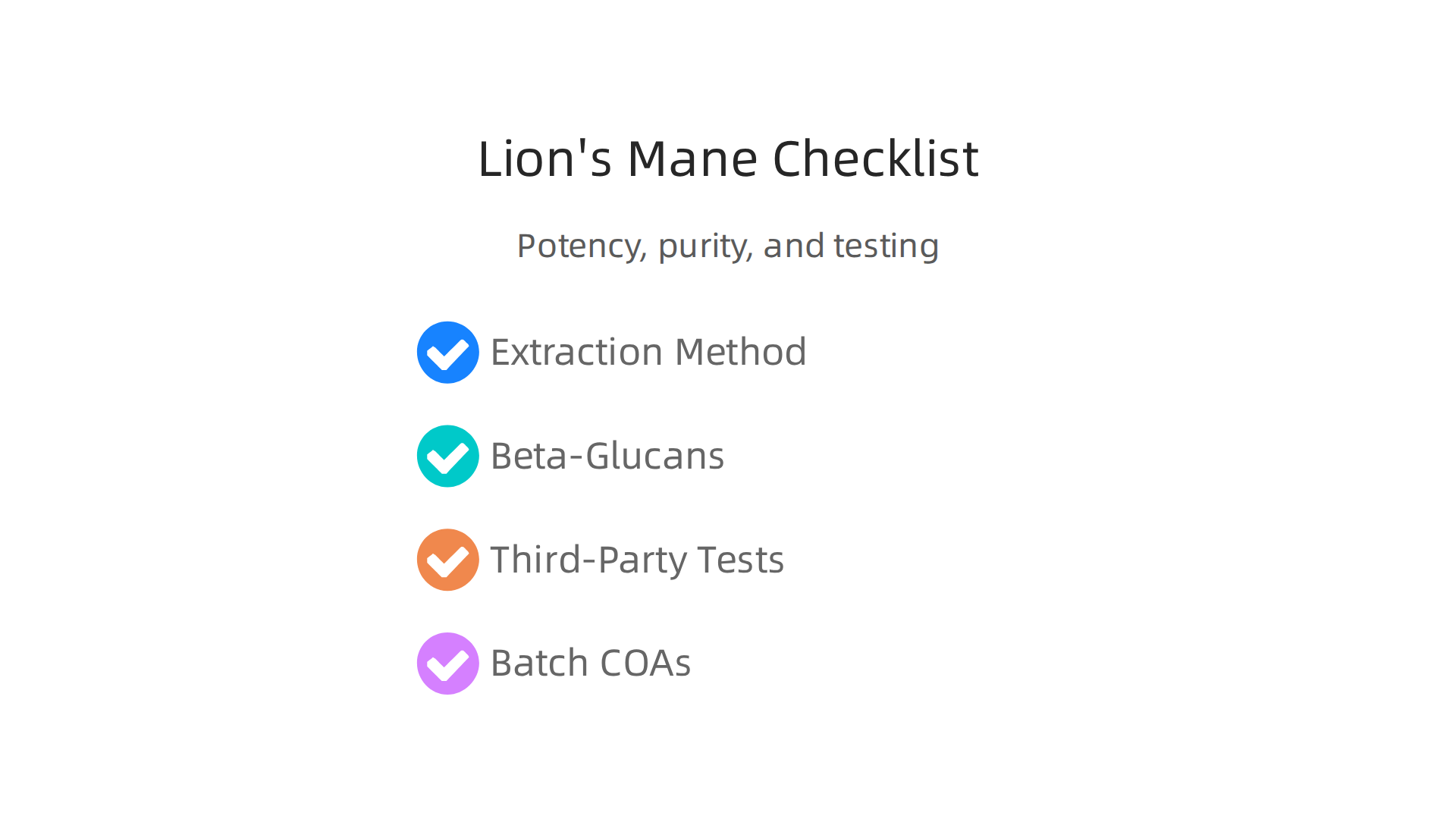
1. Check the Extraction Method: Fruiting Body vs. Mycelium
This is the most important factor. The fruiting body is the part of the mushroom you would recognize. It contains the highest levels of beta-glucans, hericenones, and erinacines that support nerve growth and recovery.
Many cheaper supplements use mycelium instead. Mycelium is the root network of the mushroom. It is often grown on brown rice grain. The final product ends up being mostly starch from the grain, not the active mushroom compounds you are paying for. A high-quality product usually stands out in five areas, starting with extraction method and starch content source. Look for a supplement that clearly says "fruiting body" on the label.
2. Look for Standardized Beta-Glucans and Third-Party Seals
You want a product that guarantees a specific percentage of beta-glucans. This is your best marker for real potency. Top brands in 2026 are recognized for having high Beta D Glucans concentration and strict third-party lab testing source.
Third-party seals are your best friend. They mean an outside company checked the quality for you. Consumer Reports recommends you look for a third-party seal on the label source.

Brands like Transparent Labs score high marks because their mushroom products are third-party tested for sport source.
3. Trust Brands That Provide Batch-Specific COAs and Avoid Fillers
Trustworthy brands give you batch-specific test results. This is called a Certificate of Analysis (COA). Premium supplement firms perform batch-level testing to confirm purity and safety source. If a brand hides their COA or refuses to share it, that is a major red flag. You can also check for certifications like ConsumerLab, which awards brands that pass rigorous purity and potency checks source.
So before you click buy, ask yourself three questions. Does it use the fruiting body? Is the beta-glucan content standardized on the label? Does the brand offer batch-specific third-party testing?
If you want a clean, potent option that checks all these boxes, a top rated fruiting body extract with high beta-glucans is a great place to start high-purity lion’s mane extract (affiliate link). Just like choosing other smart supplements, picking a quality lion’s mane means paying close attention to the label. You can use this same careful approach when picking safe and effective products at any vitamin supplement shop.
Practical Dosage, Timing, and Stacking Recommendations for Athletes
You picked a clean, high quality lion’s mane mushroom supplement. Good work. Now the next question is just as important. How much should you take, and when should you take it? The answers are simpler than you might think.
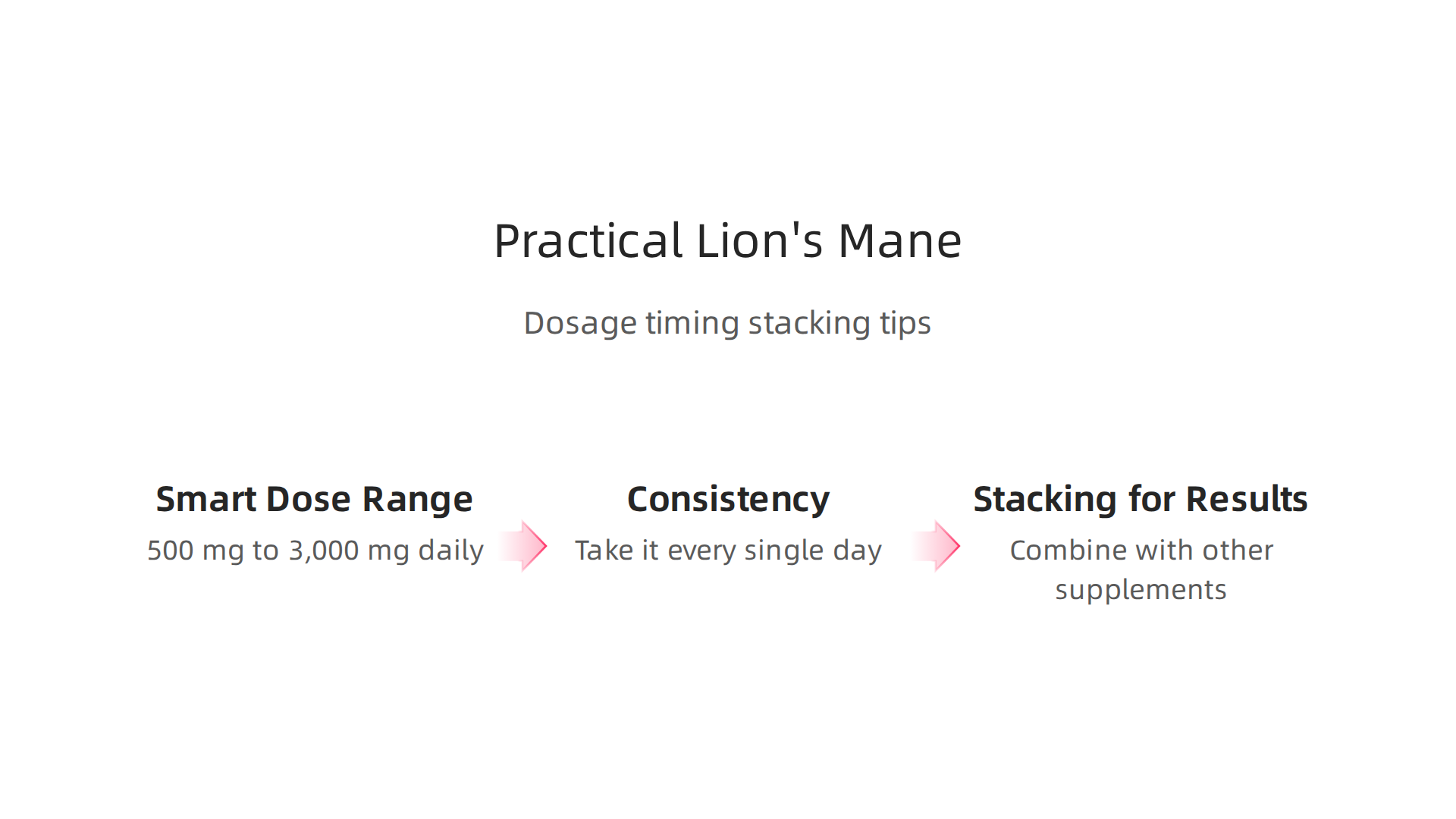
Let us break them down so you can start seeing results fast.
Start with a Smart Dose Range
Most experts agree on a daily dose between 500 mg and 3,000 mg of lion’s mane extract. For general cognitive support, dosages often range from 500 mg to 3,000 mg per day source. If you are new to this supplement, begin at the lower end. A common starting point is 500 mg to 1,000 mg per day source. This lets your body adjust without any surprises. After a week or two, you can bump the dose up if you feel you need more focus or recovery support. The sweet spot for many athletes lands around 1,000 mg to 2,000 mg daily source.
Consistency Beats Perfect Timing Every Time
Here is the honest truth. The exact time you take your lion’s mane mushroom supplement matters less than taking it every single day. The benefits for nerve growth and cognitive function build up over weeks of regular use. Most athletes find it easiest to take their dose in the morning with breakfast. This locks it into your daily routine and avoids any mild stimulation that might interfere with sleep. Taking it 30 to 60 minutes before a workout is also a solid choice if you want sharper focus during training source. Pick a time you can stick with. That is what truly drives results.
Stacking for Even Better Results
You can pair your lion’s mane with other supplements to get more out of it. This is called stacking. Many athletes combine lion’s mane with adaptogens like ashwagandha to lower stress and sharpen mental clarity even further. Another powerful combo is lion’s mane with omega-3 fatty acids. Omega-3s support brain health and fight inflammation, which works perfectly alongside the cognitive and recovery benefits of lion’s mane source. A practical starting point for any mushroom stack is 1 to 3 grams total of extracted mushroom powder per day source. You can also combine it with other staples like magnesium supplements or vitamin b12 supplements that you may already use for energy and recovery. If you want a trusted omega-3 product to build your stack, check out our best omega-3 supplement guide for everyday athletes.
Start with one new supplement at a time. Give it two to three weeks. Notice how your focus, energy, and muscle soreness change. That is how you dial in your perfect protocol.
Summary
This guide explains why lion’s mane mushroom has become popular among athletes and active people, summarizing the bioactive compounds (hericenones and erinacines), how they support nerve growth factor (NGF), and why that matters for focus, coordination, and recovery. It reviews the current human and preclinical research on cognitive benefits, reduced oxidative stress, and potential recovery advantages, while noting inconsistent results and the need for quality products. The article gives clear buying criteria—fruiting body vs. mycelium, standardized beta‑glucans, and third‑party COAs—plus practical dosage (500–3,000 mg), timing, and stacking advice with supplements like magnesium or omega‑3s. Readers learn how to pick a potent product, start sensibly, watch for real benefits over weeks, and combine lion’s mane with other evidence‑based recovery strategies without overloading their stack.



Get practical training, recovery, and nutrition insights in your inbox