
Shilajit Supplement for Athletes Science Backed Benefits and Proper Use

Introduction
You have probably seen shilajit popping up all over your social feeds and supplement shop shelves in 2026. It looks like dark tar. It comes from high mountain rocks. And people claim it can boost your energy, speed up recovery, and sharpen your focus. But here is the real question every serious athlete is asking: Is a shilajit supplement actually worth the hype, or is it just another overpriced trend?

The demand for this ancient resin is growing fast. The global shilajit market is expected to reach over $320 million by 2030. More everyday athletes are curious about it. But the problem is that search results throw everything at you. Miracle claims. Safety warnings. Confusing dosage advice. It is hard to tell what is real and what is just marketing noise.
Here is what the science actually says. Authentic shilajit is packed with fulvic acid. Fulvic acid is the primary bioactive compound that makes this substance so powerful. High quality extracts contain about 15% to 20% fulvic acid by weight. This compound helps your body absorb minerals more effectively at the cellular level. According to experts at the Cleveland Clinic, shilajit has been used for centuries in Ayurvedic medicine to support vitality and longevity. That is a strong foundation.
At RepCore, we help everyday athletes cut through the noise and find science backed solutions. We have already dug deep into specific supplements that target different parts of performance. For example, I covered how the best beetroot supplement works by boosting nitric oxide for better blood flow. I looked at how a TMG supplement supports methylation for energy production. And I explained how ancient remedies like lions mane mushroom improve focus and recovery. Shilajit is different from all of these. Instead of targeting one pathway, it acts as a broad spectrum mineral transporter. It does this thanks to its high fulvic acid content.
So how do you know if a shilajit supplement is right for your fitness goals? That is exactly what this guide is for. You will learn what real shilajit looks like, how fulvic acid works inside your body, the specific performance benefits for athletes, how to choose a pure and safe product, and the best way to use it. No guesswork. Just clear, useful information to help you make a smart decision.
What Is Shilajit? Origin, Composition, and Traditional Use
Let’s start with where this weird black resin actually comes from. Shilajit is not made in a lab. It is a natural substance that forms over hundreds of years. Here is how it happens. Plant matter gets trapped in high altitude rock formations. Over centuries, it decomposes and compresses under immense pressure. The result is a thick, mineral rich resin that oozes out of the rocks during warm summer months. That is why real shilajit is harvested by hand in remote mountain ranges like the Himalayas, Altai, and Caucasus. Harvesters have to climb to extreme altitudes to collect it. This difficult process is one reason why authentic shilajit is valuable.
According to experts at the Cleveland Clinic, this slow decomposition process gives shilajit its unique and complex chemical signature.
So what is inside this resin that makes it so special for athletes? The composition is impressive.
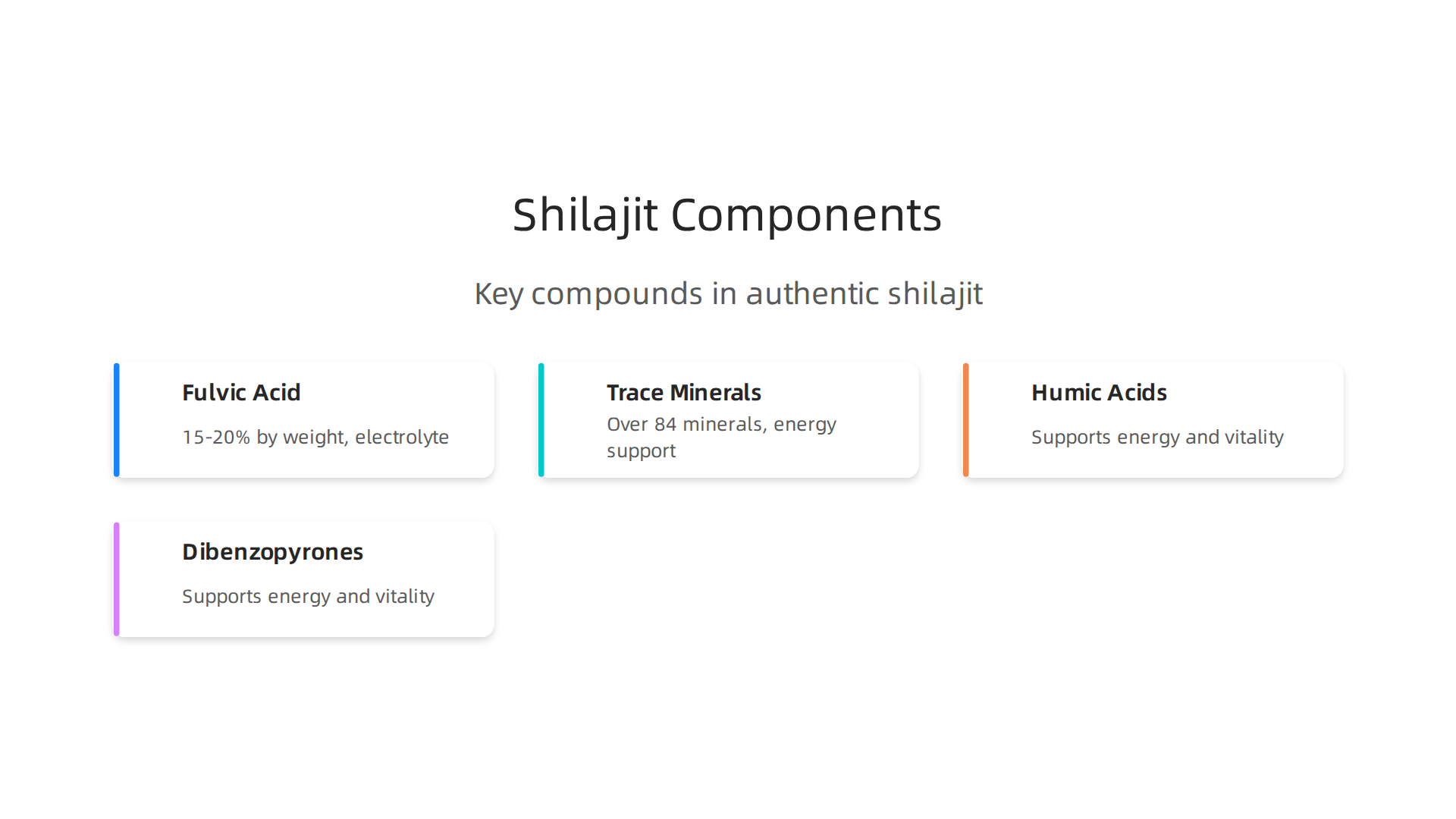
The star compound is fulvic acid. This is the main reason people take a shilajit supplement. High quality shilajit contains about 15% to 20% fulvic acid by weight [source: Cymbiotika, Wellbeing Nutrition]. Fulvic acid is a powerful electrolyte. It helps minerals dissolve so your body can absorb them. A chemical analysis from the NIH confirms that fulvic acid is the most bioactive fraction in shilajit. Think of fulvic acid as a tiny shuttle. It binds to minerals and carries them through your cell membranes. Without enough fulvic acid, many minerals just pass through your digestive system unused.
Beyond fulvic acid, shilajit contains over 84 trace minerals. These include magnesium, zinc, iron, and copper. These minerals are essential for energy production, muscle contraction, and recovery [source: Kashmiril]. Fulvic acid acts as the delivery system for these nutrients. This is a key reason why a shilajit supplement is different from a basic multivitamin. The fulvic acid ensures the minerals actually get where they need to go.
It also contains other beneficial compounds like humic acids and dibenzo alpha pyrones. These contribute to its overall effect on energy and vitality [source: WebMD].
A long history of use in Ayurveda. Shilajit is not a new trend. People have been using it for thousands of years. In the traditional Indian medicine system called Ayurveda, shilajit is classified as a Rasayana. A Rasayana is a rejuvenating tonic. It was used to promote longevity, slow aging, and build strength [source: Cleveland Clinic]. Ancient texts describe it as a substance that can help a person conquer fatigue and develop great strength. That sounds pretty relevant for an everyday athlete in 2026, right?
Just like how a beetroot supplement boosts nitric oxide for blood flow, or a lion’s mane mushroom supplement supports cognitive focus, shilajit works on a foundational level. It helps your body get more out of the minerals you consume. The key is quality. Because the resin is harvested raw, it often contains impurities like heavy metals or free radicals.
You absolutely need to look for a shilajit supplement that is tested for purity and standardized to a high fulvic acid content. You can check out a trusted source for a high quality shilajit supplement here. Choosing a purified product ensures you get the benefits without the risks. This ancient origin story and unique composition explain the foundation of shilajit’s power. Next, let’s look at the specific performance benefits for your training.
The Scientific Evidence Behind Shilajit’s Benefits
So you know where shilajit comes from and what it contains. But does it actually work for everyday athletes like you? The short answer is yes. But the longer answer is more interesting because it depends on the quality of your shilajit supplement and what specifically you want it to do. Let’s break down the main research findings.
Energy Production
The fulvic acid in shilajit does not just help with mineral absorption. It may also help your cells make more energy. Your mitochondria are the tiny power plants inside your cells. They turn food into ATP, the fuel your muscles use to contract and move. Some research suggests that fulvic acid can support mitochondrial function by acting as an electron donor. This means it helps your mitochondria work more efficiently.
A study in the Journal of the International Society of Sports Nutrition looked at how a purified shilajit supplement called PrimaVie affected fatigue and strength. The researchers gave it to healthy volunteers for eight weeks. They found that the shilajit group showed less muscle damage and better recovery after exercise. The authors suggested that shilajit may help reduce the drop in strength that happens from fatigue. That is a big deal for anyone trying to push harder in the gym.

For comparison, think of how a best beetroot supplement improves blood flow. Or how Coenzyme Q10 works in a similar way at the cellular level. If you already use a psyllium husk supplement for digestion, shilajit adds another layer of support for your energy systems.
Testosterone and Male Reproductive Health
This is where the research gets really strong. Multiple human studies have tested purified shilajit on testosterone levels. One of the most cited trials was published in 2016 in the journal Andrologia. Researchers gave 60 healthy men aged 45 to 60 either a placebo or 250 mg of purified shilajit twice a day. After 90 days, the shilajit group saw a significant increase in total testosterone and free testosterone. The numbers showed about a 20% rise in total testosterone compared to the placebo group.
A more recent review from Kashmiril breaks down the same study and adds more details. They explain that the mechanism likely involves fulvic acid helping the body produce more of the hormones that signal your testes to make testosterone. Another article on NutraIngredients covered the same 2015 clinical trial, reporting that daily supplements of purified shilajit increased testosterone by 20% in healthy men.
But not everyone agrees. The folks at Hims wrote a piece saying that current evidence does not fully support the claim that shilajit boosts testosterone. They point out that the studies are limited and that more research is needed. That is a fair point. However, the strongest evidence comes from the purified PrimaVie extract, which is standardized to a specific level of fulvic acid. If you buy any random shilajit supplement off the shelf, it might not have the same effect. Quality matters a lot here.
A 2012 rat study also found that shilajit increased total testosterone by up to 20%. Animal studies are not the same as human trials, but they support the idea that the mechanism is real.
Exercise Recovery and Adaptation
Your muscles take a beating during hard workouts. Shilajit may help you bounce back faster. The same study from the PMC database tracked markers of muscle damage like creatine kinase and lactate dehydrogenase. The group taking shilajit had lower levels of these markers after exercise. That means less muscle breakdown and less oxidative stress.
The researchers also noted that the shilajit group showed greater improvements in strength and muscle mass compared to the placebo group when both groups did resistance training. That is exactly what you want if you are trying to get stronger.
The fulvic acid acts as an antioxidant. It helps neutralize the free radicals that build up during intense exercise. That reduces inflammation and speeds up recovery. Some people compare it to the effects of a best beetroot supplement for endurance, but shilajit works on a deeper cellular level.
If you are serious about optimizing your recovery, you might also look into how a tmg supplement supports methylation and energy. But for now, the data on shilajit for recovery is promising and worth trying.
The Bottom Line from the Science
The evidence supports three main benefits for athletes:
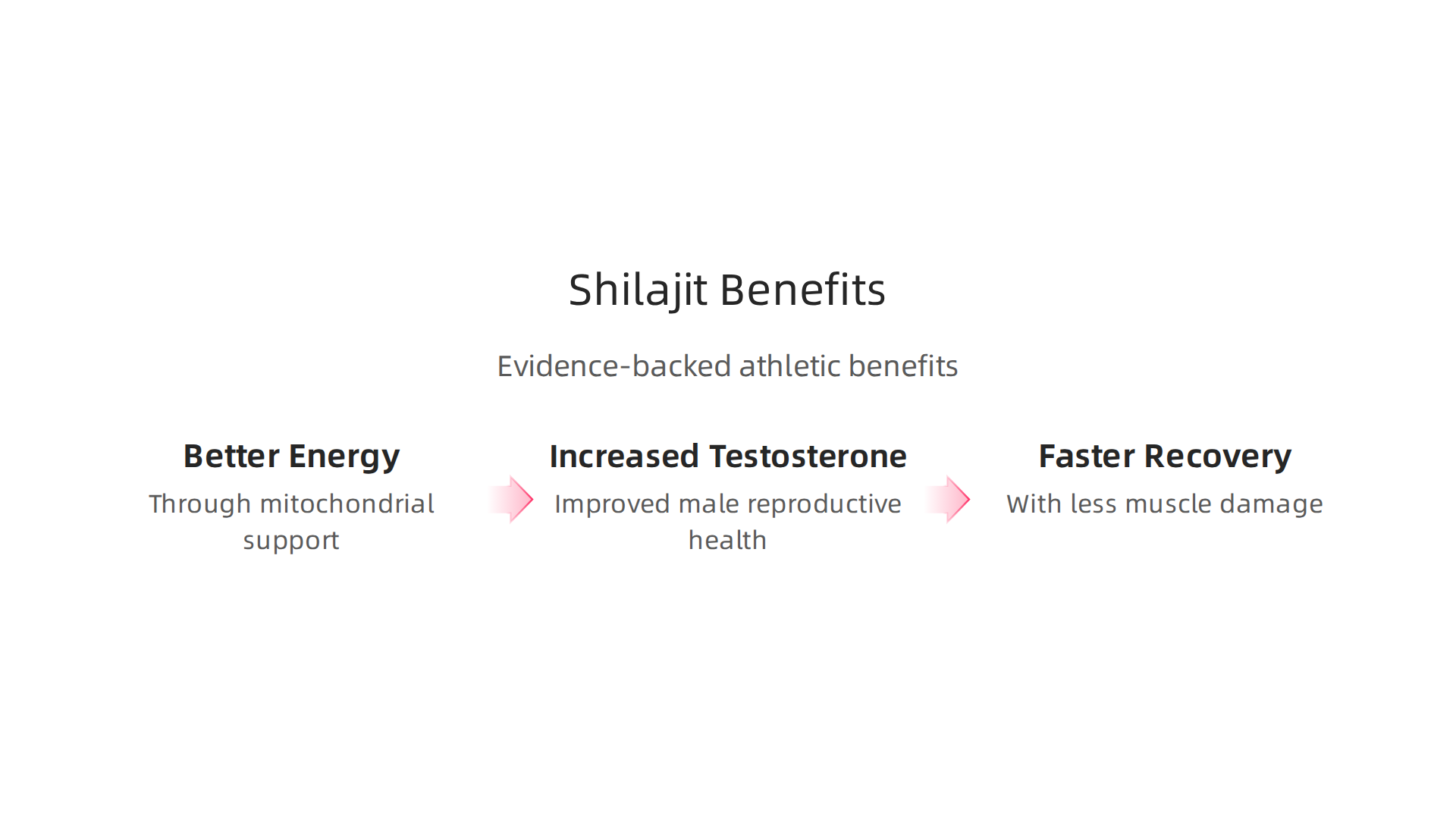
- Better energy production through mitochondrial support
- Increased testosterone and improved male reproductive health
- Faster recovery with less muscle damage
All of these studies used purified shilajit with a high fulvic acid content. That is the key takeaway. A random shilajit supplement from an unknown brand may not give you the same results. Look for products that are tested for heavy metals and standardized to at least 15% fulvic acid.
The next section will cover exactly how to take shilajit, including dosage, timing, and what to look for on the label.
How Shilajit Supports Athletic Performance and Recovery
You already know the science is solid. But what does that mean for your actual training? Let’s connect the dots between the lab and your gym.
How Shilajit Works Inside Your Body
The magic of a quality shilajit supplement comes down to three main mechanisms.
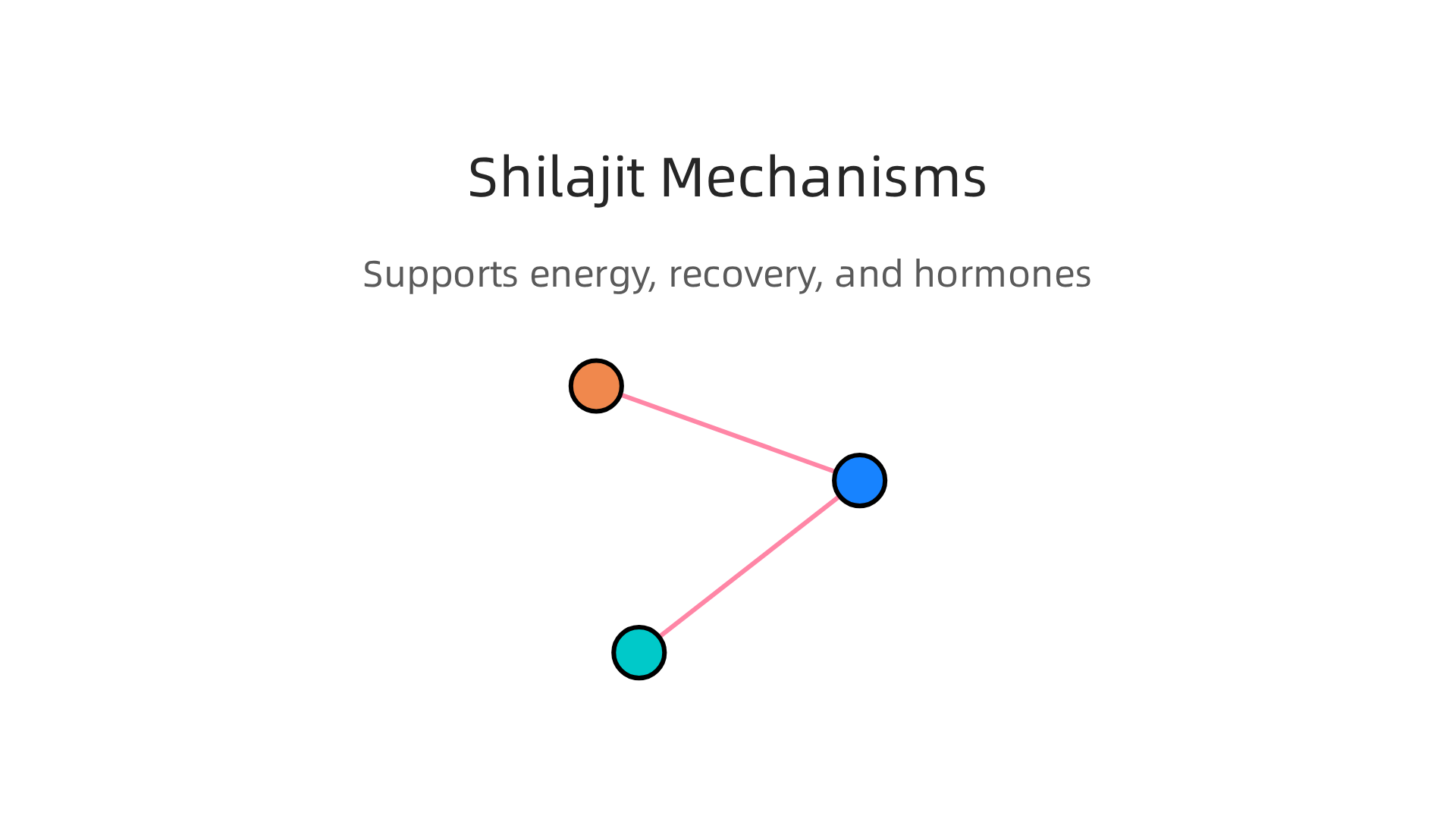
First, it helps your mitochondria work better. Your mitochondria are the tiny power plants inside your cells. They turn food into ATP, the fuel your muscles use to contract. Fulvic acid, the main active compound in shilajit, acts as an electron donor. This means it helps your mitochondria produce more energy from the same amount of fuel. A study in the PMC database found that shilajit combined with resistance training led to greater strength gains and more muscle mass than training alone. That is a direct result of better energy production at the cellular level.
Second, it reduces inflammation. Hard workouts create inflammation and oxidative stress. That is normal. But too much slows your recovery. The fulvic acid in shilajit acts as an antioxidant. It neutralizes free radicals before they can damage your muscle tissue. A 2026 study on TruBlk Shilajit resin showed that 500 mg per day for 28 days led to significant improvements in muscle strength and reduced markers of oxidative stress.
Third, it supports healthy hormone levels. As we covered earlier, a purified shilajit supplement can raise total and free testosterone. This is not just about muscle growth. Testosterone helps with recovery, mood, and energy. The Kashmiril deep dive into a 90 day human trial showed a 19% increase in free testosterone. That kind of change makes a real difference in how you feel and perform.
Practical Benefits You Can Feel
When these mechanisms work together, you get three practical benefits that matter for everyday athletes.
| Benefit | What It Feels Like | How Shilajit Helps |
|---|---|---|
| More endurance | You can push harder for longer without hitting the wall | Mitochondrial support improves cellular energy output |
| Faster recovery | Less soreness the day after a hard session | Reduced oxidative stress and inflammation |
| Lower perceived exertion | Hard sets feel easier than before | Better energy efficiency and hormone balance |
These benefits stack over time. You do not feel a sudden boost like with caffeine. Instead, after a few weeks, you notice that your legs recover faster between sets. Your morning soreness is not as bad.

You have more gas in the tank for the last few reps.
How Shilajit Compares to Other Adaptogens
You might be wondering how shilajit fits alongside other popular supplements for athletes.
Ashwagandha is great for reducing cortisol and managing stress. It helps if you are overtrained or anxious. But ashwagandha does not directly support mitochondrial energy production the way shilajit does.
Rhodiola rosea helps fight mental and physical fatigue. It works well for endurance. But rhodiola does not have the same impact on testosterone or long term recovery.
Beetroot powder, like a best beetroot supplement, improves blood flow and oxygen delivery. That helps with endurance and pump. But beetroot works on blood vessels, not on cellular energy.
Shilajit is unique because it works at the cellular level while also supporting hormone balance. It fills a gap that other adaptogens do not cover.
If you want to combine shilajit with other supplements, that can work well. For example, a psyllium husk supplement helps with digestion and nutrient absorption. Better absorption means your body uses the fulvic acid more effectively. A tmg supplement supports methylation and energy metabolism. That pairs nicely with shilajit’s mitochondrial support.
What the 2026 Research Updates Tell Us
The latest studies continue to support shilajit’s role for athletes. A 2026 research roundup from The Yeti Life covered five new PubMed studies. One showed that shilajit resin improved bone repair in animal models. Another confirmed that it is safe even at higher doses. The safety study from Herbified shilajit resin found no adverse effects at low, moderate, or high doses. That matters because you need to take it consistently to see results.
The strongest evidence still points to purified extracts. The PrimaVie extract used in the PMC study and the TruBlk resin used in the 2026 study both showed real results. A random shilajit supplement from an unknown brand may not have the same effect. Always look for products that are tested for heavy metals and standardized to a specific fulvic acid content.
If you are ready to try a high quality option, a purified extract with documented fulvic acid levels is your best choice.
How to Expect Results
Do not expect overnight changes. Most studies used 90 day protocols. That means consistent daily dosing for at least three months. After two to four weeks, you might notice less soreness. After six to eight weeks, your endurance and strength may start to improve. The full hormone benefits usually peak around the 90 day mark.
Cycling is also important. Experts recommend taking shilajit for 8 to 12 weeks, then taking a break for 2 to 4 weeks. This keeps your cells responsive and prevents adaptation.
Shilajit is not a magic bullet. But when paired with proper training and nutrition, it gives you a real edge. The science supports it. The practical benefits are real. And the research in 2026 only makes the case stronger.
Now let us move into the practical details of dosage, timing, and what to look for on the label so you can start using it the right way.
How to Choose a High-Quality Shilajit Supplement
Not every product labeled as a shilajit supplement is worth your money. Some are nothing more than dirt sold in a jar. Others are contaminated with heavy metals or lack enough fulvic acid to do anything. The good news is you can spot the difference if you know what to look for.
1. Purity and Third-Party Testing
This is the most important factor. Shilajit is a natural substance that comes from mountain rocks. It can carry toxins like lead, arsenic, or mercury if it is not purified properly.
Always look for a product that has been tested by an independent lab. A Shilajit Safety Guide explains that certifications from NSF International or USP Verified show that the product meets strict standards for purity and label accuracy. The BSCG compliance guide notes that these certifications are rare for shilajit, so when you see them, that is a strong sign of quality.
You can also request a current Certificate of Analysis from an ISO 17025-accredited lab. According to Ubie Health, this is the best way to confirm that the product is free from contaminants and contains the listed amount of fulvic acid.
The OPSS also recommends checking for seals from NSF Certified Sport or Informed Sport if you are an athlete who needs to avoid banned substances.
One of the most well-documented ingredients is PrimaVie. Penguin Shilajit notes that PrimaVie is the most studied shilajit ingredient in the US and meets USP standards. When a brand uses PrimaVie, you know what you are getting.
2. Form: Resin, Powder, or Capsules
The form you choose affects how easy it is to take and how well your body absorbs it.
-
Resin: This is the traditional form. It is a sticky, tar-like substance. You dissolve a small pea-sized amount in warm water or milk. Resin typically has the highest bioavailability because it is least processed. But it can be messy and has a strong earthy taste.
-
Powder: Dried and ground into a fine powder. You can mix it into smoothies or drinks. It is more convenient than resin but may lose some active compounds during processing.
-
Capsules: Pre-measured and easy to take. Great for travel or if you dislike the taste. The bioavailability depends on the quality of the capsule and the purity of the powder inside.
There is no single best form. Choose the one you will actually take consistently.
3. Sourcing Transparency
Where does the shilajit come from? The best sources are high-altitude regions like the Himalayas, Altai Mountains, or the Caucasus. Companies that are confident in their product will tell you the exact origin and how they process it.
Look for brands that share:
- The geographic harvest location
- The purification method (water purification vs. solvent extraction)
- The fulvic acid percentage on the label
If a brand is vague about sourcing, move on.
When you find a product that is third-party tested, transparent about sourcing, and uses a form that fits your lifestyle, you have found a winner. A high-quality shilajit supplement like one that uses the PrimaVie extract gives you the full benefits we discussed earlier.
If you are ready to start, a purified shilajit supplement from a trusted brand is a great choice. Check out a recommended option here to see what a properly tested product looks like.
Before you buy any supplement, it helps to know how to evaluate labels in general. For a broader guide on choosing safe and effective products, read our article on how to pick safe products at any vitamin supplement shop.
Recommended Dosage and Usage for Fitness Goals
You picked a clean, high-quality shilajit supplement. Now the question is: how much should you take, and when? The answer depends on your fitness goals and the form you chose.
The Right Dose for Your Goals
Most clinical research uses 300–500 mg of purified shilajit extract daily, standardized to at least 50% fulvic acid. That range works well for general energy, recovery, and endurance. Dr Stanfield’s dosing guide explains that standardized extracts require lower doses because the fulvic acid is concentrated. Resin, which contains only about 6.6% fulvic acid, needs a much higher serving around 2,000 mg per day.
A 2026 study published in PMC found that 500 mg of shilajit resin per day for 28 days produced significant improvements in muscle strength in healthy adults. That tells us you do not need extreme doses to see results. Stick to the middle of the range and adjust based on how you feel.
If you are an athlete or a high‑demand user, you can split your dose. For example, take 250 mg in the morning and another 250 mg before your workout. The Yeti Life guide suggests that athletes can go up to 1 gram per day in two doses, but never exceed that without medical advice.
Timing: When to Take It
Take shilajit with a meal. Fat helps your body absorb fulvic acid better. Many users also take it pre‑workout for a steady energy lift without jitters. Unlike caffeine, shilajit does not spike your heart rate. It works through mitochondrial support, which means you feel more endurance, not a sudden rush.
If you take it for recovery, having it with your post‑workout meal works just as well. Just keep it consistent.
Cycling: Should You Take Breaks?
Some experts recommend cycling shilajit to prevent your body from getting too adapted. Kashmiril’s dosage guide suggests 8–12 weeks on, then 2–4 weeks off. The evidence for cycling is mostly anecdotal, but no safety concerns have been reported with longer use. A 2026 safety study published in IJBCP found that even high doses of shilajit resin were safe across all measured health markers.
Still, taking a short break every few months lets you assess whether you still feel the benefits when you restart.
Putting It All Together
Here is a simple routine many fitness enthusiasts follow:
- Morning with breakfast: 300–500 mg standardized extract or equivalent resin dose
- Pre‑workout (30 minutes before): same dose for an energy boost
- Cycle: 8 weeks on, 2 weeks off
If you are unsure about timing, pairing shilajit with your pre‑workout routine can simplify things. For a full breakdown of when to take your energizers, read our guide on when to take pre‑workout for optimal energy and performance.
A properly dosed shilajit supplement can be a solid addition to your fitness stack. For a trustworthy product that meets these standards, consider a purified shilajit supplement tested by an independent lab.
Potential Side Effects and Safety Considerations
Shilajit is well tolerated by most people, but no supplement is risk free. Even when you follow the dosage guidelines from the previous section, you should know what to watch for so you can use it safely.

Common Mild Side Effects
Some users report mild digestive upset, dizziness, or allergic reactions when they first start. These usually go away after a few days as your body adjusts. If you notice a rash, swelling, or trouble breathing, stop taking it right away and see a doctor.
The good news is that a 2026 study published in IJBCP found that even high doses of shilajit resin did not cause serious side effects across all measured health markers. That matches the general experience of everyday athletes who use it consistently.
Who Should Avoid Shilajit
Certain groups need to stay away from shilajit entirely.
- Pregnant or breastfeeding women: There are not enough safety studies for these populations.
- People with iron overload (hemochromatosis): Shilajit can raise iron levels, which makes this condition worse.
- Anyone on blood thinners or diabetes medication: Shilajit may interact with these drugs. Always check with your doctor first.
If you have gout, kidney disease, or an autoimmune condition, get medical advice before adding any shilajit supplement to your routine.
The Real Risk: Contaminants from Unverified Sources
Here is the biggest danger. Raw shilajit collected from the wild can contain heavy metals like lead, arsenic, and mercury, along with mycotoxins from mold. The BSCG compliance guide explains that certifications from NSF International or USP Verified are rare for shilajit products, which is why third party lab testing matters so much.
Always look for a brand that provides a current Certificate of Analysis (COA) from an ISO 17025 accredited lab. This safety guide recommends checking for LabDoor or similar independent test results. Testing must cover USP microbiological limits and heavy metal panels as outlined by Contract Laboratory’s purity testing guide. A product that passes these checks is far less likely to cause harm.
For a deeper look at how to pick a clean, safe supplement, read our guide on how to pick safe and effective products at any vitamin supplement shop. That advice applies directly to choosing a trustworthy shilajit brand.
Bottom Line
Shilajit is safe for most healthy adults when you use a purified, tested product. The side effects are mostly mild and temporary. The main risk comes from buying cheap, unverified sources that may contain toxins. Stick with brands that prove their purity through independent labs, and you will get the benefits without the worry.
Summary
This article is a practical guide for everyday athletes who want to know whether shilajit is worth adding to their supplement stack. It explains shilajit’s origin, composition, and why fulvic acid — the primary active fraction — matters for mineral transport, mitochondrial energy, recovery, and hormone support. The piece reviews human and animal research showing benefits for energy, reduced muscle damage, and measurable testosterone increases in specific trials, while stressing that results depend on product quality and fulvic acid content. You’ll get clear, evidence‑based advice on forms (resin, powder, capsules), how to read labels, what third‑party testing to demand, and practical dosing (typical clinical ranges and cycling recommendations). The guide also covers timing, expected timelines for benefits, common mild side effects, and who should avoid shilajit. By the end you’ll know how to pick a safe, purified shilajit supplement, how to use it with your training, and what realistic gains to expect when paired with proper nutrition and exercise.


Get practical training, recovery, and nutrition insights in your inbox