
Vitamin C Rose Hips Help Active People Recover Faster and Stay Healthy


Introduction
You train hard. You eat well. You get enough sleep. Then bam, you catch a cold right after your biggest week of training. Sound familiar?
Here’s the thing. That timing is no coincidence. Intense exercise puts stress on your immune system, and studies show that endurance athletes face a higher risk of upper respiratory infections after heavy efforts. One study found that vitamin C supplementation can reduce the incidence of post-race symptoms in ultramarathon runners. That’s a big deal if you push your body regularly.

Vitamin C plays a critical role in immune function and tissue repair. But here’s the kicker, many active people simply don’t get enough. Not because they don’t try, but because standard vitamin C supplements can be harsh on the stomach or poorly absorbed.
That’s where vitamin C from rose hips comes in. Rose hips are the fruit that forms on rose bushes after the flowers fade. They pack a natural dose of vitamin C along with bioflavonoids, compounds that may help your body absorb and use that vitamin C more effectively.

Research continues to show a strong link between vitamin C levels and respiratory health, making this nutrient essential for anyone who trains consistently.
In this guide, we will break down the science-backed benefits of vitamin C rose hips, how they compare to synthetic options, and how to choose a quality supplement that matches your fitness goals.
If you are looking for a trustworthy vitamin C supplement with rose hips that supports your active lifestyle, check out this highly rated option. It combines natural rose hip extract with complementary nutrients to help you stay healthy and keep training hard.
What Is Vitamin C with Rose Hips and Why Should Active People Care?
So what exactly is this supplement, and why does it matter for your training?
Vitamin C with rose hips is a dietary supplement that combines ascorbic acid with rose hip powder or extract. Rose hips are the fruit of the rose plant (Rosa canina). They form after the flowers fade and have been used for centuries as a natural source of vitamin C.
Here is the part that matters for active people. Unlike synthetic vitamin C alone, rose hips provide natural bioflavonoids and phytonutrients. These compounds may help your body absorb the vitamin C more effectively. According to the Linus Pauling Institute, different vitamin C forms can have similar bioavailability, but whole food sources like rose hips bring extra beneficial plant compounds that synthetic forms lack.
This makes rose hips a gentler option for your stomach while still delivering the immune and recovery support you need after tough workouts.

If you want a quality supplement, check out this vitamin C rose hips option. It delivers natural support to help you stay healthy and keep training hard.
The Science of Vitamin C for Exercise Performance and Recovery
So we know what vitamin C with rose hips is. But how does it actually help your training in 2026? Let’s look at the science in simple terms.
It Builds Strong Joints and Tissues
Vitamin C is critical for collagen synthesis. Collagen is the protein that keeps your joints, tendons, and skin strong. Every workout creates tiny tears in your muscles and stress on your joints. Your body needs vitamin C to repair that damage and build back stronger. Studies show that vitamin C plays an effective role in reducing oxidative stress after injuries source. Without enough vitamin C, this repair process slows down. One clinical trial even looked at how taking collagen with vitamin C before exercise affects performance source. This combination is vital for staying active and avoiding pain.
It Fights Oxidative Stress
Intense exercise creates free radicals. These unstable molecules can damage your cells and slow down recovery. Vitamin C is a powerful antioxidant. It helps neutralize these free radicals. Research from 2022 concluded that vitamin C supplementation reduces oxidative stress and the inflammation response from a single exercise session source. This keeps your cells healthy and your engine running smoothly.
It Reduces Muscle Soreness
All this antioxidant power translates into less soreness after your workout. A 2024 study found that specific nutrient supplementation had a positive effect on the early phase of muscular recovery source. You feel better faster and can get back to training sooner without feeling wrecked.
If you want to support these recovery pathways naturally, look for a quality vitamin C supplement. A vitamin C with rose hips formula provides pure vitamin C along with natural bioflavonoids for better absorption and a gentler experience. It is a simple but effective tool for anyone serious about their fitness in 2026.
Antioxidant Protection Against Exercise-Induced Oxidative Stress
Hard workouts create a big problem: oxidative stress. When you exercise hard, your body uses more oxygen and pumps out free radicals. These unstable molecules damage your cells and slow recovery. This is where vitamin C steps in like a shield.
Vitamin C is a powerful antioxidant. It donates electrons to stabilize free radicals, stopping the damage chain reaction. A 2026 study even confirmed that vitamin C supplementation can help reduce markers of muscle damage after exercise source.
Here is what happens inside your body. When you do not have enough antioxidants, free radicals attack your cell membranes. This shows up in your blood as higher levels of compounds like malondialdehyde and creatine kinase. Research shows that proper antioxidant support reduces these systemic stress markers and helps your muscles recover source. The result? You feel less beat up after training and get back to it faster.
To get this protection every day, consider a quality vitamin c rose hips supplement. It delivers pure vitamin C plus natural bioflavonoids that boost absorption. This simple addition makes a real difference for anyone serious about their training in 2026.
Collagen Synthesis for Joint and Tendon Health
Your joints and tendons take a beating with every workout. Collagen is the protein that holds these tissues together, and your body needs vitamin C to build it.

Specifically, vitamin C acts as a helper for two enzymes that form strong collagen cross-links source.

Without enough vitamin C, your connective tissues stay weak, making injuries more likely. That is why a daily vitamin c rose hips supplement is smart. It gives you the vitamin C your body needs to keep your tendons and ligaments strong, so you can train hard and stay healthy in 2026.
How Rose Hips Amplify the Benefits of Vitamin C
Here’s the thing: plain vitamin C works great, but adding rose hips takes it to a whole new level.
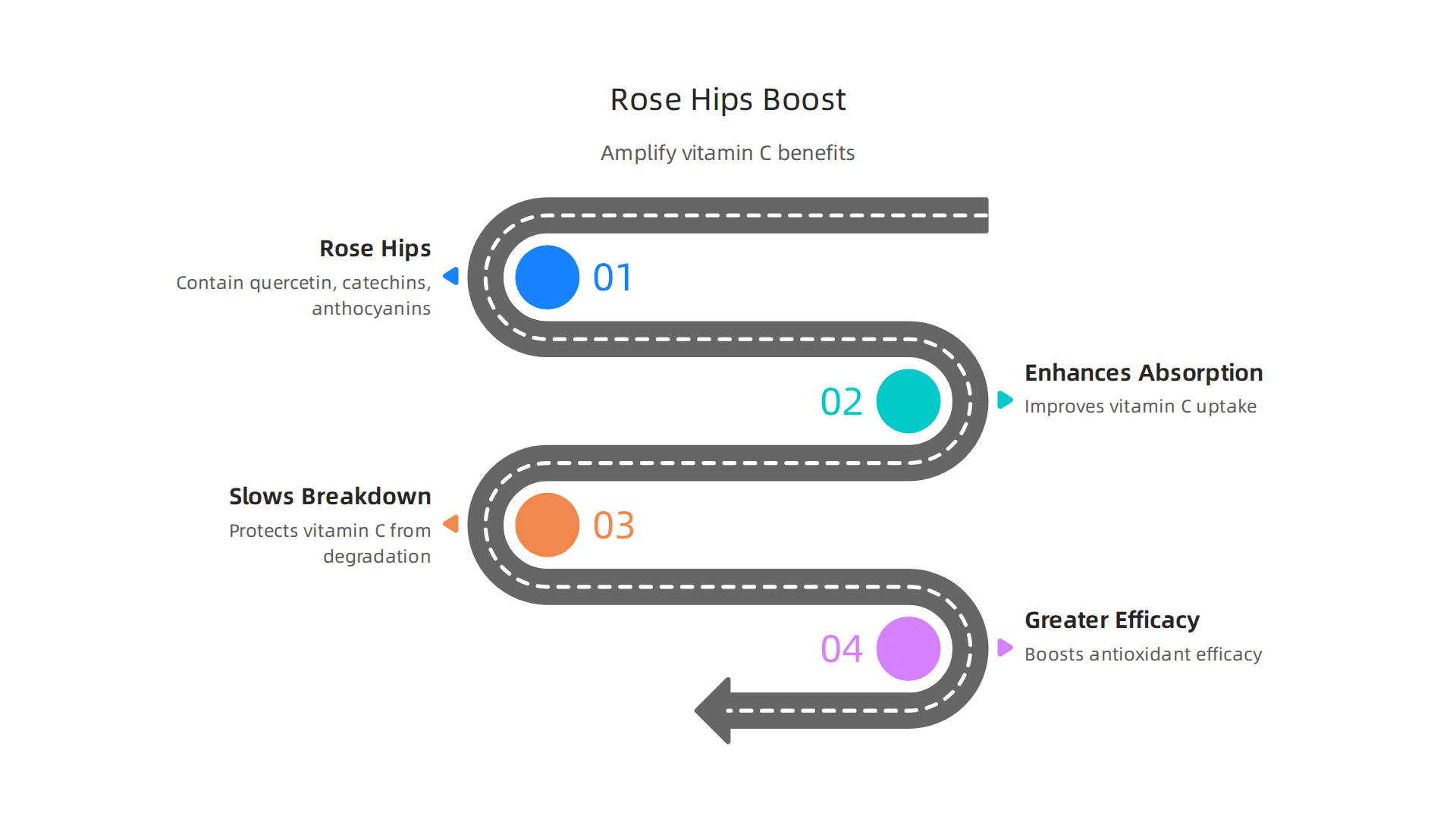
Rose hips are packed with natural compounds called bioflavonoids, including quercetin, catechins, and anthocyanins. These bioflavonoids do two important jobs. First, they help your body absorb vitamin C more effectively. Second, they slow down how fast vitamin C breaks down in your tissues, so it stays active longer source. Together, vitamin C and rose hips create a synergy that boosts both nutrient efficacy and absorption source. That means you get more out of every dose.
On top of that, rose hips are a natural source of vitamin C themselves source. So when you take a vitamin c rose hips supplement, you’re getting extra vitamin C plus the bioflavonoids that improve how well your body uses it. The combination also provides synergistic antioxidant and anti-inflammatory effects, which can support recovery after tough workouts. If you are looking for a quality option, RepCore recommends this vitamin c supplement with rose hips for better absorption and lasting benefits.
Bioflavonoids and Enhanced Absorption
So how do rose hips improve absorption? The secret is in the bioflavonoids. These natural compounds work in two big ways. First, they slow down the oxidation of vitamin C, which helps your gut absorb more of it source. Second, specific bioflavonoids like quercetin may help reduce allergic reactions and calm inflammation.
Rose hips also provide a complex matrix that keeps vitamin C stable and active longer source. That means more of what you take actually gets used by your body. If you want to experience these benefits, consider a quality vitamin c supplement with rose hips. RepCore recommends this rose hips and vitamin C option for better absorption and overall support.
Natural Source of Phytonutrients
Here’s what makes vitamin C rose hips special. Rose hips are a whole food, not just a lab-made vitamin. They naturally contain vitamins A, E, and essential fatty acids alongside vitamin C source.
This natural mix matters. The whole-food matrix keeps the nutrients working together, which may offer benefits you won’t get from isolated vitamin C alone source. People have used rose hips for generations to support immune and joint health.
If you want these extra phytonutrients, look for a vitamin c supplement that includes real rose hips. RepCore recommends this whole-food rose hips option for a complete, natural approach.
Key Fitness and Health Benefits Backed by Research
We just looked at what makes rose hips a rich source of nutrients. But here is the real question for you as an athlete. How does vitamin C rose hips actually help your performance and recovery? The research points to three big areas that matter most to anyone who trains hard.
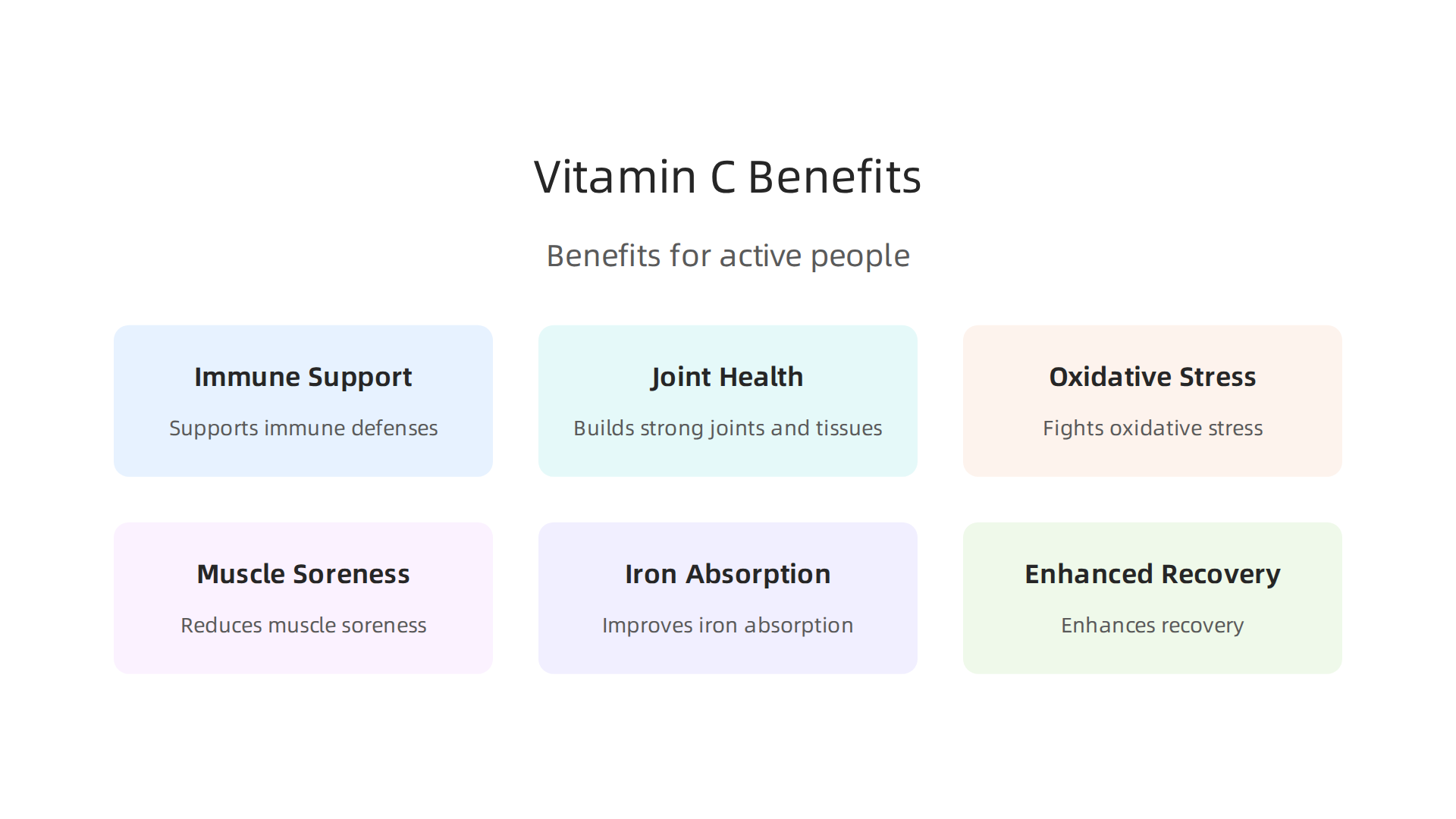
First is your immune system. When you push your body hard during a workout, it creates inflammation and stress. This can sometimes leave you more open to getting sick. Studies show that a good vitamin C supplement can lower that exercise stress and help your immune system stay strong source. This means less time sick and more time making progress.
Second is your energy and endurance. Many athletes struggle with low iron levels, especially runners and people who do not eat red meat. Vitamin C helps your body absorb iron from food or from an iron vitamin c supplement. Better iron levels mean more oxygen gets to your muscles. That feeling of being wiped out after a run? It might be low iron.
Third is your connective tissue. Think of your tendons and ligaments. They take a beating every time you lift or sprint. Your body needs vitamin C to make collagen, which is the main building block for these tissues source. Getting enough vitamin C helps repair this tissue and keeps your skin and joints healthy.
You can get all these benefits from a natural source. If you want to support your immune system, boost your iron absorption, and help your connective tissues recover, try this natural vitamin C supplement with whole food rose hips.
Immune System Support for High-Intensity Training
Do you ever get sick right after a big race or a heavy week of lifting? It is not bad luck. Intense training puts stress on your body. That stress can temporarily lower your immune defenses and raise your risk of upper respiratory infections source. This is where vitamin c rose hips really shine.
Research shows that a consistent vitamin c supplement routine can help reduce how often you get sick and how long symptoms last. Rose hips go a step further. They contain natural bioflavonoids that support your immune system and help your body manage exercise stress better source. If you want to stay healthy through your hardest training blocks, try this natural vitamin C supplement with whole food rose hips to keep your defenses up.
Muscle Recovery and Reduced Soreness
Ever have those days where walking down stairs is painful after leg day? That soreness is a sign of muscle damage. Vitamin C can help you bounce back faster. As a strong antioxidant, it can reduce muscle soreness after exercise and speed up recovery source. It works by fighting oxidative stress and supporting repair.
Rose hips bring extra benefits. Their natural anti-inflammatory compounds help calm your muscles even more. This means less stiffness and a quicker return to training. For a complete recovery boost, check out this iron vitamin C supplement with rose hips. It gives you the antioxidant and anti-inflammatory power your muscles need after hard workouts.
Improved Iron Absorption for Endurance Athletes
But vitamin C does more than just help with recovery. It also plays a big role in how well your body uses iron. Specifically, it boosts the absorption of non-heme iron, which is the type found in plant foods like spinach, beans, and lentils. This matters because iron helps your blood carry oxygen to working muscles. Without enough iron, your energy drops and your performance suffers.
Female athletes and vegetarians are especially at risk for low iron levels. Taking a vitamin C supplement alongside plant-based meals can help prevent deficiency. For a simple way to get both nutrients, try this iron vitamin C supplement with rose hips. It supports oxygen flow and keeps your endurance strong.
Skin Health and Connective Tissue Repair
But the benefits of vitamin C and rose hips go far beyond better oxygen flow. They are also essential for your skin and connective tissue.
Your body requires vitamin C to build collagen. This protein is what gives your skin its bounce and helps wounds heal. Research confirms that vitamin C is directly involved in collagen synthesis and helps manage oxidative stress after injuries cite PMC article.
The natural antioxidants found in rose hips also fight free radicals that cause sun damage and wrinkles. For active people, this matters a lot. Strong connective tissue means your tendons and ligaments can handle more stress and repair faster after a hard workout.
Support your whole body easily. Try adding a quality vitamin C supplement with rose hips to your daily routine to keep your skin firm and your joints strong.
So how much vitamin C do you actually need? And does adding rose hips change the math? Let’s look at what the research says.
For most healthy adults, the RDA is 75 to 90 milligrams per day (mg/day). That’s the amount your body needs just to function normally, according to the NIH Office of Dietary Supplements.

But here’s the thing. If you train hard, you might need more. Your body uses extra vitamin C during exercise for immune support and tissue repair. Many experts suggest a therapeutic dose in the range of 200 to 2,000 mg per day, depending on your goals.
Still, don’t go overboard. The Tolerable Upper Intake Level (UL) for adults is set at 2,000 mg per day, because taking more can cause stomach trouble (see National Academies review). The Mayo Clinic also notes that vitamin C is safe at recommended doses, but too much can lead to side effects.
This is where the rose hips part gets interesting. Because rose hips contain natural bioflavonoids, they may help your body absorb more vitamin C from each dose. So you could potentially take a lower amount and still get the benefits.
For athletes who want solid results without guessing, a quality formula is worth it. Try the RepCore recommended vitamin C supplement for a clean, effective option that respects your upper limits.
Recommended Daily Allowance vs. Therapeutic Doses
The RDA keeps you from getting sick, but it may not help you perform better. If you are active, research suggests 500 to 1,000 mg per day supports immune function and speeds up recovery after tough training. Going past 2,000 mg is where trouble starts. The Mayo Clinic warns that too much vitamin C can cause stomach upset and diarrhea. That is why vitamin c rose hips can be a smarter choice. The natural bioflavonoids in rose hips may help your body absorb more from each dose. That means you can stay in the therapeutic sweet spot without pushing your limits. A clean vitamin c supplement makes hitting that target simple and safe.
Best Time to Take Vitamin C with Rose Hips
Now that you know the right amount, let’s talk about the right moment. Timing your vitamin c rose hips intake can make a real difference in how well your body uses it.
If you have a sensitive stomach, taking it with food is a smart move. This helps reduce any risk of an upset stomach, which the Mayo Clinic warns can happen with higher doses.
For active people, try taking your vitamin c supplement about 30 to 60 minutes before a workout. This timing supports your immune system during tough training. You can also take it right after to help speed up recovery. A clean dose from a trusted source like this vitamin c supplement makes it simple to get the timing just right.
Comparing Ascorbic Acid, Rose Hips, and Liposomal Vitamin C
With so many options on the shelf, picking the right vitamin c supplement can feel overwhelming.
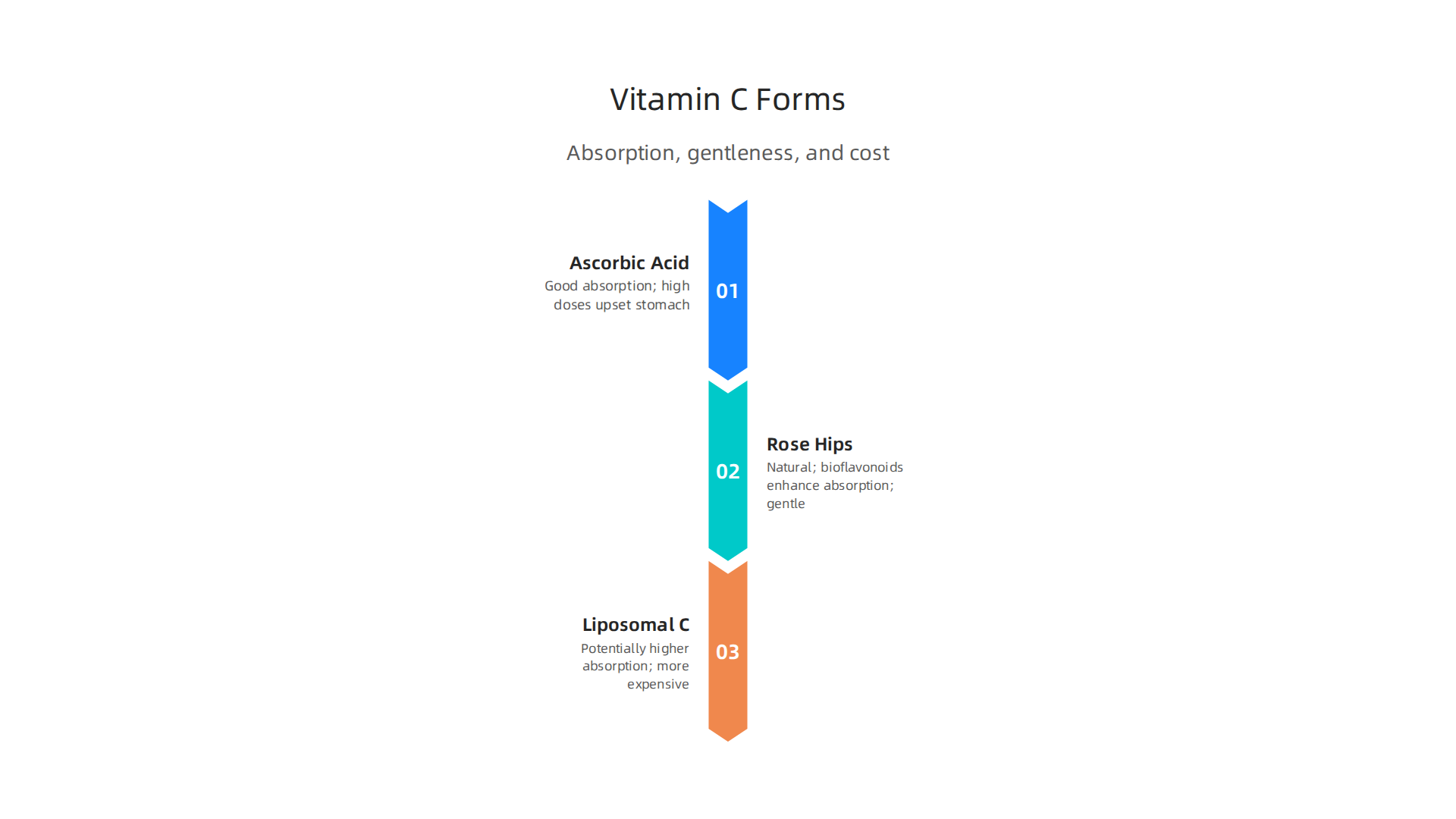
Let’s break down the three most common forms so you can choose what works best for you.
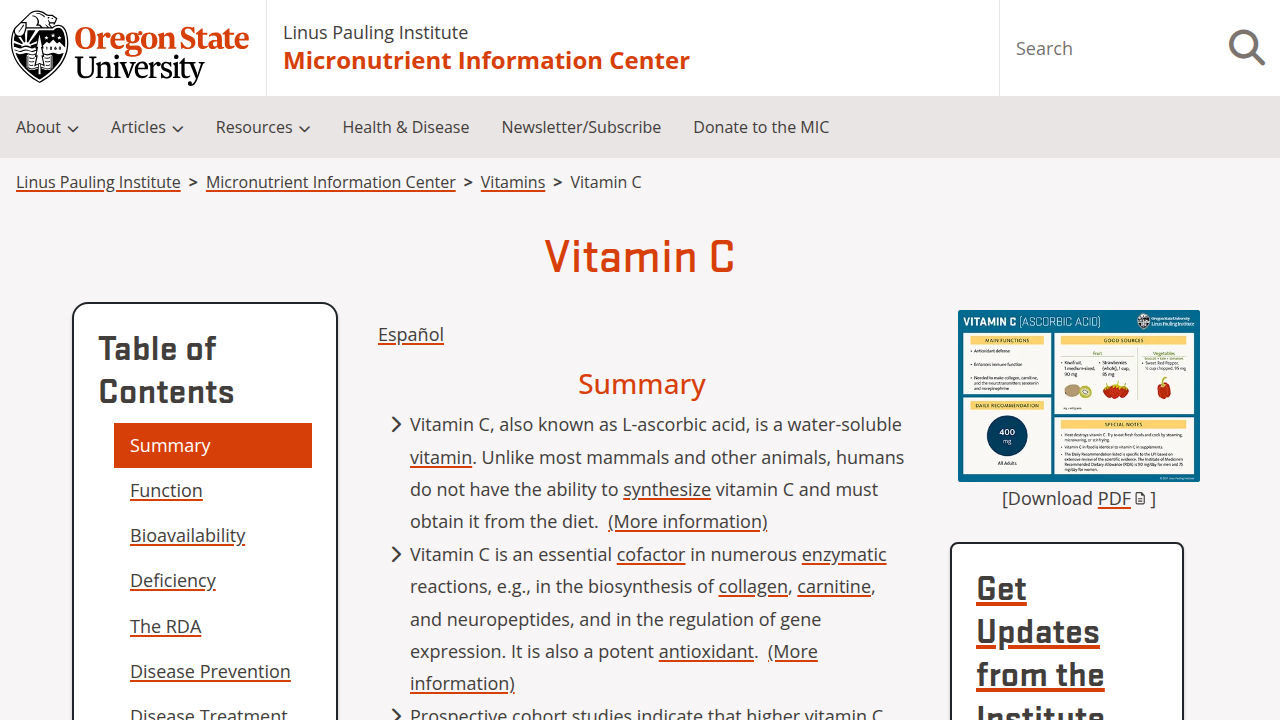
Ascorbic acid is the standard synthetic form. Your body absorbs it well, about the same as vitamin C from food, according to research from the Linus Pauling Institute.
The catch? High doses can upset your stomach. That is why many people look for gentler options.
Rose hips offer a natural source of vitamin C packed with bioflavonoids. These plant compounds may help your body use the vitamin better. Many people find this form easier on their stomach. If you want a clean, food-based option, a quality vitamin c rose hips supplement delivers natural nutrients without the harshness.
Liposomal vitamin C is the newer kid on the block. It wraps the vitamin in tiny fat bubbles to protect it during digestion. Studies show it may offer higher absorption, with some research finding it 1.77 times more bioavailable than regular forms. But a 2025 review noted the results vary a lot between studies. It also costs more. So it is promising but not a sure win for everyone.
Here is the quick take. If you want a budget-friendly standard option, choose ascorbic acid. If you prefer something natural and gentle on your stomach, go with rose hips. And if you want the highest possible absorption and do not mind paying extra, liposomal may be worth a try.
How to Choose a High-Quality Vitamin C with Rose Hips Supplement
Not all supplements are created equal. You can pick the right form, but if the brand cuts corners, you might not get what you pay for. Here is how to spot a quality vitamin c rose hips supplement.
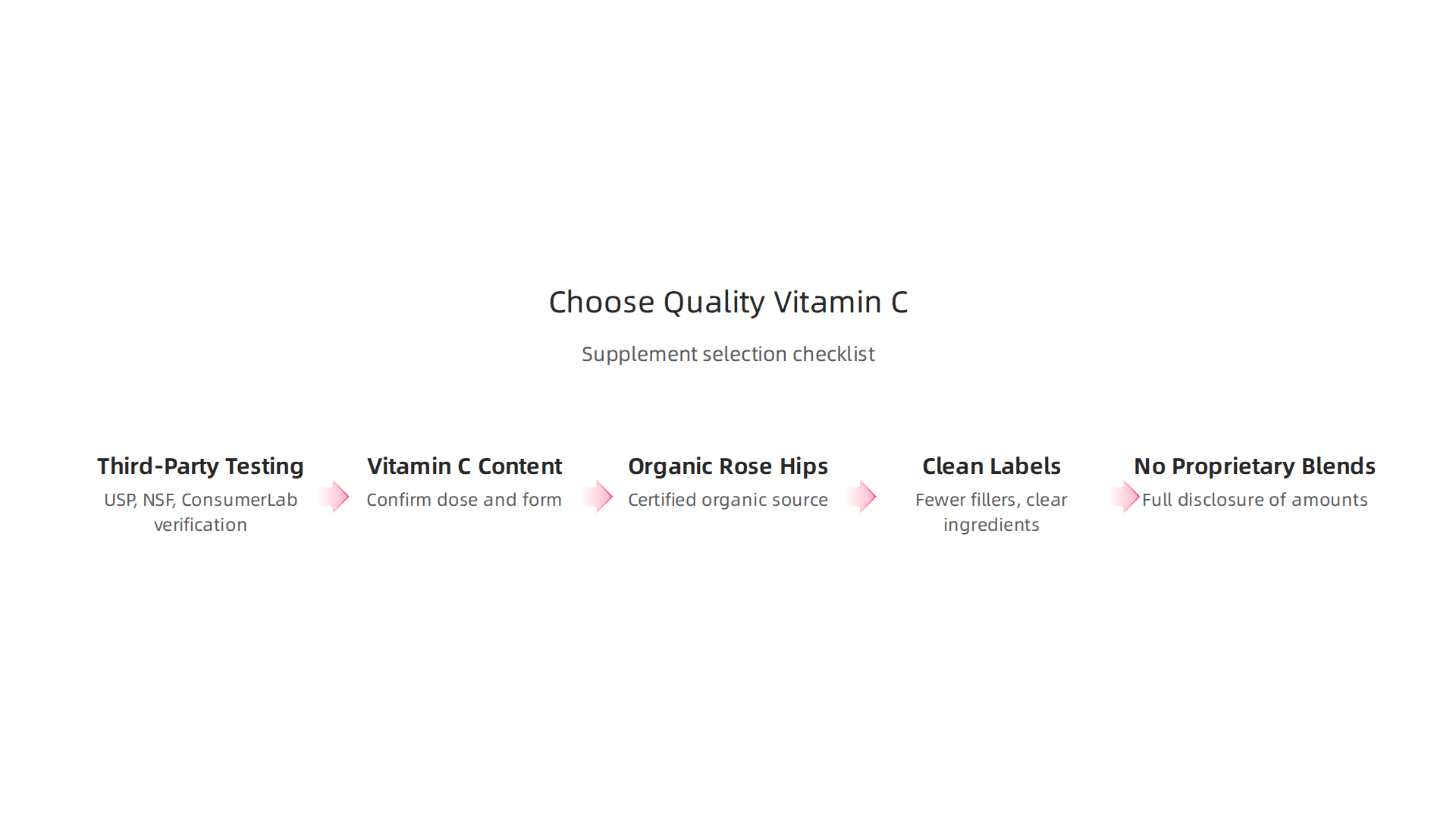
Look for third-party testing. The FDA does not check supplements before they hit shelves, so it is up to independent labs to verify quality. Third-party certification means an outside group tested the product for potency, purity, and safety. Major programs include USP, NSF, and ConsumerLab. When you see one of these seals, you know the label matches what is inside. US Pharmacist explains that these certifications check for things like heavy metals and contaminants.
Check the vitamin C content. A good supplement will list exactly how much vitamin C each serving provides. Avoid products that hide the amount or use vague terms. Verified labs confirm that the actual amount matches the label.
Choose organic rose hips when possible. Rose hips can absorb pesticides from the soil. Organic farming reduces that risk. High quality vitamin c rose hips supplements often use organic ingredients sourced from reputable growers.
Look for clean labels. Fewer fillers and artificial additives mean a purer product. If you see a long list of unrecognizable ingredients, keep looking.
If you want a trusted option that meets these standards, consider a vitamin c rose hips supplement from a brand that uses third-party testing and organic rose hips. It is a simple way to get natural support without the guesswork.
What to Look for on the Label
Reading the label is the best way to know exactly what you are getting in your vitamin c rose hips supplement.
First, find the vitamin C amount and source. You want to see the exact milligrams of vitamin C per serving. The label should also tell you if it comes from ascorbic acid, rose hips, or both. A quality brand will be clear about this just like the FDA requires for all dietary supplements.
Next, check for standardized bioflavonoids. This is a sign your rose hips are potent and high quality. It means you are getting more than just basic vitamin C.
Finally, watch out for proprietary blends. These blends can hide the true amount of each ingredient. A trustworthy brand will be fully transparent.
If you want a shortcut, the team at RepCore carefully vets supplements that meet these strict label standards.
Third-Party Testing and Certifications
Even the best label can’t tell the whole story. That’s why you need an independent check. Look for seals from USP, NSF International, or ConsumerLab. These third-party organizations test supplements to make sure what is on the label is actually in the bottle.
This kind of independent lab verification is your best protection. It can confirm that your vitamin c rose hips product contains the right amount and no hidden additives. Be careful though. Some products say ‘natural’ on the front but still use synthetic ascorbic acid inside. Third-party testing reveals that truth.
If you want a shortcut to a trusted vitamin c supplement that has already passed these checks, the team at RepCore has vetted high-quality options for you.
Potential Side Effects and Safety Considerations
You now know what to look for on a label and how third-party testing can protect you. But even the best vitamin c rose hips supplement needs to be taken with care. Let’s look at the side effects so you can stay safe while getting the benefits.
Here is the good news. Vitamin C is water-soluble. Your body gets rid of what it does not use. That is why it is generally safe for most people. But there is a limit to how much you should take. The National Academies set the upper limit for adults at 2,000 mg per day. Go over that, and you might feel it. The most common side effects are diarrhea, nausea, and stomach cramps. The Mayo Clinic confirms that too much vitamin C can cause these issues. So if you start a new vitamin c supplement and your stomach feels upset, check your dose.
Now let’s talk about vitamin c rose hips specifically. Rose hips have natural fiber. That fiber is good for you. But if you are not used to it, a sudden high dose can cause bloating or gas. Start with a smaller amount and see how your body reacts.
There is one more risk to know about. In some people, very high doses of vitamin C over a long time can raise the risk of kidney stones. This happens when the body turns extra vitamin C into oxalate. Too much oxalate can form stones in the kidneys. WebMD points out that this is a real concern for people with existing kidney problems. The Vinmec resource also notes that certain people should be careful with high doses of vitamin C.
The best way to avoid these side effects is simple. Stick to the recommended dose on the label. Choose brands that use third-party testing. And if you have a history of kidney stones, talk to your doctor first.
If you want a shortcut to a clean, properly dosed vitamin c rose hips supplement that meets these safety standards, the team at RepCore has already vetted the best options for you. They focus on quality and safety so you can feel good about what you take.
Upper Limit and Tolerable Intake
So what is the ceiling for vitamin C? The NIH Office of Dietary Supplements sets the Tolerable Upper Intake Level at 2,000 mg per day for adults. The National Academies set this limit to prevent diarrhea and stomach issues. Your body is smart about getting rid of extra vitamin C. But every system has a breaking point.
Here is the thing you need to remember with vitamin c rose hips. Rose hips already contain natural vitamin C. So if you are also eating fortified foods or taking other supplements, add it all up. Your total daily intake from every source combined should stay under that 2,000 mg mark.
Your body is unique too. Some people handle 1,000 mg with no problem. Others feel bloated at 200 mg. That is why starting with a low dose is the smart move. Try a small amount for a few days. Then slowly increase if you feel fine. This helps you find your personal sweet spot without discomfort.
If you want a shortcut to a clean, properly dosed vitamin c supplement that removes the guesswork, the team at RepCore has already vetted top options for safety and quality.
Interactions with Medications and Other Supplements
Vitamin C does not work in a bubble. It can change how your body handles other things you take. For example, vitamin C boosts how much iron you absorb from food. That is great if you are low on iron. But it can be dangerous if you have a condition like hemochromatosis where your body stores too much iron. WebMD notes that vitamin C can also increase aluminum absorption from antacids.
It may also affect blood thinners like warfarin and some chemotherapy drugs. The Linus Pauling Institute explains that high doses of vitamin C can interfere with lab tests too, like those for blood sugar and cholesterol.
Here is something unique about vitamin c rose hips. The bioflavonoids in rose hips can affect how your liver processes certain medications through the cytochrome P450 pathway. This means your body might break down some drugs faster or slower than expected.
If you are on prescription medication, talk to your doctor before adding any vitamin c supplement. And if you want a clean, pre-vetted option that removes the guesswork, the team at RepCore has already checked top choices for safety and quality.
Summary
This article explains why vitamin C combined with rose hips is a smart supplement choice for active people, especially endurance athletes and frequent trainers. It walks through the science—how vitamin C supports collagen synthesis, reduces oxidative stress, speeds muscle recovery, and improves iron absorption—and shows how rose hips add bioflavonoids and phytonutrients that can boost absorption and reduce stomach upset. You’ll learn practical dosing guidance (RDA versus therapeutic ranges), timing tips for pre- or post-workout use, and how to compare forms like ascorbic acid, rose hips, and liposomal vitamin C. The guide also covers how to pick a high-quality product (organic ingredients, clear labels, and third‑party testing), potential side effects and interactions, and simple steps to find a safe, effective supplement that helps you train harder and recover faster.



Get practical training, recovery, and nutrition insights in your inbox