
When to Take Pre Workout for Optimal Energy and Performance

Introduction
Have you ever downed a scoop of pre-workout, hit the gym, and felt absolutely nothing? Or maybe you took it too close to your workout and ended up with a jittery, uncomfortable session that threw off your entire lift.

You are not alone.
Getting the timing right with pre-workout supplements is trickier than most people think. Take it too early, and the energy fades before you even break a sweat. Take it too late, and you are stuck with caffeine crashing into your workout or struggling to fall asleep later that night. The difference between a great session and a wasted one often comes down to just a few minutes.
Here is the thing. Many everyday athletes miss the sweet spot entirely. They follow generic advice that does not account for their body, their workout type, or their individual tolerance. And that is exactly why this matters. Research shows that taking pre-workout at the wrong time can limit your performance gains and even increase the risk of unwanted side effects. A 2025 study on pre-workout supplements and cardiovascular health found that these products can improve physical performance, but timing plays a big role in how your body responds.

So when should you actually take your pre-workout for the best energy, focus, and results? In this guide, we break down the science-backed window for when to take pre workout and how to personalize it for your unique routine. Whether you are lifting heavy, running sprints, or grinding through a HIIT class, getting the timing right makes all the difference.
If you are still deciding between different options, check out our breakdown of creatine vs pre-workout to see which one fits your goals better.
The Evidence-Based Pre-Workout Timing Window
So what is the exact window you should be aiming for when you ask yourself when to take pre workout? The research points to a pretty clear range. Most studies suggest you take your pre-workout 30 to 60 minutes before you start exercising.
Here is why that window matters so much. Your body needs time to break down the ingredients, send them into your bloodstream, and let them reach peak levels. A 2025 study on pre-workout supplements and cardiovascular health found that these products work best when you give them enough time to absorb. The sweet spot for caffeine, the main driver of energy in most formulas, lands between 45 and 60 minutes after you take it.
That timing is not random. Multi-ingredient pre-workout supplements typically contain caffeine, beta-alanine, citrulline, and other compounds that work together. A 2022 study on multi-ingredient pre-workout supplements showed that these blends need about 30 minutes to start kicking in for most people. So if you chug your scoop right before you walk into the gym, you are missing the peak energy window.
Factors That Shift the Window
Here is the thing. The 30 to 60 minute rule is a great starting point, but your body can shift it. Your individual metabolism plays a big role. Fast metabolizers may feel the effects closer to 30 minutes. Slow metabolizers might need closer to 60 minutes.
What you ate earlier also matters. If you take your pre-workout on an empty stomach, it hits your system faster. But if you just had a large meal, digestion slows everything down. Research on pre-exercise nutrition and macronutrient timing shows that food in your stomach can delay absorption. So your foods for pre workout are just as important as the supplement itself. A light snack with some carbs is fine. A heavy meal means you should push your pre-workout closer to the 60-minute mark.
How to Find Your Personal Sweet Spot
The smartest way to dial this in is to start at 45 minutes. On your next workout, take your pre-workout 45 minutes before you plan to lift or run. Pay attention to how you feel. If the energy hits strong at 30 minutes and fades before you finish, try 35 or 40 minutes next time. If you feel jittery or get a caffeine crash halfway through, move it closer to 60 minutes.
Everyone responds a little differently. That is why self-experimentation is so valuable. If you are curious about how specific formulas compare and what ingredients to look for in the best pre workout, check out our in-depth Sycotic Pre-Workout Review to see how one popular brand holds up to the evidence.
Getting the timing right is one of the easiest ways to get more out of every scoop. And once you find your window, you will notice the difference immediately.
How Ingredients Influence Pre-Workout Timing
Now you know the general 30-to-60 minute window. But here is the thing. Not every ingredient in your scoop works on the same clock. Some hit fast and fade. Others take their time building up. Understanding how each ingredient behaves helps you avoid jitters on one end and wasted scoops on the other.
Stimulants vs. Non-Stim Ingredients
Caffeine is the star of most pre-workouts. It reaches peak levels in your blood between 30 and 60 minutes after you take it. A 2025 guide on pre-workout timing explains that the sweet spot for caffeine is about 30 to 45 minutes before training. That is why if you chug your drink right as you walk into the gym, you might feel the buzz halfway through your warm-up but miss the full wave during your heaviest sets.
Non-stim ingredients work differently. Beta-alanine, the stuff that gives you that tingly feeling, does not peak the same way. According to a review from Texas Health, beta-alanine builds up in your muscles over weeks of consistent use. A single dose before a workout won’t give you an immediate performance boost. You need to take it regularly for it to work. So timing on beta-alanine is less about the day of and more about being consistent.
Citrulline malate, a common ingredient for pumps and endurance, also needs time. A 2022 study on multi-ingredient pre-workout supplements found that citrulline helps improve blood flow best when given about 60 minutes to absorb. That means if your pre-workout is heavy on citrulline, you want to be closer to the 60-minute end of the window.
How Food Changes Things
Your foods for pre workout can mess with these timelines. A meal with protein, fat, or fiber slows down how fast your stomach empties. That delays the arrival of caffeine and other ingredients into your bloodstream. If you just ate a big meal, the 45-minute peak for caffeine might actually take 60 or 75 minutes. A 2024 study on pre-workout multi-ingredients and carbohydrates showed that eating a carb-heavy snack before your supplement can change how quickly the ingredients work.
So if you want to feel the caffeine hit closer to 30 minutes, take your pre-workout on a relatively empty stomach. If you eat a meal, adjust your timing. Push it to 60 minutes or even 75 to account for the delay.
Putting It All Together
Here is a simple way to think about it.
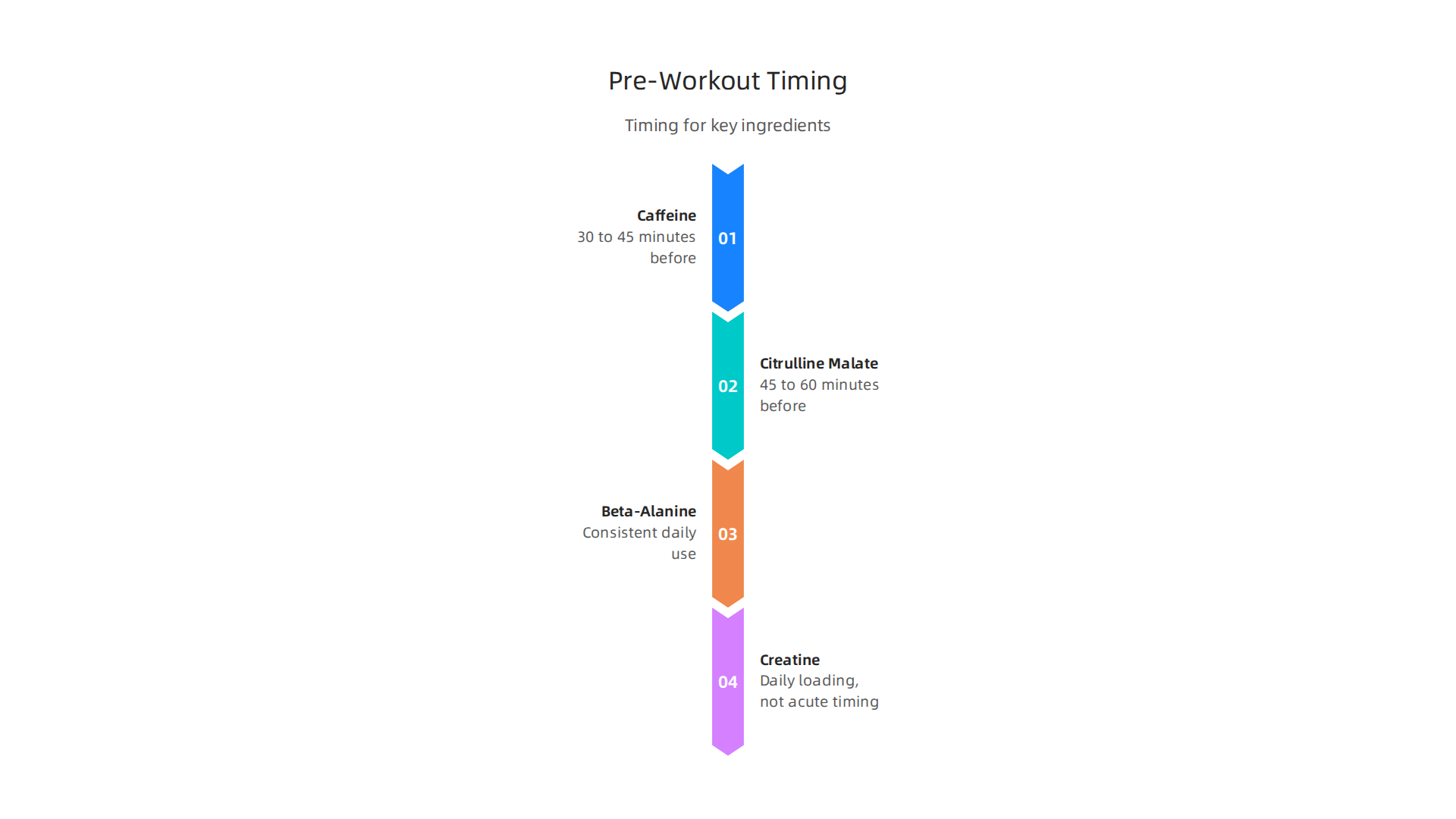
| Ingredient | Best Timing | Why It Matters |
|---|---|---|
| Caffeine | 30 to 45 minutes before | Peaks fast, gives sharp energy |
| Citrulline malate | 45 to 60 minutes before | Needs time to boost blood flow |
| Beta-alanine | Consistent daily use | Builds up over weeks, not minutes |
| Creatine (in some formulas) | Daily loading, not acute timing | Works best as a long-term stack |
If your pre-workout has a strong stimulant blend, aim for 30 to 45 minutes. If it is pump-focused with citrulline and low caffeine, lean toward 60 minutes. And if you are new to pre-workouts, start at 45 minutes and adjust from there. To see how a popular formula stacks up in terms of ingredients and timing, check out our Sycotic Pre-Workout Review for a real-world example.
Avoid the Jitters, Get the Gains
One of the biggest mistakes people make is taking pre-workout too late. Your body starts breaking it down as soon as it hits your stomach. Give each ingredient the time it needs to arrive at the right place. If you want a trusted pre-workout that balances stim and non-stim ingredients effectively, check out our top-rated pre-workout recommendations.
And if you are curious about how creatine fits into the picture, our article on creatine vs pre-workout breaks down the differences in timing and effectiveness.
When you know your ingredients, you can time your scoop with precision. That is how you turn a good pre-workout into a great one.
Pre-Workout Timing for Different Workout Types
Now you know how ingredients behave. But your workout type also changes the game. The same scoop that works perfectly for a long run can leave you jittery during a heavy squat session. And the pre workout that fires you up for HIIT might fade too early on a steady bike ride.
Here is the thing. Matching your timing to the workout prevents both under- and over-caffeination.
You do not want to crash halfway through. You also do not want to feel the buzz before you even start warming up.
Endurance Workouts Need Earlier Timing
If you are going for a long run, a bike ride, or a long swim, you likely eat a meal a couple hours beforehand.

Carbs are your main fuel here. A proper distribution of carbs, fat, and protein 2 to 3 hours before exercise can really boost performance, according to guidance from ATH Sport.
When you eat a real meal, your stomach is busy digesting food. That slows down the absorption of your pre-workout ingredients. So if you take your scoop 30 minutes before you head out, the caffeine and citrulline might not hit their peak until well into your session. Instead, take your pre-workout closer to 60 minutes before endurance exercise. This gives enough time for both the meal and the supplement to process.
Endurance sessions also last longer. You want the energy to spread out rather than spike and crash. An earlier timing helps the stimulants kick in more gradually.
Strength and HIIT Workouts Need the Peak at the Start
Heavy lifting and high intensity interval training (HIIT) are different. These workouts are short and explosive. You need your highest energy right when you start. HIIT workouts torch fat, boost fitness, and build muscle fast, as noted by UC Davis Health. But they demand a lot from your body from the very first interval.
For strength and HIIT, you want the caffeine peak to hit exactly when you begin your first set. That means taking your pre-workout about 30 to 45 minutes before, ideally on a relatively empty stomach or with just a light snack. If you eat a big meal and then take pre-workout too early, you might still feel sluggish when the bar gets heavy.
The risk with strength and HIIT is over-caffeination if you take it too late. You might get the jitters during your last few reps, which is dangerous under heavy loads. On the flip side, taking it too early means the energy fades before you finish.
Simple Adjustments Based on Workout Type
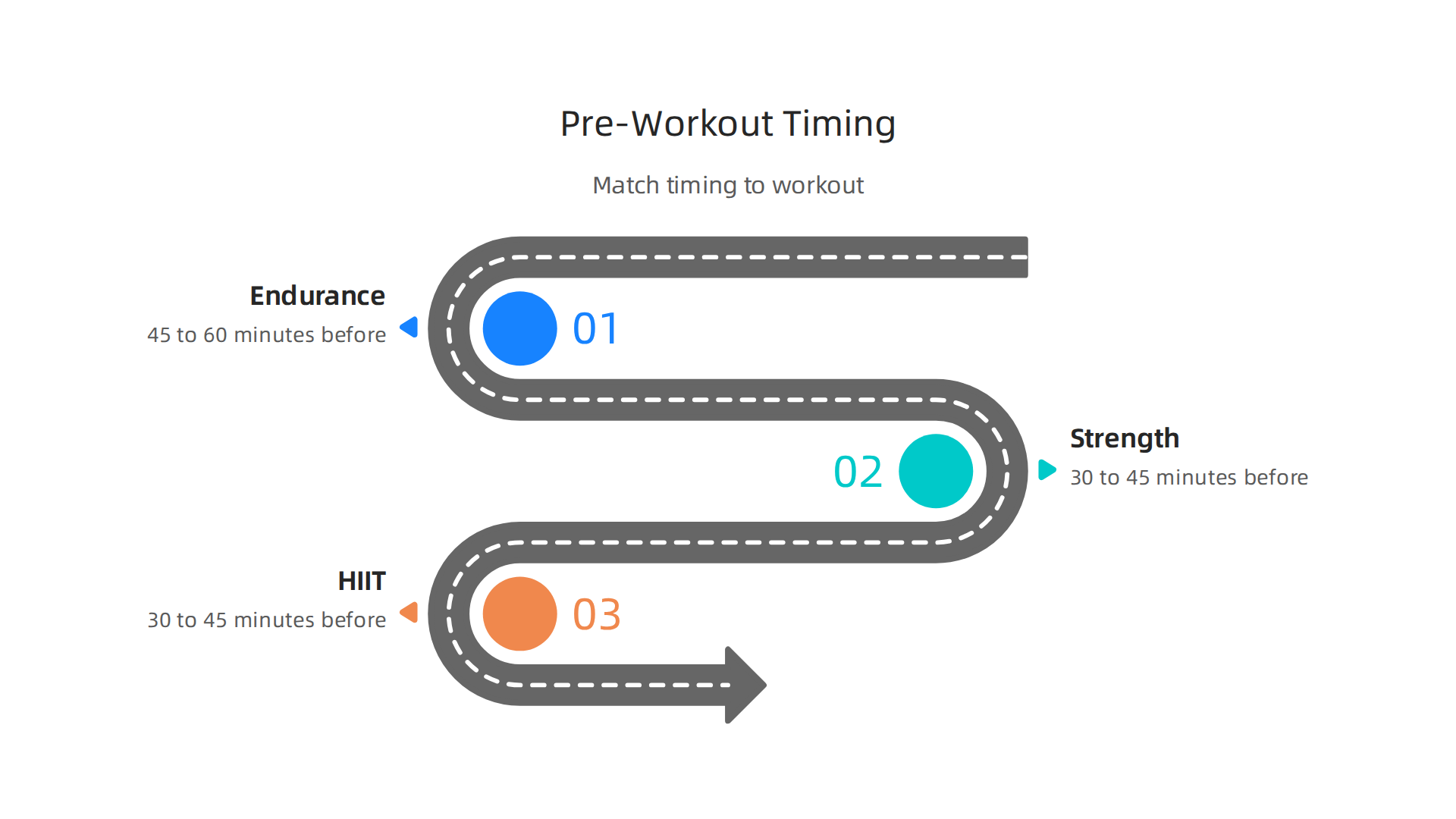
| Workout Type | Recommended Timing | Key Consideration |
|---|---|---|
| Endurance (running, cycling, swimming) | 45 to 60 minutes before | Account for a pre-workout meal |
| Strength (heavy lifting, powerlifting) | 30 to 45 minutes before | Empty or light stomach, peak at start |
| HIIT (intervals, circuit training) | 30 to 45 minutes before | Need high stim during short window |
If you are new to HIIT and want to get the most out of your sessions, check out our guide on 7 critical criteria to evaluate before joining a HIIT gym. It helps you pick a gym that matches your intensity.
A Quick Rule of Thumb
Think about how your workout feels. If you are doing something long and steady, push your pre-workout timing back. If you are doing something short and intense, keep it close to the start.
Experiment a little. Try 45 minutes for strength and 60 minutes for endurance. Adjust based on how your body responds. The goal is to feel energized but not shaky.
When you match the timing to the type of training, you get the most out of every scoop. No wasted energy. No jitters. Just better performance.
Morning vs. Evening Workouts: Does Pre-Workout Timing Change?
You have matched your pre-workout timing to your workout type. That is smart. But here is another layer. The time of day you train also changes how your body handles that scoop. Your internal clock, your circadian rhythm, affects how fast you digest and respond to caffeine and other ingredients.
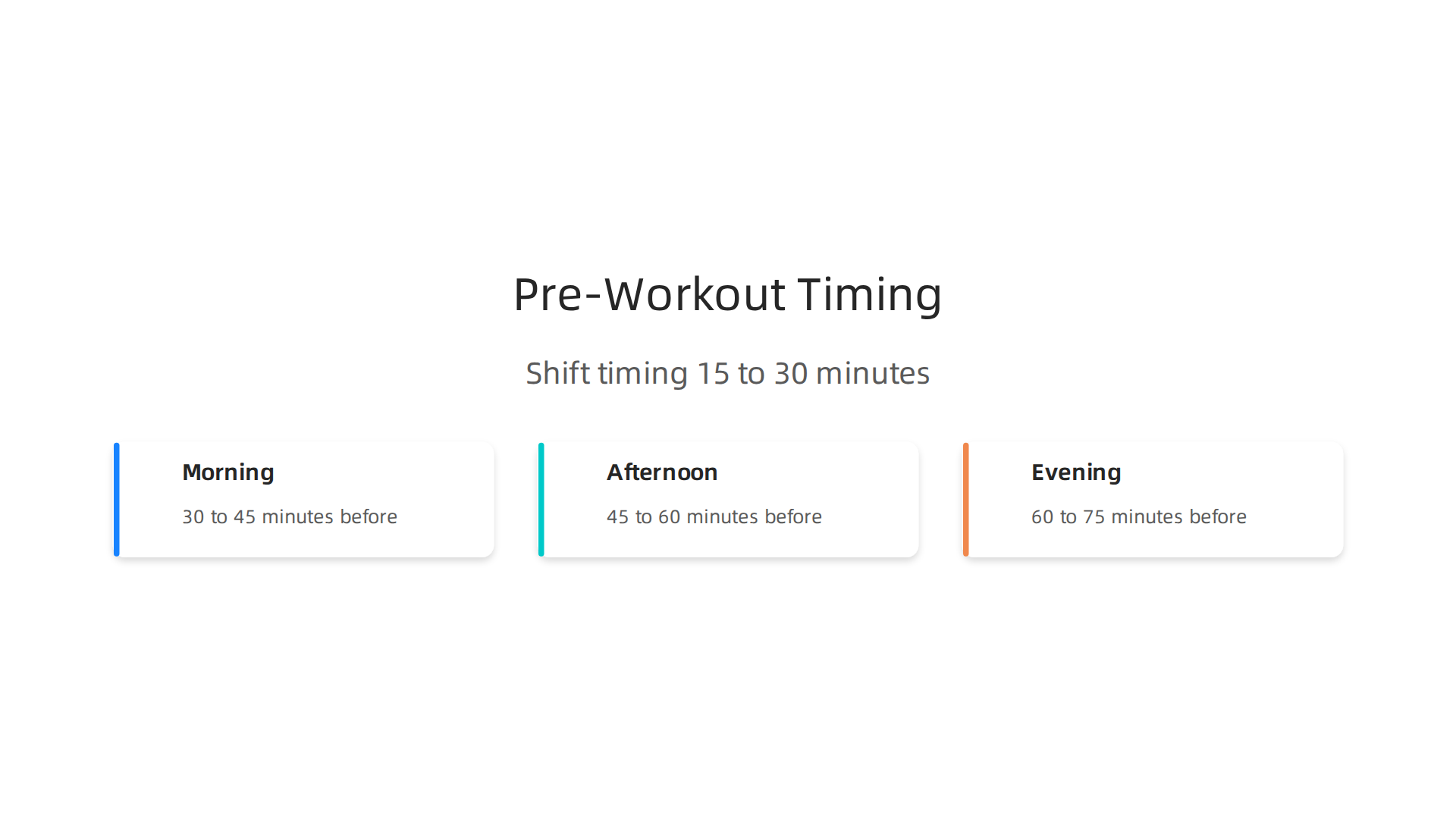
The science is clear. Your body does not process caffeine the same way at 6 a.m. and 6 p.m. So you might need to shift your timing by 15 to 30 minutes depending on when you work out.
Morning Workouts: Faster Absorption, Faster Effect
When you wake up, your body is in a fasted state. Your stomach is empty and your digestion is ready to go. Several studies show that your circadian rhythm makes you more sensitive to caffeine in the morning. According to recent research highlighted by Men’s Health, caffeine improves strength and endurance more in morning workouts than in evening ones.

That is great news. But it also means the caffeine hits you faster and peaks sooner. So you do not need as much lead time. If you normally wait 45 minutes before a strength session, try cutting it to 30 minutes. That keeps the peak energy right at the start of your workout.
One thing to watch out for. Morning cortisol levels are naturally higher. A strong pre-workout on an empty stomach can sometimes feel too intense. If you feel jittery, dial back the dose or eat a light snack like a banana first.
Evening Workouts: Protect Your Sleep at All Costs
Evening training is a different story. You have eaten during the day. Your stomach may still have food in it. And the biggest concern is sleep. Research from RP Strength points out that caffeine consumed after 2 or 3 p.m. produces weaker ergogenic effects and significantly disrupts sleep for most people.
So if you train at 6 p.m., you need to think about your pre-workout timing and your overall caffeine intake that day. Taking a full scoop of high-caffeine pre-workout at 5:30 p.m. can keep you tossing and turning at 11 p.m. A study published in PubMed Central confirms that consuming caffeine before late afternoon or evening training can negatively impact subsequent sleep.
Here is the fix. Take your pre-workout earlier in the afternoon, around 4 or 4:30 p.m. if you train at 6. This gives your body more time to clear the caffeine before bedtime. You can also switch to a lower-caffeine or stimulant-free formula for evening sessions.
| Time of Day | Recommended Timing Adjustment | Key Risk |
|---|---|---|
| Morning (before noon) | Take 30 to 45 minutes before; cut 15 minutes off your usual time | Jitters from empty stomach |
| Afternoon (noon to 4 p.m.) | Stick with 45 to 60 minutes before | Moderate sleep disruption if high caffeine |
| Evening (after 4 p.m.) | Take 60 to 75 minutes before or use low-caffeine formula | Significant sleep disruption |
Quick Rule of Thumb
Think of it this way. Morning workouts let you get away with a shorter lead time. Your body is primed and ready to absorb. Evening workouts require more caution. Push your timing earlier to protect your sleep. That way you still get the energy, but you do not sacrifice recovery.
If you struggle with evening workouts affecting your sleep, consider looking into supplements that support better recovery without stimulants. A good option is magnesium, which many athletes use to improve sleep quality and muscle relaxation.
Experiment with a 15-minute shift in either direction. Your body will tell you what works. The goal is to feel energized during the workout and relaxed enough to sleep well after. No tradeoffs. Just better timing.
Signs You’re Taking Pre-Workout Too Early or Too Late
Even after you match your timing to your workout type, things can still feel off. You take your pre-workout, hit the gym, and something feels wrong. Maybe you crash halfway through. Or maybe you never feel the energy at all.
These are clear signs your timing is off. Your body is telling you something. Here is how to read the signals.
You Took It Too Early: The Energy Crash
If you take your pre-workout too early, the peak energy hits before you even start. Then by the time you hit your hardest sets, the energy is gone. That is a classic pre-workout crash.
According to research from Bucked Up, pre-workout crashes happen when short-acting caffeine sources create a sharp energy spike followed by fatigue and mood drops.

You feel great for the first 10 minutes. Then you drag through the rest.
Other symptoms include:
- Sudden fatigue midway through your session
- Loss of focus and motivation
- Feeling sleepy or sluggish before you finish
If this sounds familiar, push your pre-workout closer to your start time. For morning workouts, try 30 minutes before instead of 45. That can keep the peak energy right where you need it.
You Took It Too Late: The Slow Start
Taking your pre-workout too late is the opposite problem. You start your workout feeling flat. The caffeine has not kicked in yet. You struggle through warmups and early sets while waiting for the energy to arrive.
Common signs include:
- No noticeable energy boost during the first 15 to 20 minutes
- Delayed peak that hits during your cool down
- Feeling like you wasted your first few sets
The solution is simple. Give your body more time. If you train in the evening, remember that digestion is slower. A guide from BodySpec explains that most pre-workout side effects are tied to stimulant dose, individual tolerance, and timing. So adjust your timing forward by 15 to 30 minutes.
Jitters and Stomach Discomfort
Jitteriness, rapid heart rate, and digestive upset are common warning signs according to Healthline. These symptoms often mean you took your pre-workout too close to your workout on an empty stomach.
If you feel shaky or anxious, try eating a small snack like a banana or a piece of toast 15 minutes before your pre-workout. That can buffer the stimulant effects and calm your stomach.
How to Get It Right
Start with the standard 45-minute window. Then pay attention. If you crash early, move your intake closer to your workout. If you start flat, move it earlier. Small 15-minute shifts can make a big difference.
For more help choosing the right supplements, read our guide on creatine vs pre-workout to understand which one fits your goals best.
Experiment with these adjustments for a week. Your body will tell you the perfect timing. You just have to listen.
Practical Pre-Workout Timing Schedule for Busy Athletes
Now you know the signs of bad timing. Let’s fix it with a simple schedule. This works for strength training, HIIT, and everything in between.
The general rule is to take your pre-workout 30 to 45 minutes before you start moving. That window gives the ingredients time to kick in. For strength and endurance workouts, aim for the full 45 minutes. For high-intensity interval training, 20 to 30 minutes is often better. This helps you avoid the peak energy hitting during your cool down.
The 60 Minute Pre-Workout Schedule
Here is how to pair your pre-workout with food for steady energy.
60 to 90 minutes before your workout
Eat a light meal if you are hungry. Think a small bowl of oatmeal with berries or a turkey sandwich. This gives your body time to digest the food while you still fuel up.
30 to 45 minutes before your workout
Take your pre-workout supplement. This is the sweet spot for most people. It lets the ingredients absorb so you feel the energy right when you need it.
15 to 20 minutes before your workout
If you need a quick boost, eat a simple snack. A banana or a rice cake with honey works great. Simple carbs digest fast and give your muscles quick fuel.
How to Pair Pre-Workout with Food
Taking pre-workout on an empty stomach can cause jitters. It can also lead to a fast energy spike and then a crash. Pairing it with a small amount of carbohydrates helps buffer the stimulants.
Good options include:
- A banana
- A slice of toast with jam
- Apple sauce
- A small handful of raisins
These foods for pre workout give you steady energy. If you feel jittery, try eating a small snack with your pre-workout next time.
Fine-Tune Your Personal Timing
This schedule is a starting point. Your body reacts differently than others. Metabolism, tolerance, and sleep all play a role.

Most side effects are tied to your dose and personal tolerance.
Try this schedule for one week. If you crash early, move your intake 15 minutes closer to your start time. If you feel flat, take it 15 minutes earlier. Small changes make a big difference.
If you are looking to simplify your stack, understanding when to take pre workout alongside other supplements helps. Read our comparison of creatine vs pre-workout to see if you need both.
Choose the Right Pre-Workout
Not every pre-workout is the same. Some are loaded with fillers. Others use clean, effective ingredients. When you find the best pre workout for your body, timing becomes even more powerful.
Look for products with proven doses of caffeine, beta-alanine, and citrulline malate. If you want help picking a safe and effective option, explore our top-rated pre-workout supplements. You deserve energy that feels smooth, not shaky.
Consistency is key. Stick to your schedule, listen to your body, and adjust as needed. You will find your perfect rhythm.
How to Adjust Pre-Workout Timing for Specific Goals
The schedule we just covered gives you a solid starting point. But your personal goals might ask for a small twist. Changing when to take pre workout based on what you want to achieve makes every workout count.
For Fat Loss
If burning fat is your main goal, earlier timing can help. Taking your pre-workout about 20 to 30 minutes before a high-intensity session is ideal. This approach supports EPOC, which keeps your metabolism elevated long after you stop moving. It also encourages your body to use stored fat for fuel. A study on HIIT benefits shows it is very effective for reducing body fat while keeping muscle. When you train this way, your pre-workout gives you the energy to push hard without needing a big meal. Just a small carbohydrate snack alongside it keeps things running smoothly. This is one reason HIIT workouts are so popular for leaning out.
For Muscle Gain
When building muscle is the focus, precise timing around your workout supports strength and protein synthesis.

Take your pre-workout 30 to 45 minutes before your first set. This lets the ingredients peak just as you hit the heavy weights. Research on resistance training shows that supplement timing can impact how your body adapts over time. Some lifters combine pre-workout with creatine for extra power. If you wonder about stacking them, read our comparison of creatine vs pre-workout to see what fits your goals. The best pre workout for muscle gain will sharpen your mind and fuel your muscles so you lift more and recover better. Pair it with a small protein-rich snack afterward for the best results.
For Endurance
Endurance athletes need a longer lead time. If you are running, cycling, or swimming for more than 60 minutes, fuel up earlier. Try eating a carbohydrate-rich meal about 2 to 3 hours before you start. Then take your pre-workout 15 to 30 minutes before the event. Studies on pre-exercise nutrition confirm that carb loading before endurance work keeps your energy steady. The carbs provide slow-burning fuel. The pre-workout adds focus and fights fatigue. For long events, also check out our beetroot supplement guide for athletes to learn about natural ways to boost blood flow and stamina. This combination helps you go the distance without hitting the wall.
Match your timing to your goal. Your body will thank you, and your results will speak for themselves.
Conclusion: Master Your Pre-Workout Timing for Better Performance
Getting the timing right comes down to one simple truth. The 30 to 60 minute window before your workout is the sweet spot for most people. This range allows key ingredients to peak just when you need them. But that window is just your starting point when you ask when to take pre workout for your specific needs.
The real magic happens when you personalize. Your body responds differently based on the ingredients in your supplement, the type of workout you plan, the time of day you train, and your specific goals. What works for a morning HIIT session may not work for an evening weightlifting session. That is why understanding the full picture matters more than following a one-size-fits-all rule.
Start with the 30 to 60 minute window. Pay attention to how you feel. If your energy dips too early or your focus feels off, shift your timing by small steps. Self-experimentation is your best tool here. Keep a simple log of your timing, energy, and results. Over time, you will find your personal sweet spot for when to take pre workout.
To support your optimized timing routine, focus on recovery too. Our guide on magnesium benefits for fitness offers practical tips to help you bounce back faster and perform at your best.
Master your timing. Master your results.
Summary
This article explains the evidence-based window for taking pre-workout supplements and shows how to personalize timing for better energy, focus, and performance. It summarizes research that supports the 30–60 minute rule, explains how caffeine, citrulline, and beta-alanine behave differently, and shows how food, metabolism, workout type, and time of day shift the ideal timing. You’ll learn a simple testing method (start at 45 minutes and adjust in 15-minute steps), concrete timing recommendations for strength, HIIT, and endurance sessions, and practical pairing tips with food to avoid jitters or crashes. The guide also lists clear signs that your timing is off and gives a ready-to-use schedule for busy athletes so you can get consistent results from every scoop.





Get practical training, recovery, and nutrition insights in your inbox